
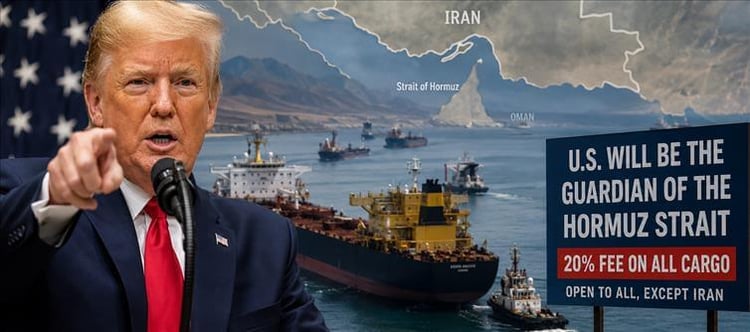


The Strait of Hormuz—one of the world's most strategically important maritime chokepoints—is back at the center of global attention after former U.S. President Donald Trump unveiled a sweeping proposal that could dramatically reshape international shipping, regional security, and U.S.-Iran tensions. In a fiery post on Truth Social, Trump declared that the waterway would remain open "with or without Iran," while announcing what he called the reinstatement of an "Iranian Blockade."
According to Trump, the blockade would target only Iranian ships and those doing business with Iran, while vessels from every other nation would continue to enjoy unrestricted access through the vital shipping lane. He argued that the move would isolate Tehran without disrupting legitimate global commerce.
Trump went even further by proclaiming that the United States would henceforth serve as the "Guardian of the Hormuz Strait." Under his proposal, Washington would provide security for the volatile waterway but would expect financial compensation in return. Specifically, he suggested a 20% reimbursement fee on all cargo transported through the Strait, describing it as a fair way to cover the costs of safeguarding one of the world's busiest energy corridors.
The announcement marks one of Trump's most ambitious geopolitical proposals, tying military protection directly to an international user-fee model. Supporters may view it as a bold strategy to deter Iranian influence while ensuring freedom of navigation. Critics, however, are likely to question its legality, feasibility, and the potential consequences for global trade and diplomacy.
If implemented, such a policy would carry enormous implications for oil markets, international shipping, and Middle East stability. Whether it becomes a serious policy proposal or remains a political statement, Trump's latest declaration has once again thrust the Strait of Hormuz into the global spotlight, ensuring the debate over security, sovereignty, and commerce is far from over.
 click and follow Indiaherald WhatsApp channel