
-

Assembly
-
Bank
-
Bharatiya Janata Party
-
Bihar
-
CM
-
court
-
Cycle
-
Delhi
-
Devendra Fadnavis
-
District
-
Election
-
Elections
-
Government
-
India
-
Indian
-
local language
-
Loksabha
-
Maharashtra
-
Mass
-
Minister
-
Nagpur
-
Om Birla
-
politics
-
Population
-
Prashant Kishor
-
Rajasthan
-
Rajya Sabha
-
READ
-
Telangana Chief Minister
-
tuesday
-
Wanted
-
WATCH
-
WOMEN

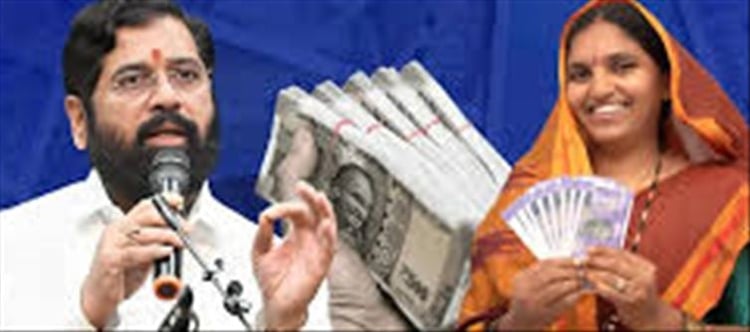
Maharashtra has removed roughly 92 lakh women — 38% of all beneficiaries — from its flagship Ladki Bahin Yojana after a post-election verification drive, according to The Indian Express and News18. The deletions raise pointed questions about whether the ₹1,500/month scheme was always fiscally unsustainable, deployed primarily as a pre-poll sweetener for the 2024 assembly elections.
Here is a number that should make every voter in Maharashtra sit up: 92 lakh. That is not a rounding error or a clerical footnote. That is the number of women just struck off the Ladki Bahin Yojana — the Mahayuti government's most loudly trumpeted welfare scheme — after a so-called verification exercise. According to The Indian Express, this amounts to roughly 38% of total beneficiaries, gone in one administrative sweep. Nearly four in ten names on the list, it turns out, should never have been there in the first place.
Or so the government now says.
The timing is exquisite. The Ladki Bahin scheme — promising ₹1,500 per month to eligible women — was the emotional centrepiece of the Mahayuti's 2024 assembly election campaign. It was plastered across hoardings, invoked in every rally, credited in every post-mortem for the ruling alliance's comfortable return to power. The scheme was announced, the money flowed, the votes arrived. And now, with the next election comfortably distant, the rolls are being trimmed by nearly 40%.
Coincidence? In Indian politics, that word does not survive contact with arithmetic.
The Treasury Math Nobody Talked About Before the Election
Consider the fiscal reality. At ₹1,500 per month per beneficiary, every crore of women on the list costs the Maharashtra exchequer roughly ₹1,800 crore annually. The 92 lakh removed names, therefore, represent a potential annual saving of approximately ₹16,560 crore — a staggering sum for a state government already navigating one of the tightest fiscal corridors among major Indian states. As India Herald previously reported, a damning audit had already flagged ₹3,541 crore in questionable Ladki Bahin outlays, raising hard questions about the scheme's financial architecture well before these deletions came to light.
According to News18, the reasons cited for removal include duplicate entries, ineligible applicants, and incomplete documentation. These are legitimate administrative categories. But the sheer scale — 92 lakh women, not 92 thousand — makes the "routine cleanup" framing absurd on its face. A scheme that enrolled nearly a quarter of Maharashtra's entire female population and somehow got 38% of its own list wrong is not a scheme with a few glitches. It is a scheme that was designed to be leaky, for as long as the leaks were politically useful.
Political Pulse
The talk in political corridors from Nagpur to Mantralaya — and India Herald's read of the unstated calculation — is blunt: the Mahayuti needed the largest possible beneficiary list before the 2024 elections to signal maximum reach and generate maximum gratitude. Verification was deliberately deferred. Nobody in the ruling alliance wanted headlines about rejected applications when the voting booth was six weeks away. The quiet consensus among political strategists on both sides, according to sources familiar with the internal thinking, is that the bloated rolls were a feature, not a bug.
Now that the electoral harvest is in, the fiscal reckoning can no longer be postponed. Maharashtra's revenue deficit is widening, borrowing costs are climbing, and the Centre's fiscal transfer math is getting tighter under the Sixteenth Finance Commission framework. Somebody had to trim the bill. And 92 lakh women — many of them rural, many of them genuinely poor — are the ones paying the price for a pre-election splurge they were told was their right.
The Opposition, predictably, has pounced. MVA leaders are already framing the deletions as a betrayal — a promise made to win, broken the moment it was no longer needed. The phrase "vote loot" is gaining traction in rural Maharashtra, and it has the advantage of being both catchy and, on the evidence, not entirely unfair.
The Backlash That Could Define 2027
What makes this politically combustible is not just the number but the identity of the people affected. These are overwhelmingly women in rural and semi-urban Maharashtra — exactly the demographic the Mahayuti wooed most aggressively. Telling 92 lakh women that they were eligible enough to receive money before the election but not eligible enough to keep it after is, in the grammar of Indian electoral politics, a textbook way to manufacture resentment.
The Fadnavis government will argue, with some justification, that a genuine cleanup was overdue and that continuing to pay ineligible beneficiaries would have been fiscally irresponsible. That argument is technically correct. It is also politically tone-deaf when delivered to a woman in Beed or Yavatmal who was receiving ₹1,500 a month and now is not. She does not care about the revenue deficit. She cares about the money that stopped.
The forward dimension is where this gets genuinely dangerous for the Mahayuti. Local body elections loom. The MVA will run a hyper-local campaign in every deleted beneficiary's village, and the campaign writes itself: they gave you money to buy your vote, and took it back the moment you gave it. If even a fraction of those 92 lakh women and their families convert that grievance into ballot-box anger, the arithmetic in rural Maharashtra shifts sharply. Watch for whether the government quietly restores some names before the next electoral cycle — a partial reinstatement dressed up as a "re-verification" — because that is precisely the play the political arithmetic will demand.
Ninety-two lakh names on a list, then off it. The money came, the votes followed, the money left. The question is not whether this was efficient governance or cynical politics — it was obviously both. The question is whether 92 lakh women will remember which came first.
Allegations reported here are attributed to named sources and remain unproven unless a court has ruled; matters sub judice are reported without prejudgment.
Reported and written with AI assistance under India Herald's editorial standards; a human editor governs publication.
More from India Herald

Key Takeaways
- Maharashtra removed 92 lakh women — 38% of all beneficiaries — from the Ladki Bahin Yojana after a post-election verification exercise, per The Indian Express and News18.
- The deletions could save the state exchequer roughly ₹16,560 crore annually, easing a mounting fiscal crunch but stripping ₹1,500/month from millions of rural women.
- The scheme's rolls were widely seen as deliberately inflated before the 2024 elections, with verification deferred until after the Mahayuti secured its mandate.
- The political fallout could reshape rural Maharashtra's electoral mood ahead of local body elections, handing the MVA a potent 'betrayal' narrative.
By the Numbers
- 92 lakh women removed — 38% of total Ladki Bahin beneficiaries (The Indian Express)
- ₹1,500/month: the per-beneficiary transfer under the scheme
- ~₹16,560 crore: estimated annual fiscal saving from the 92 lakh deletions
- ₹3,541 crore: previously flagged questionable outlays under the scheme (India Herald)
The 5W+H: Who, What, When, Where, Why, How
- Who: The Mahayuti government led by CM Devendra Fadnavis, and 92 lakh women beneficiaries of the Ladki Bahin Yojana in Maharashtra.
- What: 92 lakh women — roughly 38% of total beneficiaries — have been removed from the Ladki Bahin scheme rolls following a verification exercise, as reported by The Indian Express and News18.
- When: The removals were confirmed in 2026, following a verification drive launched after the Mahayuti's return to power in the 2024 Maharashtra assembly elections.
- Where: Across Maharashtra, with the scheme administered at the district and taluka levels statewide.
- Why: According to News18, reasons include duplicate entries, ineligible applicants, and incomplete documentation; critics allege the bloated rolls were tolerated pre-election to maximise electoral benefit.
- How: A verification exercise cross-referencing Aadhaar, ration-card, and income data flagged ineligible and duplicate entries, leading to the mass removal of 92 lakh names from the beneficiary database, per The Indian Express.
Frequently Asked Questions
Why were 92 lakh women removed from the Ladki Bahin Yojana?
According to News18, the removals followed a verification exercise that flagged duplicate entries, ineligible applicants, and incomplete documentation. The government says it is a routine cleanup; critics argue the bloated rolls were tolerated pre-election to maximise political benefit.
How much money does each Ladki Bahin beneficiary receive?
Each eligible woman receives ₹1,500 per month under the Majhi Ladki Bahin Yojana, deposited directly into her bank account.
What is the fiscal impact of removing 92 lakh beneficiaries?
At ₹1,500 per month per beneficiary, removing 92 lakh women saves the Maharashtra exchequer approximately ₹16,560 crore annually.
Will removed Ladki Bahin beneficiaries be reinstated?
The government has not announced any reinstatement. However, political analysts speculate that partial re-enrolment disguised as 're-verification' is likely before upcoming local body elections.
 click and follow Indiaherald WhatsApp channel