
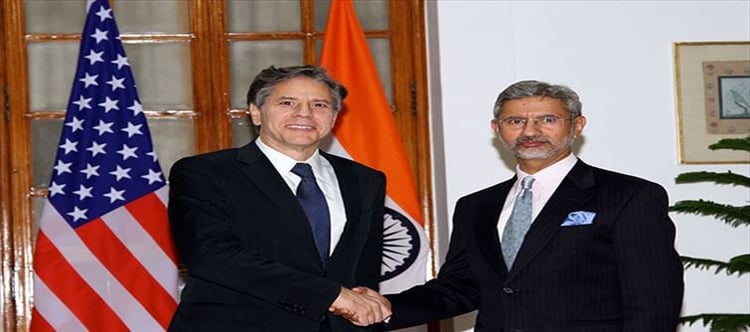


NSA Ajit Doval's series of closed-door bilateral meetings with security chiefs from Thailand, Sri Lanka, Bangladesh, and Myanmar — officially ahead of the BIMSTEC summit — are, according to News18 and strategic analysts, New Delhi's urgent effort to shore up its security perimeter as Myanmar's civil war threatens regional spillover and China deepens its maritime footprint across the Bay of Bengal.
NSA Ajit Doval does not do courtesy calls. When India's most powerful security official sits down, one by one, with his counterparts from Myanmar, Sri Lanka, Bangladesh, and Thailand — all within the same diplomatic window, all behind closed doors — the official line about 'BIMSTEC preparations' is the diplomatic wallpaper. The walls behind it tell a different story.
According to News18, Doval held a rapid sequence of bilateral meetings with the top security brass of all four nations ahead of the upcoming BIMSTEC summit. The formal framing was multilateral cooperation — counter-terrorism, maritime security, the usual BIMSTEC vocabulary. But consider the guest list. Every single country Doval met represents a live pressure point where China's influence is growing or where internal instability directly threatens India's borders. That is not a coincidence. That is a signal.
The Myanmar Fracture: India's Most Dangerous Neighbour Nobody Talks About
Start with Myanmar, because that is where the fire is closest. The junta has been losing territory at an accelerating rate to ethnic resistance armies, particularly the Arakan Army along the India-Myanmar border belt. Entire stretches of Sagaing and Chin State — areas that share a 1,643-kilometre border with India's northeast — are effectively ungoverned. Refugees, arms, and narcotics are flowing across. India's border states, particularly Mizoram and Manipur, are absorbing the fallout.
What Doval needs from Myanmar's security establishment, strategic analysts suggest, is not a political endorsement of the junta. It is something far more operational: intelligence sharing on armed groups operating in the border corridor, coordination on narcotics trafficking, and a quiet understanding that India's security forces may need to act in the grey zone along the frontier without triggering a diplomatic incident. The junta, hemorrhaging control domestically, has every incentive to cooperate with New Delhi rather than alienate the one major power not actively seeking its overthrow.
Sri Lanka and Bangladesh: Where China's Chequebook Diplomacy Meets India's Security Anxiety
Now pivot south. Sri Lanka remains the centrepiece of India's China anxiety in the Indian Ocean. Beijing's 99-year lease on Hambantota Port, its expanding footprint around Colombo Port City, and the quiet deepening of Chinese surveillance and research vessel visits to Sri Lankan waters — all of this keeps South Block awake. India has pushed back, aggressively at times, but the leverage game is delicate. Colombo needs Chinese capital; it also needs Indian goodwill and the lifeline New Delhi extended during the 2022 economic crisis.
Bangladesh presents a different flavour of the same problem. Under its current political dispensation, Dhaka has shown increased openness to Chinese infrastructure investment, including port modernisation at Chittagong and the Payra deep-sea port project. For India, a Chinese-linked port facility on the eastern shore of the Bay of Bengal, combined with the existing foothold in Sri Lanka and Myanmar's Kyaukpyu port, starts to look less like commerce and more like encirclement.
Doval's bilateral with Bangladesh's security counterpart, in India Herald's assessment, likely focused on two unspoken anxieties: the flow of illegal immigration and cross-border extremism through the porous India-Bangladesh frontier, and the strategic implications of Chinese port infrastructure that could, in a crisis, serve dual-use military purposes. Neither of these is something you discuss at a multilateral roundtable. Both require the kind of candid, closed-door exchange that only bilateral meetings permit.
Political Pulse
The talk in strategic circles in New Delhi — the kind that happens over whisky at IIC, not at press conferences — is that Doval's BIMSTEC sideline meetings are less about the summit and more about building a quiet security architecture that India controls. The whisper is that New Delhi is deeply uncomfortable with how fast the neighbourhood is shifting. Myanmar's civil war could produce a failed state on India's border. Sri Lanka's debt trap keeps pulling Colombo closer to Beijing. Bangladesh's political recalibration has made it less predictable.
One retired diplomat, speaking on background, put it bluntly in strategic policy circles: India cannot afford to wait for BIMSTEC's slow multilateral machinery to address threats that are moving at bilateral speed. Doval, the thinking goes, is building a parallel security web — one conversation at a time, one handshake at a time, with India at the centre and every spoke personally tended.
Thailand's inclusion is telling. Bangkok is BIMSTEC's other heavyweight, but it is also the gateway to mainland Southeast Asia and a critical node in the narcotics corridor that runs from Myanmar's Shan State through Laos and into the Bay of Bengal littoral. Indian and Thai intelligence cooperation on narco-trafficking has quietly deepened in recent years, and Doval's meeting with his Thai counterpart, per News18, is likely aimed at formalising more of that cooperation under a security umbrella that goes well beyond BIMSTEC's stated agenda.
The China Question Nobody Will Say Out Loud
Here is the part the official readouts will never contain. Every one of these bilateral meetings is, at its core, a conversation about China. Not openly — none of these countries can afford to publicly antagonise Beijing. But the subtext is unmistakable. India is asking each of these neighbours, in different registers: where do you stand when the pressure comes? Can we count on intelligence sharing? Will you keep us informed when a Chinese research vessel docks? Will you flag it when Beijing offers a new loan with a port lease attached?
The answers Doval gets will not be public. They may not even be fully honest. But the asking itself — the fact that India's NSA is personally conducting these conversations rather than leaving them to diplomatic channels — tells you how seriously New Delhi rates the threat. This is not protocol. This is preparation.
What Comes Next
Watch for what follows these meetings. If India announces new bilateral security agreements or intelligence-sharing protocols with any of these four nations in the coming weeks, you will know the Doval meetings were not just consultations — they were negotiations. If BIMSTEC's summit communiqué carries unusually strong language on maritime security or transnational crime, that too will bear Doval's fingerprints. And if, in the months ahead, India steps up its naval presence in the Bay of Bengal or expands its coastal surveillance network to cover Bangladesh and Myanmar's littoral, the seeds were planted in these rooms.
The larger play, in India Herald's read, is this: Doval is trying to ensure that when Myanmar's civil war produces its next crisis — a massive refugee wave, a border incursion, a narco-corridor explosion — India is not caught reacting. And when China's next port deal or surveillance vessel visit forces a choice, India's neighbours have already had the conversation about where their loyalties sit. The BIMSTEC summit is the stage. The bilateral meetings are the script. And Doval, as always, is directing from the wings — making sure that when the curtain goes up, nobody forgets who wrote the play.
More from India Herald


Key Takeaways
- NSA Doval's bilateral meetings with Myanmar, Sri Lanka, Bangladesh, and Thailand — officially BIMSTEC prep — are India's urgent effort to secure a neighbourhood where China is expanding and Myanmar is collapsing, according to News18.
- Myanmar's civil war poses a direct spillover threat to India's northeast through a 1,643-km shared border, making intelligence sharing and border coordination with the junta a quiet priority for New Delhi.
- China's port infrastructure in Sri Lanka (Hambantota), Bangladesh (Payra, Chittagong), and Myanmar (Kyaukpyu) is the unspoken driver of Doval's security diplomacy — India is asking neighbours where they stand.
- Thailand's inclusion signals India's focus on the narcotics corridor running from Myanmar's Shan State through the Bay of Bengal littoral.
- Watch for new bilateral security pacts or strengthened BIMSTEC maritime-security language in the coming weeks — these meetings were likely negotiations, not consultations.
By the Numbers
- India shares a 1,643-kilometre border with Myanmar, large stretches of which are effectively ungoverned as the junta loses territory to ethnic resistance armies.
- China holds a 99-year lease on Sri Lanka's Hambantota Port, a cornerstone of Beijing's Indian Ocean footprint.
The 5W+H: Who, What, When, Where, Why, How
- Who: National Security Adviser Ajit Doval, alongside security counterparts from Thailand, Sri Lanka, Bangladesh, and Myanmar, according to News18.
- What: A series of bilateral security meetings held on the sidelines of BIMSTEC preparations, focused on counter-terrorism, maritime security, and regional stability, as reported by News18.
- When: Ahead of the upcoming BIMSTEC summit in 2026, with meetings held in the days leading up to the multilateral gathering, per News18.
- Where: The meetings took place on the margins of BIMSTEC coordination, involving Bay of Bengal member states, according to News18.
- Why: India seeks to secure its volatile neighbourhood amid Myanmar's accelerating civil war, China's expanding port and infrastructure deals in Sri Lanka and Bangladesh, and growing transnational security threats, according to strategic assessments and News18's reporting.
- How: Through direct, closed-door bilateral engagements between NSA Doval and his counterparts — a format that allows candid discussion of sensitive security concerns outside the formal multilateral BIMSTEC framework, as News18 reported.
Frequently Asked Questions
Why is NSA Doval meeting BIMSTEC countries bilaterally instead of at the multilateral summit?
Bilateral meetings allow candid discussion of sensitive security issues — Myanmar's civil war spillover, Chinese port deals, cross-border extremism — that cannot be raised openly in a multilateral format. According to News18, Doval met counterparts from Thailand, Sri Lanka, Bangladesh, and Myanmar individually ahead of BIMSTEC, signalling that the real agenda goes beyond the summit's formal scope.
How does Myanmar's civil war affect India's security?
Myanmar shares a 1,643-km border with India's northeast. As the junta loses territory to ethnic resistance armies, particularly in Sagaing and Chin State, refugees, arms, and narcotics are flowing across into Indian border states like Mizoram and Manipur, creating direct security threats.
What is China's strategic presence in the Bay of Bengal region?
China holds a 99-year lease on Hambantota Port in Sri Lanka, is involved in Bangladesh's Payra deep-sea port project and Chittagong port modernisation, and has invested in Myanmar's Kyaukpyu port — creating what Indian strategists view as a potential encirclement of the Bay of Bengal, according to multiple strategic assessments.
 click and follow Indiaherald WhatsApp channel