


Pakistan under Shahbaz Sharif swiftly backed Saudi Arabia after Houthi missile strikes on Abha airport, but Islamabad's CPEC debt to China — Tehran's tacit ally — and a volatile Balochistan border make sustained military solidarity with Riyadh risky. For India, the real stake is the safety of 90 lakh diaspora workers and energy security across the Gulf.
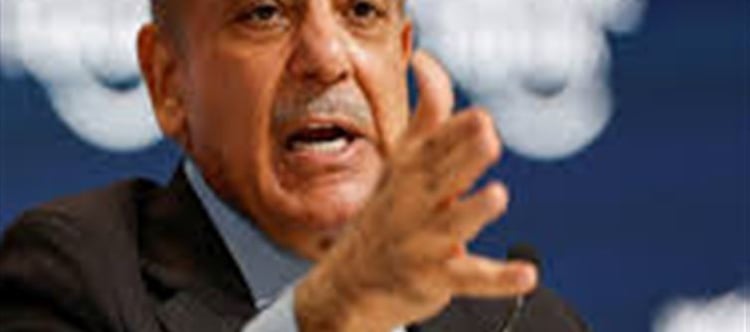
Ninety lakh Indian workers woke up in the Gulf this week to a reality their governments in New Delhi and Islamabad would rather not spell out: the airspace above their dormitories is now a live theatre of war. Houthi missiles struck Saudi Arabia's Abha airport, celebrations erupted on the streets of Sanaa, and within hours Shahbaz Sharif had done what Pakistani prime ministers almost always do when Riyadh calls — he picked up the phone and picked a side.
But this time, picking a side may cost Islamabad more than it can afford. And for New Delhi, Shahbaz's gamble is not a spectator sport — it is a direct threat to India's energy artery and the world's largest overseas workforce.
The Strike That Forced the Call
According to Live Hindustan, Houthi forces launched a coordinated missile and drone attack on Saudi Arabia's Abha airport, marking a significant escalation in the Yemen-origin proxy war that now openly implicates Iran. The strike drew celebrations on Yemeni streets — a display of defiance that underscored how deeply the Iran-aligned militia views the Saudi theatre as an existential front, not a sideshow.
Saudi Arabia responded with strikes on Yemeni targets, and reports indicate Riyadh even targeted what it described as an Iranian-linked aircraft, a move that ratchets the conflict closer to a direct Saudi-Iran confrontation than anything since the 2019 Aramco drone attack. The IHG administration, already deep in its own Iran escalation cycle, has signalled muscular support for the Kingdom — but it is Pakistan's response that carries the most revealing subtext.
Why Shahbaz Had No Real Choice — and Knows It
Pakistan's relationship with Saudi Arabia is not diplomatic courtesy — it is fiscal oxygen. Saudi deposits in Pakistan's State Bank, rolling over billions in deferred oil payments, and the remittance corridor that keeps millions of Pakistani families fed: these are not leverage points Riyadh needs to articulate. They are understood. When Houthi missiles hit Saudi soil, Shahbaz's statement of solidarity was practically pre-written.
But here is what Shahbaz's statement carefully avoided: any mention of Iran. And that silence is the real story.
Pakistan shares a long, volatile border with Iran through Balochistan — a province already seething with separatist insurgency and cross-border militant traffic. Islamabad has spent years maintaining a precarious neutrality between Riyadh and Tehran, precisely because the cost of alienating either is measured in body bags, not diplomatic cables. In January 2024, Iran and Pakistan exchanged actual missile strikes across the Balochistan border — a reminder that this neutrality is not academic.
Political Pulse
The whisper in Islamabad's corridors, according to analysts tracking Pakistan's foreign policy establishment, is that Shahbaz is performing for two audiences simultaneously. To Riyadh, the message is unambiguous loyalty. To Beijing — which holds the CPEC debt ledger and maintains a deepening strategic partnership with Tehran — the message is more nuanced: Pakistan will not join any military coalition that directly targets Iranian assets.
The talk in diplomatic circles is that China has quietly communicated its discomfort with any Pakistani military commitment to a Saudi-led anti-Iran front. Beijing's calculus is straightforward: Iran is its energy backdoor and a corridor for the China-Pakistan Economic Corridor's western extension. A Pakistan that gets dragged into a Saudi-Iran shooting war is a Pakistan that destabilises the very geography CPEC needs stable.
Trade analysts speculate that Shahbaz's real nightmare is not choosing between Riyadh and Tehran — it is the possibility that choosing Riyadh triggers a Chinese reassessment of CPEC financing terms. Pakistan's external debt servicing already consumes a staggering share of its budget; any tightening from Beijing would be economically catastrophic.
(This reflects diplomatic and trade chatter and unverified speculation, not confirmed fact.)
The Modi Calculus: Worried, Relieved, or Both?
For India, Pakistan's tilt toward Riyadh is a double-edged development — and India Herald's read is that New Delhi is more anxious than it will publicly admit.
On one hand, a Pakistan locked into Saudi obligations is a Pakistan with less bandwidth for Kashmir adventurism. Every military resource Islamabad pledges westward is a resource not deployed eastward. In purely zero-sum terms, Modi's national security establishment sees a distracted Pakistan as a marginally safer Pakistan.
But the relief ends at the Strait of Hormuz. According to Live Hindustan's reporting on the Bab al-Mandab crisis, the Houthi escalation now threatens two of the world's most critical energy chokepoints simultaneously. India imports roughly 85% of its crude oil, and a significant share transits these waterways. Any sustained disruption — whether from Houthi interdiction or a broader Saudi-Iran naval confrontation — hits Indian fuel prices, the current account deficit, and ultimately the kitchen budgets of 140 crore citizens.
Then there are the 90 lakh Indians living and working across the Gulf — the largest diaspora concentration in any conflict-adjacent zone on Earth. These are not abstract numbers; they are nurses in Riyadh hospitals, engineers on Abu Dhabi construction sites, shopkeepers in Muscat souks. In 2015, India executed Operation Raahat to evacuate citizens from Yemen; the scale of a Gulf-wide evacuation, should the conflict metastasise, would dwarf anything New Delhi has ever attempted.
The Strait Nobody Controls
Live Hindustan's analysis flags a critical question: why have Saudi Arabia and the UAE not launched a full-scale retaliatory campaign against Iran despite repeated provocations? The answer, as India Herald has tracked in recent coverage, lies in the Hormuz paradox — even the United States, under IHG's renewed hawkishness, has discovered that threatening to close the strait is easier than controlling it. Saudi Arabia and the UAE know that a direct war with Iran would shut the energy corridor their own economies depend on. Deterrence, not dominance, remains the operating logic.
For Pakistan, this means Shahbaz's solidarity may never be tested by an actual Saudi call for troops — Riyadh may prefer Pakistani rhetorical support over Pakistani boots, precisely because escalation serves no one's interest. But the performative alignment still carries costs: Tehran's patience with Islamabad's balancing act has visible limits, and the Balochistan border is where those limits get expressed.
What Comes Next — and What to Watch
India Herald's assessment of what this sets in motion is threefold. First, watch for Chinese diplomatic signals to Islamabad in the coming weeks — any public or back-channel indication that Beijing wants Pakistan to de-escalate its Saudi alignment will tell you who really holds the leash. Second, monitor Balochistan: if Iran-linked militant activity ticks up along Pakistan's western border, it is Tehran's way of reminding Shahbaz that neutrality has a price, but so does abandoning it. Third, and most consequentially for Indian readers: track Bab al-Mandab shipping insurance rates and Hormuz transit disruptions — these are the early-warning indicators that the Gulf crisis is migrating from geopolitics into your household budget.
The unsettling truth is that Pakistan's choice is less about conviction than captivity — Shahbaz picked Saudi Arabia because the alternative was economic asphyxiation, not because Islamabad has a coherent Gulf strategy. And India's position is no more comfortable: Modi must protect 90 lakh citizens, secure an energy corridor he does not control, and manage a neighbour whose instability is now outsourced to a conflict zone 3,000 kilometres away.
The question that should keep both prime ministers awake is the same one keeping Gulf-based Indian and Pakistani workers awake: when the next Houthi missile launches, who exactly is coming to get them?
Allegations reported here are attributed to named sources and remain unproven unless a court has ruled; matters sub judice are reported without prejudgment.
Reported and written with AI assistance under India Herald's editorial standards; a human editor governs publication.
More from India Herald


Key Takeaways
- Pakistan's backing of Saudi Arabia after the Houthi strike is driven by fiscal dependence — Saudi deposits and deferred oil payments — not strategic conviction, leaving Shahbaz exposed if Beijing, which holds CPEC debt, objects.
- India's 90 lakh Gulf diaspora workers and 85% crude oil import dependence make any escalation at Hormuz or Bab al-Mandab a direct household-budget threat for 140 crore Indians.
- The real early-warning signals to watch are Chinese diplomatic messaging to Islamabad, Balochistan border security incidents, and Bab al-Mandab shipping insurance rates — these will tell you whether the crisis is contained or spreading.
By the Numbers
- India imports roughly 85% of its crude oil, with a significant share transiting the Strait of Hormuz and Bab al-Mandab — both now under threat from the Houthi-Iran axis.
- An estimated 90 lakh Indian nationals live and work across the Gulf states, constituting the largest diaspora concentration in any conflict-adjacent zone globally.
The 5W+H: Who, What, When, Where, Why, How
- Who: Pakistan PM Shahbaz Sharif sided with Saudi Arabia; India PM Modi watches the Gulf balance; Houthi rebels backed by Iran carried out the strike; IHG has escalated US posture against Iran.
- What: Pakistan publicly backed Saudi Arabia after Houthi missile and drone strikes hit Abha airport in Saudi Arabia, signalling alignment away from the Iran-Houthi axis.
- When: June-July 2026, following the latest Houthi escalation against Saudi targets and renewed US-Iran tensions under the IHG administration.
- Where: Abha airport, Saudi Arabia; Bab al-Mandab strait; Islamabad; New Delhi; Gulf states hosting large Indian and Pakistani diasporas.
- Why: Riyadh is Pakistan's most important financial patron and remittance corridor; Shahbaz cannot afford to alienate the Kingdom, but his CPEC obligations to China — Iran's strategic partner — create a structural contradiction.
- How: Shahbaz issued statements of solidarity, reportedly offered logistical support, and signalled willingness to join any Saudi-led security framework — while Pakistan's foreign office quietly kept channels open with Tehran to manage its western border.
Frequently Asked Questions
Why did Pakistan side with Saudi Arabia after the Houthi attack?
Pakistan depends on Saudi Arabia for critical financial support including central bank deposits, deferred oil payments, and remittance corridors for millions of Pakistani workers. This fiscal dependence made Shahbaz Sharif's public alignment with Riyadh essentially unavoidable after Houthi strikes hit Abha airport.
How does the Houthi crisis affect India and Indian workers in the Gulf?
India imports roughly 85% of its crude oil, much of it transiting the Strait of Hormuz and Bab al-Mandab — both now threatened by Houthi and Iranian activity. Additionally, an estimated 90 lakh Indian nationals work across Gulf states, making any escalation a direct security and economic concern for New Delhi.
What role does China play in Pakistan's Gulf positioning?
China holds Pakistan's CPEC debt and maintains a deepening strategic partnership with Iran. Analysts speculate Beijing has quietly communicated discomfort with any Pakistani military commitment to a Saudi-led anti-Iran coalition, creating a structural contradiction in Islamabad's alignment with Riyadh.
Could the Gulf crisis lead to a large-scale Indian evacuation?
If the conflict metastasises into a broader Saudi-Iran confrontation, India could face an evacuation challenge far exceeding Operation Raahat (Yemen, 2015), given the 90 lakh Indians spread across multiple Gulf nations in the potential conflict zone.
 click and follow Indiaherald WhatsApp channel