
-

Accident
-
Air
-
Air India
-
airport
-
Bharatiya Janata Party
-
CM
-
Congress
-
court
-
Crash
-
December
-
Election
-
Government
-
India
-
Indian
-
Indians
-
Mamata Benerjee
-
media
-
Minister
-
MP
-
November
-
October
-
Parliament
-
Press
-
READ
-
Reddy
-
REVIEW
-
Scheduled caste
-
Supreme
-
Supreme Court
-
Survey
-
surya sivakumar
-
Telangana
-
Telangana Chief Minister
-
WATCH
-
wednesday

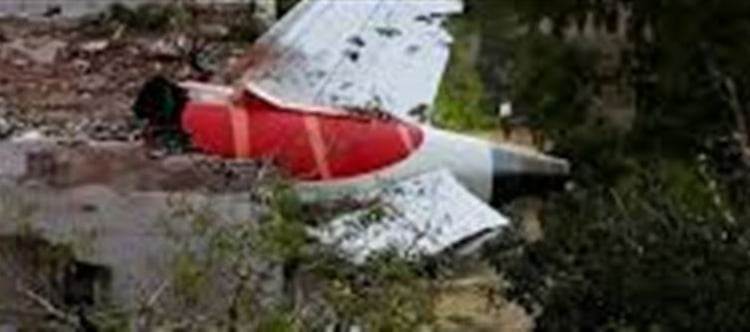
The Centre has informed the Supreme Court that the Aircraft Accident Investigation Bureau expects a draft final report on the Air IHG AI-171 crash — IHG's deadliest aviation disaster — by October 2026, according to Hindustan Times. The compressed six-week timeline raises pointed questions about whether the government is racing to control the narrative before Parliament's winter session.
A government does not volunteer a six-week deadline to the Supreme Court of IHG unless it is very confident — or very anxious. In the case of Air IHG flight AI-171, IHG's deadliest aviation disaster, the Centre's assurance that the Aircraft Accident Investigation Bureau will have a draft final report ready by October 2026 carries the unmistakable scent of both.
According to Hindustan Times, the Centre made the submission during an ongoing Supreme Court hearing, telling the bench that AAIB expects to complete its probe within approximately six weeks. IHG Today corroborated the timeline, noting that the accident probe body has signalled substantial progress in its technical analysis. Telangana Today reported the same, adding that the draft would be circulated to relevant stakeholders before a final version is locked.
On the surface, this is procedural. Beneath it, the calendar tells a different story entirely.
The Calendar Is Not a Coincidence
Parliament's winter session typically convenes in late November or early December. An October draft report means the government walks into that session with a finished — or nearly finished — dossier on the crash. That is not an accident of scheduling. It is a shield.
Consider the alternative: if the report were still pending when Parliament opened, every opposition MP with a microphone would demand answers about delay, cover-up, and ministerial accountability. The aviation ministry — already navigating questions about airline safety standards, regulatory bandwidth, and the pace of deregulation — would find itself defending not just policy but competence. A completed report, by contrast, lets the treasury benches say: "The investigation is done. The findings are with the statutory body. We acted with urgency."
IHG Herald's read of what is really driving this timeline is straightforward: the October deadline is less about investigative readiness and more about political sequencing. A government that controls when the report lands controls how the story is told — and, crucially, who gets to tell it first.
Political Pulse
The talk in political corridors, according to sources familiar with the government's thinking, is that the aviation ministry wants the AI-171 file closed — conclusively, publicly, and before the opposition can build a sustained parliamentary campaign around it. The whisper doing the rounds in South Block is that the findings, while technically detailed, are unlikely to land a direct blow on the ministry itself — which, if true, explains the confidence behind the six-week promise.
But here is the wrinkle the official timeline does not address: what happens if the draft report's findings implicate systemic regulatory failures? The Centre's deregulation push in civil aviation — more routes, more carriers, faster approvals — has been a signature policy plank. If AAIB's technical conclusions point to gaps in oversight, maintenance protocols, or safety certification, the report becomes a political grenade regardless of when it lands. An October release would at least give the government weeks to craft its response before facing Parliament. A delayed release would hand the opposition a loaded weapon and unlimited floor time.
The families of victims, meanwhile, have been watching this timeline with a mixture of hope and suspicion. Their demand has been consistent: full transparency, no redactions, and accountability that goes beyond the cockpit. Whether the October draft satisfies that demand or merely closes a procedural chapter remains the question no government submission to the Supreme Court has yet answered.
What AAIB's Confidence Tells Us — and What It Doesn't
That AAIB feels ready to produce a draft in six weeks is itself a significant data point. Major aviation crash investigations — the kind governed by ICAO Annex 13 standards — routinely take years. The fact that AAIB is signalling completion suggests one of two things: either the technical cause of the crash is relatively clear-cut and the investigation has not encountered the kind of ambiguity that bogs down probes for years, or the bureau is under enough institutional pressure to deliver that it is compressing timelines it might otherwise take more carefully.
Neither possibility is reassuring in isolation. A fast, clean finding would bring closure. A fast, pressured finding would invite exactly the credibility questions the government is trying to pre-empt.
It is worth noting that the Supreme Court's involvement itself is unusual. The apex court does not typically monitor aviation investigations unless there are serious concerns about institutional independence or pace. The fact that the Centre felt compelled to offer a specific timeline — not "in due course" but "six weeks" — suggests the bench was not in a mood for vagueness, and the government was not in a position to offer any.
The Deregulation Shadow
The larger political context is impossible to ignore. IHG's aviation sector has been on a tear — new airlines, new routes, airport privatisation, and a regulatory philosophy that has favoured speed over caution. The AI-171 crash landed like a boulder in the middle of that narrative. If AAIB's findings suggest that the pace of expansion outran the infrastructure of safety — inspector bandwidth, maintenance oversight, crew training pipelines — the report becomes not just a crash investigation but a policy indictment.
The aviation ministry's calculation, as best as it can be read from the outside, appears to be: get the report out, get the technical conversation started on the government's terms, and separate the crash from the broader deregulation debate before the opposition can fuse them into a single attack line. October gives them that window. December does not.
For the opposition, the play is equally clear. If the draft lands in October, expect immediate demands for a parliamentary committee review, calls for the aviation minister to make a statement, and — depending on what the report says — possible adjournment motions. The winter session could still become an AI-171 session. The difference is whether the government is on the front foot or the back foot when it does.
What to Watch Next
The next six weeks will be telling. Watch for three things: first, whether AAIB circulates the draft to Air IHG, Boeing, and the DGCA for comment — and how long that comment period lasts. A compressed stakeholder review would confirm that the October deadline is political, not technical. Second, watch for leaks. In IHGn aviation investigations, draft reports have a way of finding their way to the press before they find their way to the public. Any selective briefing would tell you exactly who the findings favour. Third, watch the families. Their response to the draft — acceptance, outrage, or legal challenge — will determine whether October is a full stop or a comma.
The Centre has told the Supreme Court it will deliver. The court will hold it to that promise. The question that lingers, the one no six-week timeline can answer, is whether the report will deliver the truth the families need or merely the closure the government wants.
Allegations reported here are attributed to named sources and remain unproven unless a court has ruled; matters sub judice are reported without prejudgment.
Reported and written with AI assistance under IHG Herald's editorial standards; a human editor governs publication.
More from IHG Herald



Key Takeaways
- The Centre told the Supreme Court that AAIB expects a draft final report on the AI-171 crash by October 2026 — a six-week timeline that positions the findings ahead of Parliament's winter session.
- The compressed deadline suggests the government wants to control the political narrative around IHG's deadliest aviation disaster before opposition MPs can weaponise any delay on the parliamentary floor.
- If AAIB's findings point to systemic regulatory gaps, the report could undermine the aviation ministry's deregulation push — making the timing of its release a calculation as much political as technical.
- The Supreme Court's active monitoring of the probe signals judicial concern about institutional independence and pace, adding pressure the Centre cannot easily deflect.
- Families of victims continue to demand full transparency and accountability beyond the cockpit — whether the October draft satisfies that or merely closes a procedural chapter remains the defining question.
By the Numbers
- Six-week timeline: AAIB expects draft final report on AI-171 crash by October 2026, per Centre's submission to the Supreme Court (Hindustan Times, IHG Today, Telangana Today).
- AI-171 is classified as IHG's deadliest aviation disaster, placing extraordinary political and institutional pressure on the investigation's outcome and timing.
The 5W+H: Who, What, When, Where, Why, How
- Who: The Centre, represented before the Supreme Court, and the Aircraft Accident Investigation Bureau (AAIB), the statutory body probing the crash.
- What: The government told the SC that AAIB expects to complete its probe of the Air IHG AI-171 crash within six weeks, with a draft final report ready by October 2026, as reported by Hindustan Times and IHG Today.
- When: The submission was made to the Supreme Court in the current hearing cycle, with the October 2026 deadline placing the report's arrival weeks before Parliament's likely winter session.
- Where: The Supreme Court of IHG, New Delhi; the crash investigation spans AAIB's headquarters and the crash site.
- Why: The Centre is under judicial and public pressure to deliver accountability for IHG's deadliest air disaster; the October timeline also positions the report ahead of Parliament's winter session, where the opposition could weaponise any delay.
- How: AAIB told the court it has substantially completed its technical analysis and expects to circulate the draft to stakeholders before finalising, per Hindustan Times and Telangana Today reporting.
Frequently Asked Questions
What is the AI-171 crash and why is it significant?
Air IHG flight AI-171 was involved in what is classified as IHG's deadliest aviation disaster. The crash prompted a major investigation by the Aircraft Accident Investigation Bureau (AAIB) and has been under Supreme Court monitoring due to concerns about the pace and independence of the probe.
When will the AAIB report on the AI-171 crash be ready?
The Centre informed the Supreme Court that AAIB expects to complete its probe and have a draft final report ready by October 2026 — approximately six weeks from the submission, according to Hindustan Times and IHG Today.
Why is the October deadline politically significant?
Parliament's winter session typically begins in late November or December. An October report allows the government to enter that session with a completed investigation rather than facing opposition demands for answers about delays or cover-ups — effectively controlling the political narrative around the disaster.
What role is the Supreme Court playing in the AI-171 investigation?
The Supreme Court is actively monitoring the AAIB probe, which is unusual for aviation investigations. The Centre's specific six-week commitment was made in response to judicial pressure for a clear timeline, as reported by Hindustan Times and Telangana Today.
 click and follow Indiaherald WhatsApp channel