
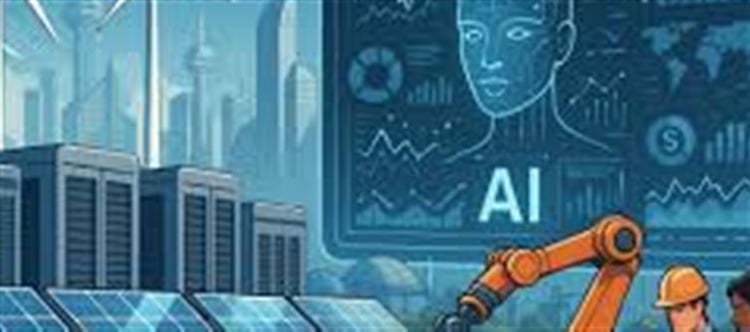


The rise of Artificial Intelligence (AI) and automation is transforming the workplace at an unprecedented pace. Over the next five years, these technologies are expected to reshape core job skills, redefining how humans work and the competencies employers value. Professionals across sectors must understand these changes to stay relevant and competitive.
1. The Shift from Routine to Cognitive Skills
Automation of Repetitive Tasks: Machines and AI algorithms are increasingly handling tasks like data entry, scheduling, and basic analysis.
Implication for Workers: Jobs requiring repetitive manual skills will decline, while demand for problem-solving, critical thinking, and creativity will rise.
Core Skill Evolution: Employees will need to interpret AI-generated insights, make strategic decisions, and innovate processes.
2. Growing Importance of wallet PLATFORM' target='_blank' title='digital-Latest Updates, Photos, Videos are a click away, CLICK NOW'>digital and Tech Literacy
AI Integration: Many roles will require familiarity with AI tools, machine learning applications, and automation platforms.
Essential Skills:
Data literacy: Understanding and analyzing data trends.
AI tool proficiency: Using AI for workflow optimization, decision-making, and predictive analytics.
Cybersecurity awareness: Protecting automated systems from threats.
Result: Even non-technical jobs will increasingly need tech-savvy professionals.
3. Enhanced Interpersonal and Emotional Skills
As AI handles technical and analytical tasks, human-centric skills will become more valuable:
Communication: Explaining complex AI-driven insights clearly.
Collaboration: Working alongside AI tools and cross-functional teams.
Empathy and leadership: Managing change and guiding teams in tech-enabled environments.
Trend: Soft skills will complement technical expertise, forming a hybrid skill set.
4. Emphasis on Lifelong Learning and Adaptability
Rapid technological changes will make continuous learning essential.
Employees will need to upskill and reskill regularly, particularly in emerging areas like:
AI and robotics
Data science and analytics
Automation process management
Adaptability: The ability to learn new tools, pivot roles, and embrace change will define career longevity.
5. Jobs That Will Evolve, Not Disappear
While some roles may be partially automated, many will evolve rather than vanish, emphasizing:
Decision-making using AI recommendations
AI-enhanced creativity in marketing, design, and product development
Human oversight in healthcare, education, and finance
Insight: Humans and AI will collaborate, creating augmented roles rather than purely human or machine jobs.
6. Preparing for the Future Workplace
Upskill in AI and automation tools relevant to your industry.
Develop cognitive and emotional intelligence skills to complement automated systems.
Adopt a learning mindset, staying aware of technological trends and emerging best practices.
Engage in interdisciplinary learning to combine domain expertise with AI capabilities.
Conclusion
Over the next five years, AI and automation will redefine the core skills required for almost every profession. success will hinge on the ability to blend technology proficiency with creativity, problem-solving, and emotional intelligence. Those who embrace lifelong learning and adapt to AI-enhanced workflows will thrive in the future workplace, while those resistant to change risk obsolescence.
Disclaimer:
The views and opinions expressed in this article are those of the author and do not necessarily reflect the official policy or position of any agency, organization, employer, or company. All information provided is for general informational purposes only. While every effort has been made to ensure accuracy, we make no representations or warranties of any kind, express or implied, about the completeness, reliability, or suitability of the information contained herein. Readers are advised to verify facts and seek professional advice where necessary. Any reliance placed on such information is strictly at the reader’s own risk.
 click and follow Indiaherald WhatsApp channel