
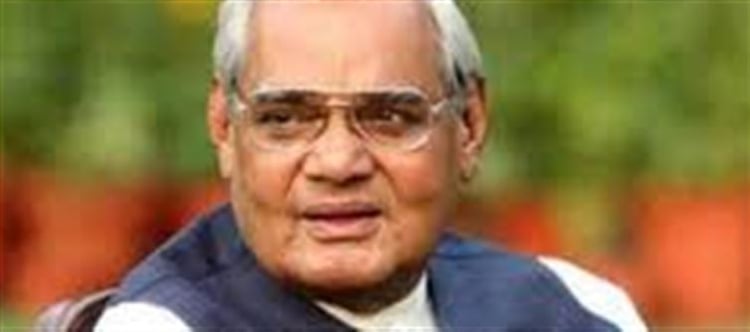


December 25th is significant in india not only as Christmas Day, the day marking the birth of Jesus Christ, but also as the birthday of one of India's most beloved leaders — Atal Bihari Vajpayee, the former Prime Minister of India. He is widely respected for his contributions to the nation’s politics, foreign policy, and infrastructure development. Additionally, Good Governance Day is celebrated on this day in honor of his legacy.
Let's take an in-depth look at Atal Bihari Vajpayee's life and his significance in India:
1. Atal Bihari Vajpayee: A Visionary Leader
Atal Bihari Vajpayee was born on December 25, 1924, in Gwalior, Madhya Pradesh, into a family with a strong political and literary background. His father, krishna Bihari Vajpayee, was a school teacher, and his mother, Krishna Devi, was deeply religious. From a young age, Vajpayee exhibited qualities of leadership, intellectual curiosity, and a keen interest in public affairs.
Early Life and Education
· Atal Bihari Vajpayee was an accomplished student, excelling in his studies. He earned a degree in Political Science from Snagar University, followed by a Master’s degree in the same subject. His intellectual background and keen interest in national affairs laid the foundation for his future political career.
· He was influenced by the freedom struggle and the Hindu nationalist movement, which would shape much of his political ideology.
2. Political journey of Atal Bihari Vajpayee
Vajpayee's political career began at a young age. He was deeply influenced by Shyama prasad Mukherjee, the founder of the Bharatiya Janata party (BJP)’s predecessor, the Janata Party. His political ideology was grounded in Indian nationalism, Hindu values, and a strong commitment to democracy.
Joining the Rashtriya Swayamsevak Sangh (RSS)
Vajpayee's political journey was closely tied to the Rashtriya Swayamsevak Sangh (RSS), a right-wing Hindu nationalist organization. He joined the RSS as a young man, where he was influenced by its principles of selfless service to the nation and the promotion of indian culture. His association with the RSS would serve as the bedrock of his political ideology.
Role in the bharatiya janata party (BJP)
In 1980, when the Janata Party disbanded, Vajpayee was one of the founding members of the Bharatiya Janata party (BJP), alongside L.K. Advani and other prominent leaders. He played a key role in shaping the party into a major political force in India.
· His leadership helped the bjp transition from a regional political party into a national one, eventually leading it to power in the 1990s and 2000s.
3. Vajpayee’s Tenure as Prime Minister
Atal Bihari Vajpayee served as India’s Prime Minister three times. His leadership and policies left an indelible mark on the country.
First Term (1996)
Vajpayee first became prime minister in 1996 for a brief period of 13 days, after his party won the general elections. However, he resigned after failing to prove a majority in Parliament. Despite the short tenure, this marked the beginning of his national political presence.
Second Term (1998-2004)
· His most significant term came from 1998 to 2004, during which he served as prime minister for a full five years.
· Nuclear Tests: Under his leadership, india conducted a series of nuclear tests in 1998 (Pokhran II), which solidified India's position as a nuclear power and earned Vajpayee the reputation of a decisive and strong leader.
· India-Pakistan Relations: Vajpayee is widely remembered for his bold diplomatic moves, including his initiative to open dialogue with Pakistan. In 2001, he extended a peace offer to pakistan, marking a significant shift in Indo-Pakistani relations.
· Economic Growth and Infrastructure Development: Vajpayee is credited with pushing forward key infrastructure projects like the Golden Quadrilateral, a network of highways connecting major cities across the country, and boosting the Indian economy during his tenure.
Third Term (2004)
Vajpayee returned as prime minister for a third term in 2004. However, his government was defeated in the general elections, marking the end of his premiership.
4. Key Contributions of Atal Bihari Vajpayee
Atal Bihari Vajpayee’s leadership shaped India’s domestic and international policies in lasting ways. His contributions include:
A Strong Foreign Policy
· Vajpayee played a key role in shaping India’s foreign policy. His diplomatic efforts helped improve relations with major powers like the United States, Russia, and Israel, and Vajpayee’s pakistan policy was instrumental in managing tensions with India’s neighbor.
· His famous bus diplomacy to Lahore in 1999 is remembered as a bold and sincere attempt to normalize relations between india and Pakistan.
Economic Growth
· His economic policies were aimed at liberalizing India’s economy, continuing from the reforms initiated in the early 1990s. Vajpayee’s government helped create a more open, competitive economy.
· Under his leadership, India’s GDP grew, and the country saw improved performance in sectors such as information technology, telecommunications, and infrastructure.
Social and Cultural Leadership
· Promotion of Hindi: Vajpayee was a strong proponent of Hindi as the national language of india, believing that it would help bridge linguistic divides.
· Cultural Integration: His speeches often emphasized India’s rich cultural diversity, emphasizing unity among its many different cultures, languages, and religions.
5. Legacy and Good Governance Day
Atal Bihari Vajpayee passed away on August 16, 2018, but his birthday continues to be celebrated as a day of remembrance and reflection on his contributions to India’s growth and independence.
Good Governance Day
Since 2014, December 25th has been observed as Good Governance Day by the Government of India in honor of Vajpayee’s commitment to transparency, accountability, and the betterment of the country. On this day, various government officials, politicians, and citizens reflect on Vajpayee’s leadership and his vision for a prosperous and democratic India.
· Objective of Good Governance Day: The main goal of this day is to promote the idea of effective governance and ensure that government decisions and policies prioritize the welfare and development of the people.
6. Personal Traits and Philosophy
Vajpayee was known for his affable and gentle demeanor, even while being a strong and determined leader. His leadership was marked by several qualities:
· Oratory Skills: Vajpayee was an exceptional orator, with speeches that often combined his command over the hindi language and his ability to make complex political issues relatable to the masses.
· A Vision for Unity: Throughout his career, Vajpayee advocated for national integration and social harmony, balancing the concerns of both urban and rural India.
· Intellectual Approach: He had a deep understanding of world affairs and indian culture, often combining his knowledge of history, literature, and politics in his speeches and decisions.
7. Atal Bihari Vajpayee’s Cultural Impact
· Poet and Writer: Apart from his political career, Vajpayee was a poet, and his works in hindi poetry are admired across India. His poems often reflected his nationalistic spirit and commitment to India’s independence, as well as his personal struggles and hopes for the nation.
· Statesman with a Global Vision: As an international statesman, Vajpayee advocated for India's place on the global stage as an emerging economic power, nuclear state, and a key player in global peace and security.
Conclusion: The Legacy of Atal Bihari Vajpayee
Atal Bihari Vajpayee's birthday, December 25th, is an occasion to reflect on the visionary leadership he provided india, his contributions to foreign policy, economic growth, and nation-building, and his lasting influence on indian politics. His leadership and values of good governance, social justice, and national integration continue to inspire political leaders and citizens alike. The observance of Good Governance Day on his birthday ensures that his legacy lives on, reminding the nation of the importance of democratic ideals and effective governance.
Vajpayee remains one of the most beloved figures in indian politics, admired for his integrity, wisdom, and vision for a strong and united India.
Disclaimer:
The views and opinions expressed in this article are those of the author and do not necessarily reflect the official policy or position of any agency, organization, employer, or company. All information provided is for general informational purposes only. While every effort has been made to ensure accuracy, we make no representations or warranties of any kind, express or implied, about the completeness, reliability, or suitability of the information contained herein. Readers are advised to verify facts and seek professional advice where necessary. Any reliance placed on such information is strictly at the reader’s own risk.
 click and follow Indiaherald WhatsApp channel