
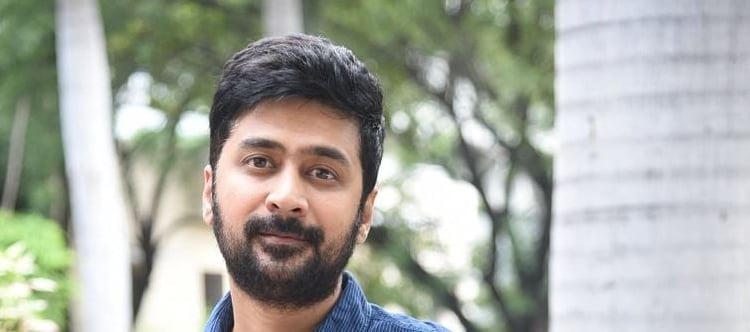


Director Rahul Ravindran deleted his X account after receiving death threats targeting his children, as reported by India Today. The incident exposes a deepening crisis in Telugu cinema where organised fan armies have graduated from online trolling to real-world intimidation of filmmakers and their families — and the industry's silence suggests complicity.
The 5W+H: Who, What, When, Where, Why, How
- Who: Director Rahul Ravindran, known for films like Chi La Sow, and his family, including his children who were targeted with death threats by online fan groups.
- What: Ravindran deleted his X (formerly Twitter) account after sustained death threats were directed at his children by hyper-partisan fan armies in Tollywood.
- When: The deletion and the surrounding threat campaign were reported in 2025-2026, as covered by India Today.
- Where: The threats originated on X and other social media platforms, targeting the Hyderabad-based filmmaker and reflecting a wider pattern across the Telugu film industry.
- Why: Fan armies, organised around rival stars, routinely weaponise social media to attack anyone perceived as critical of their idol — escalating from hashtag abuse to threats against family members, including children.
- How: Ravindran reportedly received repeated threats targeting his minor children on X; finding no institutional recourse or industry solidarity, he chose to delete his account entirely — effectively silencing himself to protect his family.
A man makes films for a living. He posts a thought on the internet. Within hours, strangers are describing how they would harm his children. His employer says nothing. His colleagues look away. His only option, in the end, is to disappear. This is not a storyline from a gritty Telugu thriller. This is the reality Rahul Ravindran walked into — and then walked away from — when he deleted his X account after death threats were aimed squarely at his kids, as India Today reported.
Let that settle for a moment: a working director in one of India's largest film industries felt that the safest thing he could do for his family was not to file a case, not to rally his peers, but to simply stop existing on a platform. The silence that followed from Tollywood's power corridors was louder than any of the threats.
The Machinery Behind the Menace
Tollywood's fan armies did not become toxic overnight. They were built, brick by brick, over more than a decade — first as marketing assets, then as political muscle, and now as something far darker. Every major Telugu star has a digitally organised 'army' — hierarchical, with designated handles, content teams, and trend managers. These outfits were initially encouraged by studios and stars because they drove first-day collections, trended hashtags into the stratosphere, and created the illusion of consensus around a film's success. The trouble is, a machinery built to amplify love is trivially easy to repurpose for hate.
What begins as 'our star is the best' inevitably becomes 'anyone who disagrees deserves punishment.' Directors who cast the wrong hero, critics who give the wrong rating, journalists who ask the wrong question — all become targets. But the escalation Ravindran's case represents is qualitatively different: these threats did not target his work, his reputation, or even his livelihood. They targeted his children. That is not fandom. That is organised intimidation with the structure and intent of a protection racket.
[EMBED-SUGGESTION:tweet]
Inside Talk
The whisper in Film Nagar — and it has been circulating for months, long before the Ravindran episode broke into headlines — is that several directors and writers have quietly scrubbed their social media or switched to private accounts after receiving similar threats. The talk in production circles is that at least two upcoming projects saw script rewrites specifically because the original storylines were perceived as 'anti' a particular star's camp, and the writing teams feared reprisals. Industry insiders speaking off the record describe a climate where 'you cannot tweet about your own film's casting without someone's fan army deciding you insulted their god.'
The more uncomfortable chatter, the kind that rarely makes it into print, is about who benefits. Trade analysts privately speculate that rival camps sometimes amplify toxic fan behaviour because it serves a competitive purpose: if a director is intimidated into silence, or a critic is bullied off a platform, the information ecosystem around a competing film is weakened. Whether stars directly orchestrate this or merely look away is the question no one in the industry will answer on the record — but the pattern, as India Today's reporting and the broader digital trail make plain, is unmistakable.
(This section reflects industry chatter and unverified speculation widely circulating in Telugu film circles, not confirmed fact.)
The Silence of the Stars
Here is the detail that should haunt every stakeholder in Telugu cinema: as of this writing, not a single A-list Tollywood star has publicly condemned the threats against Ravindran's children. Not one. Consider the irony — these are the same stars who command armies of millions, who can trend a hashtag in six minutes flat, who can fill a stadium with a single Instagram story. They have the reach and the influence to end this overnight. A single unambiguous statement — 'Threatening a filmmaker's child is not fandom; it is criminal, and anyone who does it in my name is not my fan' — would shift the culture more than any police complaint.
Their silence, India Herald's read of this situation suggests, is not accidental. It is strategic. Fan armies are assets. They trend films, they buy tickets in bulk for opening weekends, they flood IMDb with ten-star ratings, they swamp rival releases with one-star reviews. The ecosystem is rigged to reward the star who has the most aggressive digital militia. Condemning that militia risks demobilising it — and no star in a Rs 200-crore game wants to unilaterally disarm.
[EMBED-SUGGESTION:tweet]
A Pattern, Not an Anomaly
Ravindran is not the first. Over the past three to four years, multiple Telugu film professionals — directors, music composers, film critics, entertainment journalists — have reported sustained online abuse from fan armies, according to reports across Indian media. Several have spoken about receiving threats serious enough to involve law enforcement. The pattern is consistent: express an opinion that is perceived as critical of a reigning star or favourable to a rival, and within hours you face coordinated pile-ons, doxxing attempts, and threats that escalate from career damage to physical harm.
What makes the Ravindran case a tipping point is the target: children. When the cost of making a film or voicing an opinion extends to the safety of a filmmaker's minor children, the industry has crossed a line from which there is no quiet retreat. This is no longer about hurt fan sentiments. It is about whether Tollywood can function as a creative industry at all, or whether it has become a space where artistic freedom is conditional on the approval of anonymous digital mobs.
What Comes Next — And What Should
The likely trajectory, unless something structural changes, is grimly predictable. More filmmakers will self-censor. More critics will go silent. The information asymmetry will widen: audiences will see only the curated, studio-approved narrative around a film, never the honest critical discourse that is essential to any healthy creative industry. The fan armies will interpret the silence as victory and push further.
What would break the cycle? India Herald's assessment is that it requires two things that are currently absent. First, at least one major star needs to publicly and unambiguously disown toxic fan behaviour — not with a vague 'I love all my fans, spread positivity' post, but with a specific condemnation that names the behaviour and its consequences. Second, the Telugu Film Chamber of Commerce and the producers' guild need to establish a formal mechanism — a rapid-response protocol — for protecting industry professionals who face threats. Without institutional backing, the individual filmmaker is always outgunned.
Until then, the industry's message to its own people is clear, even if unspoken: you are on your own. And if the price of safety is silence, so be it.
Rahul Ravindran deleted his account to protect his children. The question Tollywood's biggest names now face is not complicated: will you use your platform to protect the people who make your films — or will you keep counting the benefits of the mobs that do it in your name?





By the Numbers
- Zero A-list Tollywood stars have publicly condemned the death threats against Rahul Ravindran's children as of this writing.
- Rahul Ravindran chose to delete his entire X account — effectively removing himself from the platform — as his sole recourse against sustained threats targeting his minor children.
Key Takeaways
- Director Rahul Ravindran deleted his X account after death threats targeted his children, per India Today — choosing self-erasure as the only available protection.
- Not a single A-list Tollywood star has publicly condemned the threats, reflecting a strategic silence: fan armies are marketing and box-office assets no star wants to disarm.
- Industry insiders report that multiple filmmakers and critics have quietly scrubbed social media or altered scripts under pressure from organised fan groups — suggesting Ravindran's case is a pattern, not an anomaly.
- The escalation from online trolling to threats against minors marks a qualitative shift: Tollywood's fan-army ecosystem now functions less like fandom and more like a protection racket.
- India Herald's assessment: without a public star-level condemnation and an institutional rapid-response mechanism from the Telugu Film Chamber, the cycle of intimidation will deepen and creative freedom will erode further.
Frequently Asked Questions
Why did Rahul Ravindran delete his X account?
According to India Today, director Rahul Ravindran deleted his X (formerly Twitter) account after receiving death threats that were directed at his children by hyper-partisan Tollywood fan armies. He reportedly found no institutional support or peer solidarity, making self-removal from the platform his only practical option to protect his family.
Have any Tollywood stars condemned the threats against Rahul Ravindran's children?
As of this writing, no A-list Telugu star has publicly condemned the death threats. Industry observers note that fan armies serve as valuable marketing and box-office assets, and stars appear reluctant to risk demobilising them through public condemnation.
What is driving the rise of toxic fan armies in Telugu cinema?
Over the past decade, stars and studios actively built and encouraged organised digital fan groups to drive box-office openings, trend hashtags, and create online buzz. These structures, originally marketing tools, have escalated into mechanisms for coordinated harassment, doxxing, and threats against anyone perceived as critical of a particular star.
Is Rahul Ravindran the only filmmaker targeted by Tollywood fan armies?
No. Reports across Indian media indicate that multiple Telugu directors, critics, music composers, and journalists have faced sustained online abuse and threats from organised fan groups in recent years. Several have quietly scrubbed their social media or altered creative decisions under pressure.
 click and follow Indiaherald WhatsApp channel