
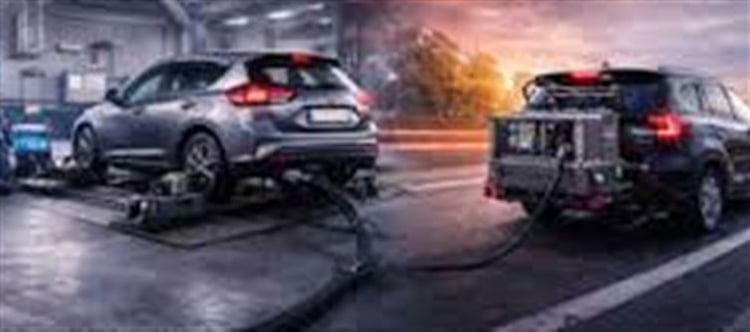


The Ministry of Road Transport and Highways (MoRTH) has notified a major update to how vehicle emissions are measured in India. Starting April 2027, passenger cars and similar vehicles will be tested using the Worldwide Harmonized Light‑Duty vehicles Test Procedure (WLTP) under the Bharat Stage VI (BS‑VI) emission regime.
1. What Is WLTP? A Smarter Emission Test
WLTP stands for Worldwide Harmonized Light‑Duty vehicles Test Procedure — a globally developed test cycle that more accurately reflects real‑world driving conditions while measuring emissions and fuel consumption.
- Unlike older methods, WLTP isn’t limited to controlled lab cycles.
- It simulates varied speeds, temperatures, and driving behavior closer to actual road use.
- This means vehicle emissions and fuel economy figures will be more realistic compared to outdated tests.
2. Why WLTP Matters: Real‑World Accuracy
The current test in india (MIDC) has been criticized for producing optimistic emission values that don’t match what vehicles emit on the road. WLTP aims to fix this gap.
- It helps provide transparent and reliable data for consumers.
- Makes automakers accountable for how vehicles perform outside of laboratory settings.
- Aligns india with international standards used in europe and other major markets.
3. When Will the New Norms Apply? Key Dates
The WLTP‑based BS‑VI emission testing will apply to:
📅 From April 1, 2027:
- All new models of passenger cars, SUVs, MPVs, and other vehicles (categories M1 & M2) must be tested using WLTP.
- Existing models will also need to comply if produced on or after this date.
This gives manufacturers time to adapt design and testing processes before full implementation.
4. Who Is Affected? Passenger vehicles and More
The new WLTP norms will apply to vehicles including:
🚗 Passenger cars
🚙 SUVs and crossovers
🚐 MPVs
🚌 Commercial passenger vans
All such vehicles under the BS‑VI regime will have to undergo WLTP emission certification tests before being sold or registered.
5. Cleaner Air, Better Data: Environmental Benefits
Using WLTP‑aligned emission limits isn’t just about compliance — it’s about real environmental impact:
🌿 More accurate emission numbers mean policymakers and citizens get a clearer picture of pollution output.
🌎 Helps india meet its climate and clean‑air commitments.
🚘 Encourages automakers to innovate with cleaner engines and hybrid/electric technologies.
6. industry Response and Challenges
Automakers have mixed reactions:
⚙️ Supporters say WLTP ensures fairness and better consumer information internationally.
🔧 Critics note transitioning requires additional testing infrastructure and calibration — especially for heavy diesel‑powered fleets.
This shift is part of a wider evolution in emission testing that many advanced markets have already adopted.
7. What It Means for Consumers
For car buyers and owners:
✔ Expect more realistic fuel economy and emission figures.
✔ Better visibility into how clean your vehicle really runs on actual roads.
✔ Manufacturers may price vehicles slightly differently based on WLTP certification costs.
📊 Over time, this could create market pressure for cleaner, more fuel‑efficient cars in India.
🚘 Final Takeaway
MoRTH’s move to introduce WLTP emission norms under BS‑VI represents a major modernization of India’s vehicle emission testing system — making measurements more accurate, cleaner, and aligned with global standards. With implementation from April 2027, both automakers and car buyers will see benefits in transparency and environmental performance.
Disclaimer:
The views and opinions expressed in this article are those of the author and do not necessarily reflect the official policy or position of any agency, organization, employer, or company. All information provided is for general informational purposes only. While every effort has been made to ensure accuracy, we make no representations or warranties of any kind, express or implied, about the completeness, reliability, or suitability of the information contained herein. Readers are advised to verify facts and seek professional advice where necessary. Any reliance placed on such information is strictly at the reader’s own risk.
 click and follow Indiaherald WhatsApp channel