
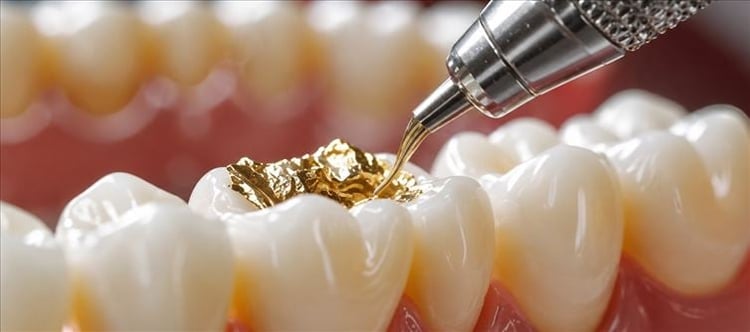


For decades, damaged tooth enamel came with one brutal reality: once it’s gone, it’s gone forever. Dentists could drill, patch, and fill the damage, but actually regrow enamel? That sounded like science fiction. Now, researchers at the university of Nottingham may have just shattered that belief with a breakthrough that could completely transform modern dentistry.
Scientists led by professor Alvaro Mata have developed a bioinspired gel capable of helping teeth rebuild enamel naturally — and early results are turning heads across the medical world. In laboratory testing on extracted human teeth, the gel reportedly began forming a new protective enamel-like layer within just two weeks. That’s the kind of timeline that has researchers, dentists, and biotech companies paying very close attention.
Here’s what makes the discovery so powerful: the gel doesn’t simply “coat” the tooth or temporarily protect it. Instead, it mimics the natural biological process the body uses to grow enamel in the first place. The material works with minerals already found in saliva, guiding them into organized crystal structures that resemble real enamel formation.
And unlike traditional fillings, which essentially act as artificial repairs, this approach aims to regenerate the tooth itself. If successful in large-scale human trials, it could radically reduce the need for drilling, fillings, and repeated dental procedures that millions dread every year.
But there’s one important reality check: this isn’t available at your dentist yet. The technology is still in the research phase, and clinical trials are expected to begin soon. Researchers hope the first commercial products could arrive sometime around 2026 or 2027 if everything goes according to plan.
Still, the implications are massive. Tooth decay remains one of the most common health problems on Earth. And if this gel delivers on its promise, the future of dentistry may look a whole lot less painful — and a lot more revolutionary.
 click and follow Indiaherald WhatsApp channel