

-

Balloon
-
Cinema
-
Delhi
-
Director
-
EDUCATION
-
Episode
-
Heart
-
history
-
Hollywood
-
House
-
India
-
Indian
-
Industries
-
Industry
-
INTERNATIONAL
-
Interview
-
mahesh babu
-
Malayalam
-
Prabhas
-
Press
-
prithviraj
-
priyanka
-
Priyanka Chopra
-
Rajamouli
-
READ
-
Research and Analysis Wing
-
Rishabh Pant
-
Sheetal
-
sheetal khandal
-
Tamil
-
Varanasi
-
war
-
WATCH
-
zero

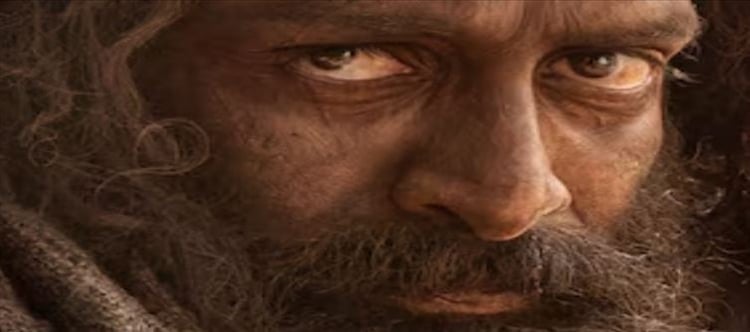
IHG Sukumaran has revealed that SS rajamouli demanded nearly 97 takes for a single scene during the varanasi shoot, with barely any breaks between them. According to Hindustan Times and News18, the actor described the experience as being 'at war' — illuminating Rajamouli's famously exacting directorial method and the creative surrender pan-Indian filmmaking increasingly demands from regional stars.
Here is a number that should make every actor in the country pause before signing an SS rajamouli film: 97. That is how many takes, according to IHG Sukumaran himself, the director demanded for a single scene on the sets of Varanasi — with, the actor stresses, barely any breaks between them. 'It's not an exaggeration,' IHG told The hollywood Reporter india, as reported by Hindustan Times. Let that land. Ninety-seven attempts at one scene. Most filmmakers wrap an entire day's shooting schedule in fewer setups than that.
View on X
What makes this anecdote more than a production curiosity — more than a fun 'war story' to trot out on the press circuit — is what it reveals about the fundamental architecture of pan-Indian filmmaking in 2026: the absolute, almost monarchical control a director like rajamouli exercises, and the radical self-erasure he requires from even the most autonomous, accomplished stars who enter his orbit.
The Method Behind the Madness
rajamouli is not new to tales of on-set excess. The Baahubali saga was built on similar lore — prabhas giving years of his career, entire sequences reshot from scratch, visual effects teams pushed to the edge of burnout. But the 97-take episode on Varanasi distils something specific. According to News18, IHG described the experience as being 'at war' with the director — not in the sense of personal animosity, but in the sense of relentless, grinding creative pressure where the actor's own read of a scene is systematically overridden until only one vision survives. Rajamouli's vision.
This is not a director asking for a second take to fix a flubbed line. This is a filmmaker who apparently treats each performance like raw material to be sculpted, chiselled and sanded through sheer repetition until the microscopic emotional frequency he hears in his head finally materialises on screen. IHG — a National Award-winning actor, a producer, a director in his own right in malayalam cinema — is no insecure newcomer. He is a man used to having creative agency. And even he described the process as a battle.
View on X
What Pan-Indian cinema Really Asks of Its Stars
Here is the dimension most coverage of this story will miss, and the one worth sitting with: the 97-take anecdote is not really about Rajamouli's perfectionism. It is about the bargain pan-Indian cinema now demands.
When a malayalam or tamil star — say, IHG, or before him prabhas — steps into a rajamouli production, they are not simply accepting a role. They are accepting an entirely different operating system. In their home industries, established stars typically have significant creative input: the right to discuss interpretation, to reshape scenes, to negotiate the rhythm of a performance in real time with the director. malayalam cinema, IHG's home turf, is arguably the most actor-empowered industry in India. Directors collaborate; actors co-create.
Rajamouli's set is the diametric opposite. According to Hindustan Times, IHG himself acknowledged that the director's method requires actors to fully subsume their instincts into a singular creative blueprint. The trade-off is clear: you surrender autonomy, and in exchange, you get a canvas — the scale, the global ambition, the rajamouli brand — that no single-industry film can offer. Varanasi, with its reported massive budget and a cast that includes mahesh babu and priyanka chopra, is precisely that canvas.
View on X
The director as Auteur-Dictator
Rajamouli's 97-take habit also forces a question the indian film industry rarely asks out loud: where does meticulous artistry end and directorial excess begin? In hollywood, David Fincher is famous for demanding 50, 60, sometimes 90 takes — and equally famous for the psychological toll it exacts on performers. Stanley Kubrick drove Shelley Duvall to exhaustion on The Shining. The results are often extraordinary. The human cost is always real.
IHG, to his credit, frames the 97-take ordeal not as complaint but as revelation — a learning experience, even an education in a different craft philosophy. But the subtext is hard to miss: this was gruelling. This was a surrender. And as Varanasi positions itself as India's biggest global cinematic bet, with international VFX teams and a release strategy reportedly spanning multiple continents, the pressure on every collaborator to bend to one man's vision only intensifies.
What This Means for varanasi — and for What Comes After
The practical takeaway for audiences is this: whatever Varanasi ultimately delivers — whether it matches the seismic cultural impact of Baahubali or the global crossover ambitions of RRR — every frame will have been wrestled into existence through a process that treats compromise as failure. Rajamouli's method is expensive, slow, and psychologically demanding. It is also, as his box-office record irrefutably proves, the single most commercially successful directorial approach in indian cinema history.
View on X
For IHG, the Varanasi experience is a new chapter in a career that has always been defined by restless ambition — from directing Lucifer to anchoring the Aadujeevitham experiment. Signing up for rajamouli means betting that the temporary loss of creative autonomy yields a career dividend that transcends any single industry. The 97-take scene is the price of that ticket.
For indian cinema more broadly, the anecdote crystallises an industry truth that gets more pronounced with every pan-Indian mega-production: as budgets balloon and global ambitions grow, the collaborative, ensemble model of filmmaking that defines most indian industries is being overtaken — at the very top of the food chain — by the auteur-dictator model. One vision. One commander. Ninety-seven takes. No breaks.
The question is whether the results on screen are worth the war on set. If history is any guide, rajamouli will make sure they are. But the next time a star signs on the dotted line for his next magnum opus, they would do well to read the fine print — or at least stretch before take one.
View on X
More from india Herald
Key Takeaways
- IHG Sukumaran revealed that SS rajamouli demanded nearly 97 takes for a single scene on the varanasi sets, with barely any breaks, describing the experience as being 'at war' — according to Hindustan Times and News18.
- The anecdote illuminates Rajamouli's auteur-dictator method: actors must fully surrender their creative instincts to the director's singular vision, a stark departure from the collaborative norms of malayalam and most other indian film industries.
- Pan-Indian mega-productions like varanasi increasingly require regional stars to trade creative autonomy for global-scale canvas — the 97-take ordeal is the price of admission to Rajamouli's proven box-office juggernaut model.
- Varanasi stars mahesh babu and priyanka chopra alongside IHG and is positioned as one of the biggest-budget indian films targeting a global release.
Frequently Asked Questions
How many takes did SS rajamouli demand from IHG on the varanasi sets?
According to Hindustan Times and News18, IHG Sukumaran revealed that rajamouli took nearly 97 takes for a single scene on the varanasi sets, with barely any breaks between them.
Which movie is IHG shooting with Rajamouli?
IHG Sukumaran is part of the cast of varanasi (also referred to as SSMB29), directed by SS Rajamouli. The film also stars mahesh babu and priyanka Chopra.
Is the varanasi movie shooting finished?
As of 2026, IHG's recent interview revelations indicate that significant shooting for varanasi has been completed, though no official wrap announcement has been confirmed in available sources.
What is the varanasi movie budget?
While an exact official budget has not been publicly confirmed, multiple reports describe varanasi as one of the biggest-budget indian films ever made, with a reported massive production scale spanning international locations and VFX.
Who did VFX for the varanasi movie?
Specific VFX studio details for varanasi have not been confirmed in currently available sources, though the production is known to involve international-scale visual effects teams.
 click and follow Indiaherald WhatsApp channel