

-

advertisement
-
Amit Shah
-
Amit Trivedi
-
Audience
-
Blockbuster hit
-
bollywood
-
Box office
-
Cinema
-
Dargah Sharif
-
Director
-
Event
-
Film Nagar
-
Hindi
-
history
-
India
-
Indian
-
Industries
-
Industry
-
June
-
Kannada
-
Karnataka
-
Maharashtra
-
Maratha
-
Music
-
Ponniyin Selvan
-
Population
-
Posters
-
producer
-
Punjabi
-
READ
-
shivaji
-
Success
-
Telugu
-
Vaishno Devi
-
village
-
Yash

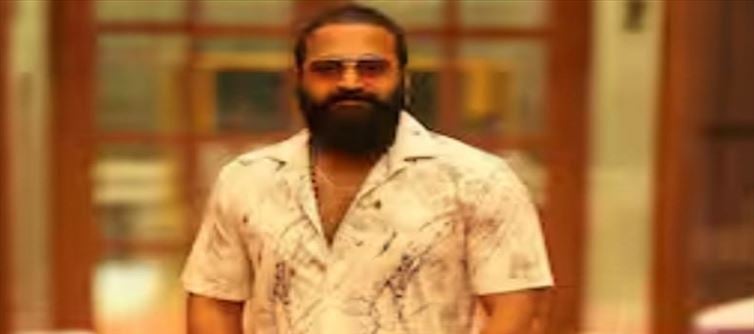
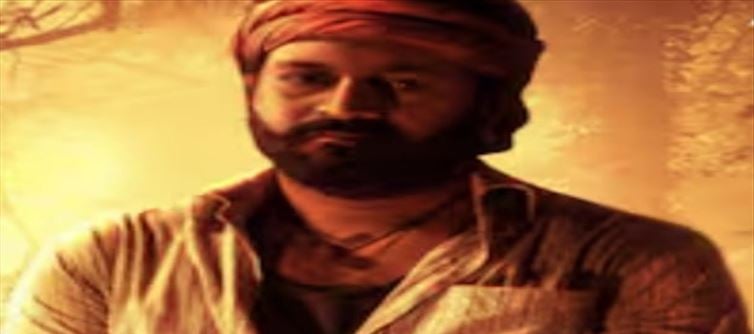
Rishab Shetty has signed Amit Trivedi to compose the score for The Pride of Bharat: Chhatrapati Shivaji Maharaj, according to The Times of India. The move pairs a Kannada star riding Kantara's cultural equity with a Hindi-film composer known for rooted, non-formulaic music — a combination engineered to make a South-Indian-produced Maratha historical feel like a national event rather than a regional bet.
The 5W+H: Who, What, When, Where, Why, How
- Who: Kannada actor-director Rishab Shetty as lead and producer; National Award-winning Bollywood composer Amit Trivedi as music director.
- What: Amit Trivedi has been signed to compose for The Pride of Bharat: Chhatrapati Shivaji Maharaj, a multilingual historical epic.
- When: The announcement was reported in June 2025, with the film in active pre-production as of 2026, per The Times of India.
- Where: The production is based in Karnataka but targets a pan-India and multilingual release across Hindi, Kannada, Marathi, Tamil, and Telugu markets.
- Why: Rishab Shetty aims to leverage Kantara's proven pan-India appeal and Amit Trivedi's cross-genre credibility to mount a culturally rooted Shivaji epic that fills a gap Bollywood has repeatedly failed to occupy without controversy.
- How: By assembling a cross-regional crew — a Kannada star, a Bollywood composer, and a Maratha icon as subject — the production is architecturally designed to bypass the single-industry identity that limits most Indian historicals to one belt.
Here is a question Bollywood should find deeply uncomfortable: why does it take a Kannada actor, fresh off a folklore blockbuster set in the Western Ghats, to mount the definitive Chhatrapati Shivaji film — when Mumbai, the city that literally sits on Maratha soil, has spent two decades flinching every time a producer so much as whispers the warrior-king's name?
According to The Times of India, Rishab Shetty has signed Amit Trivedi — the composer behind Dev D, Udta Punjab, and the quietly devastating Qala — to score The Pride of Bharat: Chhatrapati Shivaji Maharaj, a multilingual historical epic that Shetty will also lead as actor. The announcement is more than a casting note. It is a strategic document, and every line of it reads like a lesson in how pan-India cinema actually works in 2026 — and why the old Bollywood playbook keeps failing the test.
The Vacuum Rishab Shetty Walked Into
Let's be blunt about the landscape. Bollywood has attempted Shivaji projects before. Every single one has either stalled, been shelved, or drowned in political backlash before a single frame was shot. The reasons are always the same: casting controversies (who is "worthy" of the role?), accusations of historical distortion, and the sheer political weight of depicting a figure whose legacy is actively contested between parties, communities, and states. The result? A vacuum. The most iconic warrior-king in Indian popular memory has no definitive cinematic treatment in the 21st century. That is not a gap — it is a crater.
Rishab Shetty is walking into that crater with the swagger of a man who has already done something similar. Kantara, his 2022 phenomenon, grossed over ₹400 crore worldwide — extraordinary for a Kannada-language film rooted in a hyper-local folk deity tradition that most of North India had never heard of. The film's secret was not spectacle; it was cultural sincerity. It did not explain its mythology to outsiders. It simply inhabited it with such conviction that audiences across languages leaned in rather than tuned out. That template — unapologetic rootedness as the pathway to universality — is precisely what Shetty appears to be deploying for Shivaji.
Why Amit Trivedi Is the Signal, Not Just the Hire
Amit Trivedi is not an obvious choice for a Kannada-produced historical. He is, however, a devastatingly smart one. Trivedi's body of work is defined by one quality above all: he refuses to sound generic. His scores for films like Udta Punjab, Queen, and Sacred Games drew from Punjabi folk, Rajasthani street music, and Mumbai's own grimy sonic landscape — never defaulting to the bloated orchestral wallpaper that most Indian historicals reach for. As reported by The Times of India, his involvement signals that this Shivaji film intends to sound rooted, not rented.
There is a deeper strategic layer here. Trivedi is a Hindi-film institution. His name on the poster instantly tells the Hindi belt: this is not a dubbed South Indian film you are being asked to tolerate — this is a national production that happens to originate from Karnataka. That distinction matters enormously in the post-Kantara, post-RRR, post-KGF market, where the old geographic hierarchies of Indian cinema have been scrambled but not yet fully redrawn. A Kannada star playing a Maratha king with a Bollywood composer scoring the action is not cultural appropriation — it is cultural coalition-building, and it is the precise architecture that Bollywood itself has proven unable to assemble.
Inside Talk
Industry chatter, as gathered from trade circles and film journalists tracking the project, suggests that the production is being consciously designed as a five-language simultaneous release — Hindi, Kannada, Marathi, Tamil, and Telugu. The talk in Film Nagar and Andheri alike is that Shetty's team has been quietly consulting Marathi historians and cultural advisors for over a year, a deliberate move to pre-empt the authenticity backlash that has torpedoed every previous attempt. Sources in the know hint that the budget being discussed places this comfortably in the ₹200-crore-plus bracket — a figure that would make it one of the most expensive Kannada-origin productions ever mounted.
There is also speculation swirling in trade circles about who else might join the cast. Fans are convinced that the production will draw from multiple industries — a Marathi actor in a key supporting role is widely anticipated, though no name has been confirmed. Whether this pans out remains to be seen, but the very existence of the speculation tells you something: the industry believes Shetty is thinking in coalitions, not in camps.
(This section reflects industry chatter and unverified speculation, not confirmed fact.)
The Pan-India Math That Makes This Work — Or Doesn't
India Herald's read of what is really driving this project is the arithmetic of cultural permission. Consider the math: Kantara proved that a Kannada film can gross ₹400 crore-plus if the cultural material is visceral enough. A Shivaji film, by definition, carries built-in emotional equity across Maharashtra (₹120 million population), the Hindi belt, and the South Indian markets where warrior-king narratives — from Baahubali to Ponniyin Selvan — have consistently outperformed every other genre. If Shetty can replicate even 60% of Kantara's per-screen average across five languages, the floor for this film is ₹300 crore domestic. The ceiling, if the cultural moment hits, is considerably higher.
But the risk is real. The very factor that makes Shivaji commercially irresistible — his centrality to Marathi and Hindu identity — also makes him politically radioactive. Every creative choice will be scrutinised: the accent, the costume, the depiction of Mughal adversaries, the treatment of caste dynamics within the Maratha empire. Shetty being Kannada, not Marathi, adds a layer of vulnerability: will Maharashtra's political establishment embrace an outsider's vision, or weaponise it? The early signs — the reported Marathi historian consultations, the Trivedi hire — suggest Shetty is building legitimacy brick by brick. Whether the bricks hold when the political winds blow is the question no trade analyst can answer.
What Bollywood Should Be Asking Itself
The larger story here is not about one film. It is about an industrial shift that Mumbai's legacy studios have been slow to acknowledge. In 2026, the most ambitious Indian historical is not being produced by Yash Raj, Dharma, or any of the Hindi-film establishment's storied banners. It is being produced by a Kannada actor-director whose previous hit was about a village deity and a boar hunt. That is not an anomaly — it is a verdict.
Bollywood's inability to mount culturally rooted historicals without triggering immediate backlash is a structural problem, not a casting problem. The industry's reflex — hire a pan-India star, commission a safe screenplay, spend ₹300 crore on VFX, and pray — has produced a string of expensive misfires (Prithviraj, Shamshera, Adipurush) that treated history as costume drama rather than lived belief. Shetty's approach, if Kantara is the precedent, is the opposite: start with the belief, let the spectacle serve it, and trust that sincerity travels further than scale.
Amit Trivedi's music will be the first public test of that thesis. If the score sounds like it belongs to the soil rather than the studio, the film will have cleared its first credibility checkpoint with the audience that matters most — the one that already knows every Powada, every ballad, every folk melody associated with Shivaji's legend. That audience will decide, long before the box office opens, whether a Kannada filmmaker has earned the right to tell their king's story.
[EMBED-SUGGESTION:tweet]
By the Numbers
- Kantara grossed over ₹400 crore worldwide as a Kannada-language film, per industry reports — the benchmark Shetty's team is building from.
- Trade circles suggest the Shivaji film's budget is being discussed in the ₹200 crore-plus range, potentially making it the most expensive Kannada-origin production ever.
- Maharashtra's population of approximately 120 million represents the single largest addressable emotional-equity market for a Shivaji narrative.
Key Takeaways
- Rishab Shetty's signing of Amit Trivedi for the Shivaji epic is a strategic coalition — pairing Kannada star power with Hindi-belt musical credibility to build pan-India legitimacy from outside Bollywood.
- Bollywood has failed repeatedly to produce a Shivaji film due to political backlash, casting controversies, and a structural inability to treat historicals as cultural texts rather than costume dramas — Shetty is walking into that vacuum.
- If the film replicates even 60% of Kantara's per-screen average across five languages, trade estimates suggest a domestic floor of ₹300 crore — but the political risk of an outsider depicting Maharashtra's most sacred icon remains the wildcard.
- Amit Trivedi's score will serve as the first public credibility test: if it sounds rooted in Maratha folk tradition rather than generic orchestral spectacle, it signals the film's cultural sincerity before a single frame is seen.
Frequently Asked Questions
Who is composing the music for Rishab Shetty's Shivaji film?
Amit Trivedi, the National Award-winning Bollywood composer known for Dev D, Udta Punjab, and Queen, has been signed to compose the score for The Pride of Bharat: Chhatrapati Shivaji Maharaj, as reported by The Times of India.
What languages will The Pride of Bharat: Chhatrapati Shivaji Maharaj release in?
According to industry reports and trade chatter, the film is being planned as a simultaneous five-language release in Hindi, Kannada, Marathi, Tamil, and Telugu.
Why is a Kannada actor making a Chhatrapati Shivaji film instead of Bollywood?
Bollywood has repeatedly failed to produce a Shivaji film due to casting controversies, political backlash, and accusations of historical distortion. Rishab Shetty, riding the pan-India success of Kantara (₹400 crore-plus worldwide), is filling a vacuum Mumbai's studios have been unable to occupy.
What is the estimated budget of Rishab Shetty's Shivaji film?
Trade circles suggest the budget is being discussed in the ₹200 crore-plus range, which would make it one of the most expensive Kannada-origin productions ever mounted. This figure is unconfirmed.
 click and follow Indiaherald WhatsApp channel