
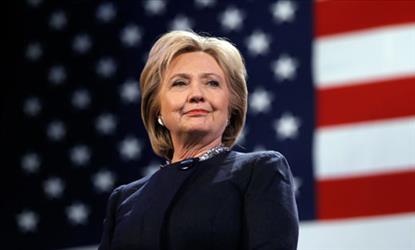


The US Supreme Court has upheld birthright citizenship under the 14th Amendment, striking down President Trump's executive order that sought to deny automatic citizenship to babies born on American soil to non-citizen parents. For Indian parents on H-1B, L-1, or student visas, their US-born children remain legally American citizens.
The 5W+H: Who, What, When, Where, Why, How
- Who: The US Supreme Court, ruling against an executive order by President Donald Trump, directly affecting hundreds of thousands of Indian-origin families living and working in the United States.
- What: The Court struck down Trump's executive order that attempted to end birthright citizenship — the constitutional guarantee under the 14th Amendment that any child born on US soil is an American citizen, regardless of parents' immigration status.
- When: The ruling was delivered in 2025, following legal challenges mounted shortly after Trump signed the executive order upon taking office.
- Where: The United States Supreme Court in Washington, D.C., with the ruling's impact felt across every state where Indian diaspora families reside — concentrated in California, Texas, New Jersey, and the greater New York area.
- Why: Trump's order argued that children born to non-citizen parents should not automatically receive citizenship, seeking to reinterpret the 14th Amendment's 'subject to the jurisdiction thereof' clause — a reading the Court rejected as unconstitutional.
- How: Multiple states and civil rights organisations filed legal challenges; lower courts issued injunctions blocking the order; the case escalated to the Supreme Court, which affirmed that the 14th Amendment's text and over 125 years of precedent leave no room for executive reinterpretation.
[The following is a composite scenario, not a specific case.] Picture this: a young couple from Hyderabad, both on H-1B visas, working twelve-hour days at a tech firm in the Bay Area, anxiously awaiting their first child. For months, a single question hung over their hospital plans like a monsoon cloud that would not break — would their baby be American?
The US Supreme Court has now answered, decisively and without ambiguity: yes. Every child born on American soil is an American citizen. The 14th Amendment stands exactly as it has since 1868. President Trump's executive order attempting to dismantle birthright citizenship has been struck down, and for Indian nationals living in the United States — estimated at roughly 1.5 million by the Migration Policy Institute (MPI), many of them young professionals on temporary work visas — the relief is real and immediate.
But relief is not the same as safety. And that distinction is where this story truly begins.
What the Court Actually Said — and Why It Matters for Indian Families
The 14th Amendment's Citizenship Clause is among the most straightforward sentences in constitutional law: "All persons born or naturalized in the United States, and subject to the jurisdiction thereof, are citizens of the United States." Trump's executive order attempted to narrow the phrase "subject to the jurisdiction thereof" to exclude children whose parents were not citizens or lawful permanent residents.
The Trump administration defended the order by arguing that the original intent of the 14th Amendment — ratified in the aftermath of the Civil War — was never meant to apply to children of temporary visitors or unauthorised immigrants, and that the executive branch had legitimate authority to clarify the clause's scope. Administration officials, as reported by News18 and other outlets, characterised the order as a necessary correction to what they described as a misapplication of constitutional text.
The Supreme Court rejected this reading comprehensively — ruling, as reported by News18 and multiple legal outlets, that the executive branch cannot unilaterally redefine a constitutional amendment that has been consistently interpreted for over 125 years, citing the landmark 1898 precedent United States v. Wong Kim Ark.
For Indian parents, the practical impact is enormous. Estimates vary, but immigration analysts note that a significant number of Indian-origin babies are born in the US each year to parents on H-1B, L-1, H-4, and F-1 visas — exact figures are not centrally tracked, though the scale is suggested by the roughly 300,000 new H-1B petitions filed annually, according to USCIS data, a disproportionate share of which go to Indian nationals. Under the challenged order, immigration attorneys such as Cyrus Mehta, a prominent New York-based immigration lawyer, warned that such children could have faced what he characterised as a form of "legal limbo" — born on American soil but potentially denied documentation proving citizenship, while holding no automatic citizenship claim in India either. That scenario is now off the table.
View on X
Multiple media outlets, including Reuters and the Financial Times, have reported that India-US trade negotiations are in advanced stages, with immigration-related provisions reportedly on the table. The broader bilateral relationship is entering a delicate phase where immigration policy and trade leverage appear increasingly intertwined. The birthright ruling removes one flashpoint — but it does not remove the tension.
The 14th Amendment Is Safe. Indian Immigrants Face Other Pressures.
Here is the part that most coverage will not tell you, and the reason India Herald has been tracking this beat closely: the birthright citizenship order was always the loudest front in a multi-front campaign. The administration's broader immigration architecture — the one that directly affects legal Indian immigrants — remains not only intact but actively expanding.
Consider the landscape Indian families still navigate in 2025-2026:
H-1B fee escalation: The Department of Homeland Security proposed a significant fee increase for H-1B registrations in 2025. The exact structure and dollar amounts have been subject to litigation — a federal court in the Northern District of California blocked portions of the fee schedule, though USCIS has already implemented increases to base processing fees under separate regulatory authority. The direction of travel — making skilled immigration more expensive — is unmistakable, even as the precise figures remain in legal flux.
Processing slowdowns: Average H-1B processing times have stretched, according to USCIS's own published case-processing time data and reports tracked by the American Immigration Lawyers Association (AILA). What once took weeks now takes months, and premium processing — the paid fast-track — has been subject to intermittent pauses. For Indian families whose visa status determines whether they can remain in the country, every extra week of uncertainty is a week of quiet dread.
Denaturalisation scrutiny: The administration has signalled heightened scrutiny of previously granted citizenships. The Department of Justice referenced expanded denaturalisation efforts in public statements and budget requests, though the scope and staffing of any dedicated unit remain unclear. Immigration lawyers, including those at AILA, caution that even the rhetorical emphasis on denaturalisation reviews creates a climate where naturalised Indian Americans may feel their status is conditional — though they stress that legitimately obtained citizenship cannot be revoked without evidence of fraud proven in federal court.
Green card backlogs: The per-country cap that forces Indian applicants to wait decades for a green card remains stubbornly unchanged. According to the Cato Institute's analysis of State Department visa bulletin data, an Indian-born applicant in the EB-2 category who entered the queue in 2012 may still be waiting well into the 2030s. The Supreme Court's birthright ruling does nothing to address this — their US-born child is a citizen, but the parent who raised that child could face deportation if their visa lapses.
The Constitutional Fortress and Its Blind Spots
What the Supreme Court has done is build a fortress around one specific right — jus soli, citizenship by birth on the soil. The 14th Amendment, the Court affirmed, is not a policy preference that can be toggled by executive order. It is bedrock constitutional law, and changing it would require a constitutional amendment — a process so difficult it has only been achieved 27 times in nearly 250 years of American history.
But a fortress protects only what is inside it. And most of the daily anxieties of Indian families in America — Will my H-1B be renewed? Can my spouse work? Will my green card come before my child finishes college? — live outside those walls.
View on X
There is a biting irony here that The Economist's recent praise of the Indian visa system underscores: India, which processes millions of visa applications with its own bureaucratic quirks, is being held up as a model even as Indians abroad face an increasingly restrictive system. The comparison would be funny if it were not so consequential.
What Immigration Lawyers Are Watching Next
India Herald's read of where this goes next centres on three pressure points that immigration attorneys have identified as the administration's likely next moves:
1. Administrative attrition: Rather than dramatic executive orders that invite judicial reversal, expect quieter mechanisms — stricter Request for Evidence (RFE) standards, narrower interpretations of "specialty occupation," and longer adjudication timelines that achieve through friction what legislation cannot achieve through votes. AILA has documented a measurable increase in RFE issuance rates over the past year.
2. The trade-immigration linkage: As the India-US trade deal negotiations reportedly enter advanced stages — per Reuters and Financial Times reporting — immigration concessions or the withholding of them may become bargaining chips. Whether the H-1B regime gets friendlier or harsher for Indian professionals may depend less on immigration philosophy and more on tariff arithmetic.
3. State-level action: Multiple states have introduced or are considering legislation that would restrict benefits, driving licences, or in-state tuition for non-citizens — measures that affect the daily lives of Indian visa holders even when federal courts protect their children's citizenship.
The Emotional Math That No Policy Paper Captures
Behind every legal clause is a family doing arithmetic that no spreadsheet was designed for. A couple in New Jersey calculating whether to have a child now — while their H-1B is valid — or wait until a green card that may never come. A grandmother in Chennai who has never held her American grandchild because the parent's visa does not permit the re-entry risk. A teenager in Cupertino who is a US citizen by birth but whose parents could be asked to leave the country when their visa cycle ends.
The Supreme Court ruling protects the child's piece of paper. It does not protect the family's peace of mind. And it is that gap — between the constitutional certainty of jus soli and the administrative uncertainty of everything else — that defines the Indian immigrant experience in Trump-era America.
The 14th Amendment survived. The question Indian families are now asking, quietly, over kitchen tables and WhatsApp groups and late-night calls home, is whether surviving a constitutional challenge is the same as being safe. The honest answer, as of today, is: not yet.
By the Numbers
- An estimated 1.5 million Indian nationals currently live and work in the United States, according to the Migration Policy Institute
- The 14th Amendment has been consistently interpreted to guarantee birthright citizenship for over 125 years since its ratification in 1868, reinforced by the 1898 United States v. Wong Kim Ark ruling
- The US Constitution has been amended only 27 times in nearly 250 years, making a constitutional change to birthright citizenship extraordinarily unlikely
- Indian green card applicants face decades-long backlogs due to per-country caps — a 2012 EB-2 applicant may wait until the 2030s or beyond, per Cato Institute analysis of State Department visa bulletin data
- Roughly 300,000 new H-1B petitions are filed annually according to USCIS data, with Indian nationals receiving a disproportionate share
Key Takeaways
- The US Supreme Court has definitively struck down Trump's executive order challenging birthright citizenship — every baby born on US soil remains an American citizen under the 14th Amendment, regardless of parents' visa status.
- For the estimated 1.5 million Indian nationals in the US (per Migration Policy Institute data), this eliminates the risk of their US-born children facing documentation challenges, but does not address broader immigration pressures including H-1B fee hikes, processing delays, and green card backlogs.
- The Trump administration defended the order by arguing the 14th Amendment's original intent did not cover children of temporary visitors — a reading the Court rejected, citing the 1898 United States v. Wong Kim Ark precedent.
- Immigration attorneys warn that the administration's likely next strategy is 'administrative attrition' — achieving immigration restriction through bureaucratic friction rather than headline-grabbing executive orders that courts can strike down.
- The per-country green card cap remains unchanged — according to Cato Institute analysis, an Indian EB-2 applicant who joined the queue in 2012 may still be waiting well into the 2030s, even as their US-born child grows up fully American.
Frequently Asked Questions
Does the Supreme Court ruling mean birthright citizenship is permanently safe?
Yes, as a constitutional matter. The Court affirmed that the 14th Amendment guarantees citizenship to anyone born on US soil, citing the 1898 precedent United States v. Wong Kim Ark. Changing this would require a constitutional amendment — an extraordinarily difficult process achieved only 27 times in US history. No executive order or ordinary legislation can override it.
Are children born to Indian parents on H-1B or student visas still US citizens?
Absolutely. The ruling confirms that a child's citizenship is determined by birth on US soil, not by the parents' visa category or immigration status. Children born to parents on H-1B, L-1, F-1, H-4, or any other visa remain full US citizens under the 14th Amendment.
Can the US government revoke citizenship from people already naturalised?
Only in cases involving fraud proven in federal court during the naturalisation process. The administration has signalled heightened denaturalisation scrutiny through DOJ public statements and budget requests, though the scope remains unclear. Immigration attorneys at organisations like AILA advise maintaining meticulous records of all immigration filings as a precaution, while stressing that legitimately obtained citizenship cannot be revoked arbitrarily.
What is the biggest remaining immigration risk for Indian families in the US?
The green card backlog and administrative processing delays. According to Cato Institute analysis of State Department data, Indian EB-2 applicants face decades-long waits due to per-country caps. H-1B renewal processes have also become slower, per USCIS published case-processing data. These systemic pressures are entirely unaffected by the birthright citizenship ruling.
Could the India-US trade deal affect immigration policy for Indians?
Potentially, yes. Reuters and the Financial Times have reported that trade negotiations are in advanced stages with immigration-related provisions reportedly on the table. The linkage between trade and immigration policy appears increasingly explicit in US diplomatic strategy, though final terms remain under negotiation.

 click and follow Indiaherald WhatsApp channel