


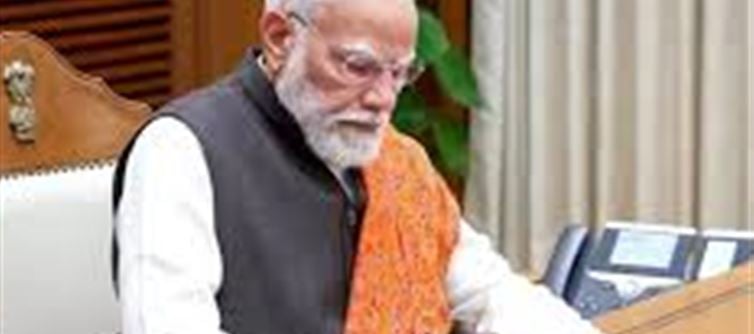

Prime minister Narendra Modi has approved the launch of the PM RAHAT (Road accident Victims Hospitalisation and Assured Treatment) scheme — a nationwide cashless medical care programme that ensures accident victims get timely emergency treatment without worrying about medical bills. This decision was part of the Prime Minister’s first set of welfare files signed after moving to the new Seva Teerth office complex in New Delhi.
The key objective of PM RAHAT is simple: to prevent loss of life due to delays in emergency treatment by guaranteeing cashless medical care of up to ₹1.5 lakh per victim at designated hospitals.
🧠 Why the Scheme Was Introduced
India witnesses a large number of road accidents every year, and many fatalities occur because victims can’t access emergency care quickly or afford treatment costs. The PM RAHAT scheme builds upon an earlier Cashless Treatment of Road accident Victims Scheme notified by the Ministry of Road Transport and Highways and aims to provide immediate, free, and cashless medical care after a crash.
🏥 Who Can Benefit Under PM RAHAT
🚶♂️ Any Road accident Victim
The scheme covers:
- Drivers, passengers, pedestrians, and bystanders affected by road traffic accidents involving a motor vehicle on any road in India.
- There is no restriction on age, income group, or social category — all victims are eligible for treatment benefits.
🗓️ Timing and Validity
- Treatment must be availed within seven days from the date of the accident.
- The maximum benefit per victim per accident is ₹1.5 lakh.
- This cashless help aims to ensure immediate treatment during the “golden hour”, when timely care can be life‑saving.
🏨 Cashless Treatment Under PM RAHAT
The scheme operates through a network of designated hospitals empanelled under the programme by the National health Authority (NHA) — the implementing agency working with state governments, police, and hospitals.
🩺 What Is Covered
Under PM RAHAT, victims are entitled to:
- Emergency treatment and surgery
- Diagnostic and medical procedures
- Drugs and consumables
- ICU care and hospital services
- All costs up to ₹1.5 lakh for a maximum 7‑day treatment window after the accident occurs.
🏥 Designated vs Non‑Designated Hospitals
- At designated hospitals, the full cashless benefit is available.
- If a victim first reaches a non‑designated hospital, they’ll receive stabilisation care while arrangements are made for transfer to a designated centre for ongoing treatment.
📌 How the Scheme Works Step‑by‑Step
Here’s a simplified pathway of how a road accident victim gets help under PM RAHAT:
Accident occurs and victim is taken to the nearest hospital.
Police or caregiver reports the case to the designated system and a unique victim ID is generated.
The hospital starts immediate treatment without upfront payment.
Hospital submits pre‑authorisation through the NHA portal to confirm eligibility.
Cashless settlement of eligible treatment costs up to ₹1.5 lakh is processed directly to the hospital.
If the hospital is non‑designated, initial stabilisation care is provided and transfer is arranged.
This wallet PLATFORM' target='_blank' title='digital-Latest Updates, Photos, Videos are a click away, CLICK NOW'>digital process ensures quick service coordination without financial burden on the victim’s family.
🪪 Important Rules and Conditions
✔ Maximum benefit per victim: ₹1,50,000
✔ Coverage period: Up to 7 days from accident date
✔ Applicable nationwide: Any road, any state or Union Territory
✔ Treatment type: Emergency, surgical, diagnostic, ICU, medications
✔ Hospital requirement: Benefits apply fully at designated hospitals; stabilisation only at non‑designated facilities initially
✔ No pre‑existing condition exclusion: The scheme applies specifically to road accident injuries — not other health issues.
🛡️ Who Oversees the Scheme
- The National health Authority (NHA) is the central implementing agency.
- State Road Safety Councils act as nodal bodies for local execution.
- A steering committee including officials from the Road Transport Ministry and health departments monitors nationwide implementation.
🤝 Why This Matters
Road accidents are one of India’s biggest public health challenges — with hundreds of thousands of injuries and fatalities annually. The PM RAHAT scheme ensures that financial constraints do not delay life‑saving intervention. The cashless benefit enhances emergency care and supports victims and their families during critical moments.
🧠 Final Takeaway
The PM RAHAT scheme represents one of the most significant public welfare decisions rolled out from the new Seva Teerth PMO complex, aimed at safeguarding vulnerable victims of road mishaps. By providing cashless treatment up to ₹1.5 lakh, the government seeks to ensure that no life is lost due to lack of timely medical help or financial barriers.
Disclaimer:
The views and opinions expressed in this article are those of the author and do not necessarily reflect the official policy or position of any agency, organization, employer, or company. All information provided is for general informational purposes only. While every effort has been made to ensure accuracy, we make no representations or warranties of any kind, express or implied, about the completeness, reliability, or suitability of the information contained herein. Readers are advised to verify facts and seek professional advice where necessary. Any reliance placed on such information is strictly at the reader’s own risk.
 click and follow Indiaherald WhatsApp channel