


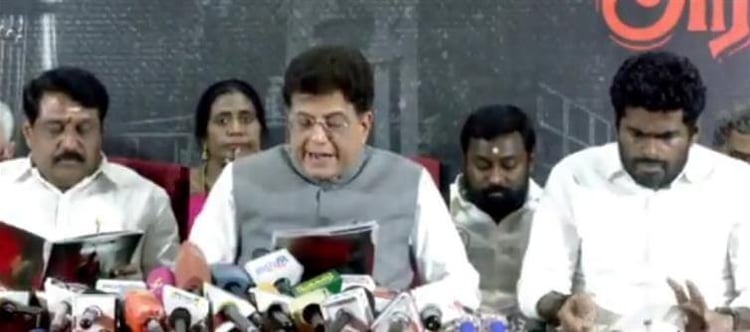

Commerce minister piyush goyal and the US Trade Representative have begun formal talks on a bilateral trade pact, according to telangana Today. The negotiations cover tariffs, market access, and trade rules across sectors including agriculture, textiles, and pharmaceuticals. Both sides have signalled progress, though key sticking points remain.
Commerce minister piyush goyal and the US Trade Representative have begun formal negotiations on a comprehensive bilateral trade pact, according to telangana Today. The talks span tariffs, market access, and trade rules across multiple sectors including agriculture and textiles.
Goyal has publicly framed the discussions as aimed at mutual benefit, stating in public remarks that no deal will proceed without a tariff advantage framework for india and that sensitive sectors — agriculture, dairy, certain textiles — remain protected. The stated message to domestic audiences: india negotiates from strength.
What the Negotiations Cover
According to telangana Today, the bilateral trade pact talks address tariffs, market access, and regulatory frameworks across several sectors. Goyal has publicly listed textiles, agriculture, and allied sectors as key beneficiary areas of any prospective deal.
However, from this bureau's analysis, the scope of what is being negotiated raises questions that the official framing does not fully address — particularly around the terms of agricultural market access, pharmaceutical intellectual property rules, and wallet PLATFORM' target='_blank' title='digital-Latest Updates, Photos, Videos are a click away, CLICK NOW'>digital trade provisions.
Three Areas Trade Analysts Are Watching
First, tariffs on American agricultural products. According to World Trade Organization data, India's applied tariffs on items like almonds, apples, and dairy products are among the highest globally. Trade analysts have noted that the US has historically sought reduction of these tariffs as a precondition for meaningful bilateral pacts, according to reports by the Peterson Institute for international Economics. Goyal's repeated public insistence that sensitive sectors are excluded suggests, from this bureau's reading, that these items were part of the negotiating agenda — and that what has been excluded may be narrower than public statements imply.
Second, intellectual property and pharmaceuticals. According to the office of the US Trade Representative's annual Special 301 Reports, American trade negotiators have historically pushed for longer patent exclusivity periods for pharmaceuticals — a position that trade policy analysts say could affect India's generic drug industry, which supplies affordable medicines across the developing world. Any movement on this front would carry significant domestic political weight.
Third, wallet PLATFORM' target='_blank' title='digital-Latest Updates, Photos, Videos are a click away, CLICK NOW'>digital trade and data localisation. According to analyses by the Brookings Institution and the Carnegie Endowment for international Peace, India's push to keep data within its borders through localisation mandates clashes with the position of major American technology firms favouring free cross-border data flows. A trade pact that alters India's data localisation framework would have implications beyond trade, touching on data sovereignty. Goyal's public statements have not addressed this dimension in detail.
The Political Context
From this bureau's analysis, the political timing of the trade talks merits attention. A headline bilateral trade agreement with the united states would carry significant signalling value for any ruling party — conveying global stature, economic confidence, and diplomatic weight. In trade negotiations globally, concessions are often phased over multiple years, which, analysts at the Centre for Policy Research have noted, can reduce their near-term political visibility.
india Herald reached out to the Commerce Ministry and the bjp for comment on the scope of concessions under discussion and the political context of the negotiations. No response had been received as of publication time.
What Remains Unresolved
From this bureau's analysis, the real test of any India-US trade pact will not be the day it is signed but when its detailed provisions are examined — by agricultural producers, pharmaceutical industry stakeholders, and data privacy advocates. The gap between what is announced at the podium and what appears in the detailed text of trade agreements is a well-documented phenomenon in international trade, as noted by trade scholars at the World Trade Institute.
The key question for domestic constituencies — farmers in Punjab, pharma companies in Hyderabad, technology firms in Bengaluru — is what specific market access and regulatory changes india has agreed to in exchange for the deal's headline benefits. That clarity, as is typical in complex trade negotiations, will likely emerge only when the full text is made available.
More from india Herald




Key Takeaways
- Piyush Goyal and the US Trade Representative have begun formal bilateral trade pact talks, per telangana Today, covering tariffs, market access, and trade rules across multiple sectors.
- Goyal has publicly insisted sensitive sectors like agriculture and dairy are protected, but trade analysts note that US reduction of India's high agricultural tariffs has historically been a precondition for bilateral deals.
- From this bureau's analysis, the concession areas to watch span agricultural tariffs, pharmaceutical IP enforcement timelines, and data localisation rules — each carrying significant domestic political implications.
- India Herald reached out to the Commerce Ministry and bjp for comment; no response had been received as of publication time.
Frequently Asked Questions
What is the new agreement between india and USA?
According to telangana Today, India's Commerce minister piyush goyal and the US Trade Representative have begun formal negotiations on a bilateral trade pact covering tariffs, market access, and trade rules across multiple sectors including agriculture and textiles.
What has piyush goyal said about the India-US trade talks?
In public remarks, Goyal has stated that no deal will proceed without a tariff advantage framework for india and that sensitive sectors remain protected, while describing the talks as oriented toward mutual benefit.
Which sectors are covered in the India-US trade deal?
According to telangana Today and Goyal's public statements, key sectors include textiles, agriculture, and allied industries. Trade analysts have also flagged pharmaceuticals, dairy, and wallet PLATFORM' target='_blank' title='digital-Latest Updates, Photos, Videos are a click away, CLICK NOW'>digital trade rules as significant negotiation areas.
What are the main sticking points in the negotiations?
From this bureau's analysis and based on published trade research, the main unresolved areas are agricultural tariff reductions, pharmaceutical patent exclusivity timelines, and data localisation provisions — each of which carries significant domestic political implications in India.
 click and follow Indiaherald WhatsApp channel