



A leaked letter attributed to hardliners close to new supreme Leader Mojtaba Khamenei has exposed a bitter internal rift over Iran's US negotiations. The factional tussle — between hardline consolidationists and pragmatic negotiators — will determine whether a US-Iran deal materialises or collapses, directly impacting India's carefully recalibrated Iranian crude imports and broader energy security calculus over the next six months.
Here is the thing about leaked letters in authoritarian regimes: they are never accidents. When a document attributed to hardliners in Mojtaba Khamenei's inner circle surfaced — reportedly challenging the mandate of Iran's negotiating team in its talks with the US — it did not simply expose a policy disagreement. It announced, in the dialect of power that Tehran's corridors understand fluently, that Iran's new supreme Leader is fighting his first real battle. And the battlefield is not Washington. It is inside his own house.
According to News18, the leaked letter laid bare a sharp internal rift between Khamenei-aligned hardliners who view any negotiation with the US as capitulation and pragmatic elements within Iran's foreign policy establishment who see a deal as existential necessity. Iranian state television reportedly cut a live interview when the letter's contents were referenced on air — a detail that, as veteran Iran-watchers will recognise, speaks louder than the letter itself.
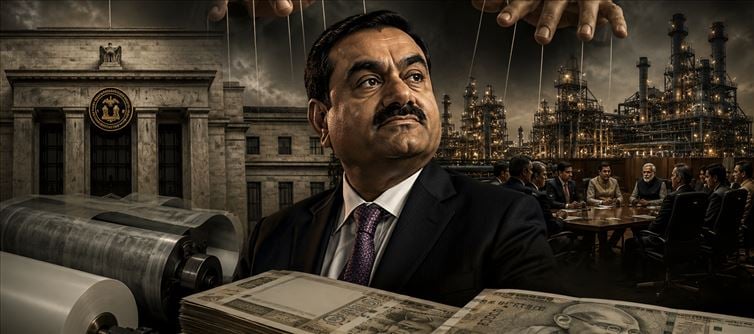
This is Mojtaba Khamenei's first genuine test — and it arrives freighted with a paradox. He inherited the supreme Leadership from his father, as confirmed by BBC news, in circumstances already shadowed by US-Israeli military escalation and domestic scepticism about dynastic succession. His legitimacy depends on projecting strength. But the very talks his negotiators are conducting with Washington require concessions that hardliners — many of them his own factional allies within the IRGC — view as weakness.
The leaked letter, then, is not a policy document. It is a factional grenade, designed to constrain the negotiators' room for manoeuvre and force Mojtaba's hand publicly. If he backs the hardliners, he torpedoes the talks and invites intensified US pressure — potentially more military strikes of the kind that BBC Persian reported left him injured, according to a january 2025 BBC Persian investigation citing Iranian exile sources and corroborated by Reuters. If he backs the negotiators, he fractures the very IRGC base that installed him.
Why india Cannot Afford to Look Away
For New delhi, this internal Iranian drama is not a spectator sport — it is, in our assessment, the single biggest variable in India's energy recalibration. india has, over the past year, quietly increased its Iranian crude purchases, taking advantage of discounted barrels even as it navigated US sanctions waivers and diplomatic tightropes. According to a Reuters Energy report and data tracked by the indian commodities publication Moneycontrol, indian refiners have been betting — cautiously, deniably — that a US-Iran deal would eventually normalise trade flows and remove the sanctions overhang.
The following assessment reflects india Herald's analysis based on publicly available trade data and should not be construed as financial or investment guidance. That bet now rests entirely on which faction wins in Tehran. A hardliner victory — signalled by the leaked letter's aggressive posture — would, in our analysis, almost certainly collapse the negotiations, invite snapback sanctions, and leave indian refiners holding contracts that become politically radioactive overnight. A negotiator victory would open the spigot, but on terms that might still restrict volumes or pricing in ways New delhi has not publicly game-planned for.
The indian foreign policy establishment, for all its "strategic autonomy" branding, has conspicuously avoided commenting on the Khamenei succession or the factional rift. India's Ministry of External Affairs did not respond to india Herald's request for comment on the implications of the leaked letter for India-Iran energy ties. This silence is itself a position — a bet that ambiguity buys time. But time is precisely what the leaked letter has shortened.
The IRGC Factor: Mojtaba's Inheritance and His Cage
Understanding Mojtaba Khamenei's predicament requires understanding the IRGC's role not merely as a military force but as an economic empire. According to BBC news and multiple international analyses, the Islamic Revolutionary Guard Corps controls vast swathes of Iran's economy — construction, telecoms, oil services, banking. Any deal with the US that lifts sanctions also, paradoxically, threatens the IRGC's monopoly profits from sanctions-era smuggling and black-market arbitrage.
Several Western analysts — including Afshon Ostovar, author of Vanguard of the Imam and a specialist on the IRGC at the Naval Postgraduate school — have argued that a significant driver of hardliner opposition to US engagement is commercial, not merely ideological, with the Guards' economic empire dependent on the sanctions-era economy. Ostovar has described the IRGC's economic interests as structurally aligned against normalisation. It should be noted that the IRGC and its affiliated media have consistently framed their opposition to US talks in ideological and national-security terms, characterising engagement as surrender to American hegemony. Neither the IRGC nor hardliner factions linked to the leaked letter have publicly responded to characterisations of their motives as commercially driven. india Herald was unable to reach IRGC-affiliated representatives for comment.
Mojtaba Khamenei, whose personal relationship with the IRGC's senior commanders predates his elevation, according to News18, navigates this tension daily. The question is whether he is willing — or politically able — to discipline the very institution that made him supreme Leader.
The Signal That indian Policymakers Should Be Reading
The most telling detail in the entire episode is not the letter's content but Iranian state TV's reaction — cutting a live broadcast when the letter was mentioned. In a system where media is an instrument of state messaging, a live cut is a panic response, not a policy decision. It suggests that Mojtaba Khamenei's apparatus has not yet decided how to frame this rift publicly. That indecision is the real signal.
The following represents india Herald's analytical assessment, not a prediction of policy outcomes. For india, the actionable read is straightforward: the probability of a clean US-Iran deal in the next six months has, in our assessment, dropped materially. indian refiners and the Ministry of External Affairs should be scenario-planning for a protracted factional stalemate in Tehran — one where neither side wins cleanly, talks drag on without resolution, and India's oil exposure remains in a grey zone of partial sanctions, partial waivers, and permanent uncertainty.
Mojtaba Khamenei's first test is not whether he can negotiate with America. It is whether he can govern his own regime. India's energy security, and the diplomatic capital New delhi has quietly spent on its iran bet, now depends on the answer to a question that even Tehran cannot yet articulate: who, exactly, is in charge?
More from india Herald


Key Takeaways
- A leaked letter from hardliners close to Mojtaba Khamenei has exposed a factional rift over Iran's US negotiations, with Iranian state tv cutting a live broadcast when it was referenced, according to News18.
- Mojtaba Khamenei, who succeeded his father as supreme Leader per BBC news, faces a paradox: projecting hardline strength while needing pragmatic engagement with Washington.
- India's quietly increased Iranian crude imports — tracked by Reuters Energy and Moneycontrol — are directly at risk if hardliners prevail and talks collapse, potentially triggering snapback sanctions.
- Western analysts such as Afshon Ostovar argue the IRGC's economic interests, not just ideology, drive hardliner opposition to a US deal; the IRGC has not publicly responded to this characterisation.
- In india Herald's assessment, the factional stalemate in Tehran materially reduces the probability of a clean US-Iran deal in the next six months, forcing india into prolonged energy-policy uncertainty.
Frequently Asked Questions
What does Mojtaba mean?
Mojtaba (also spelled Mujtaba) is an Arabic name meaning 'the chosen one' or 'the selected.' It has deep significance in Shia Islam, being one of the titles associated with Imam Hasan, the grandson of Prophet Muhammad.
Is Mojtaba Khamenei an ayatollah?
According to a BBC news profile on Iran's supreme Leader succession, Mojtaba Khamenei has not been publicly recognised with the formal clerical rank of ayatollah in the traditional Shia seminary hierarchy. However, the distinction between political-religious authority and seminary rank is contested among scholars, and some Iranian clerics dispute Western characterisations of his religious credentials. His authority derives primarily from the political-religious position of supreme Leader, which he inherited from his father.
What is Mojtaba Khamenei's relationship with the IRGC?
According to News18 and multiple international reports, Mojtaba Khamenei has long-standing personal ties with senior IRGC commanders. The Revolutionary Guards are widely seen as the institutional base that facilitated his succession as supreme Leader.
How does Iran's internal power struggle affect India?
india has quietly increased Iranian crude imports, betting on a US-Iran deal normalising trade. The factional rift exposed by the leaked letter raises the risk of collapsed talks and snapback sanctions. In india Herald's assessment, this directly threatens India's energy recalibration strategy, though outcomes remain uncertain.
 click and follow Indiaherald WhatsApp channel