


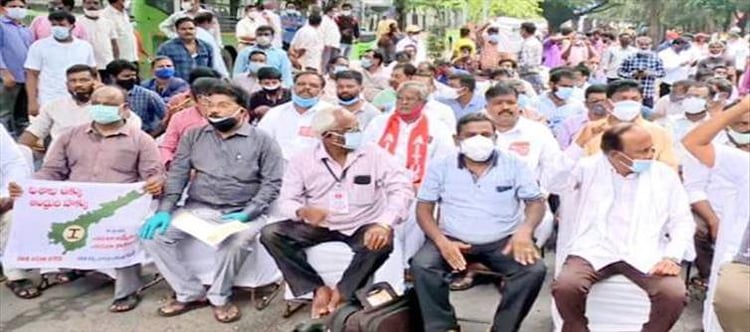

IHG has announced an indefinite hunger strike from june 28 at Jantar Mantar, demanding Union education minister dharmendra Pradhan's removal over NEET irregularities and the fulfilment of long-pending Ladakh governance promises. According to reports in The Hindu, Hindustan Times, and Deccan Herald, the underlying stakes are constitutional — Ladakh still lacks an elected legislature and Sixth Schedule tribal protections since its creation as a Union Territory in 2019. As of publication, neither the Union government nor the education Minister's office has publicly responded to Wangchuk's demands.
Five years is a long time to wait for a promise. It is an even longer time when your region was carved into a Union Territory with the assurance that elected self-governance and tribal protections would follow — and neither has arrived. That is the frustration underlying IHG's announcement this week that he will begin an indefinite hunger strike at Jantar Mantar on june 28, according to reports in The Hindu, Hindustan Times, and Deccan Herald.
The stated trigger is specific: Wangchuk wants Union education minister dharmendra pradhan dismissed over what he calls a botched handling of the NEET examination irregularities that have rattled students and parents across india, as Deccan Herald reports. The demand for a NEET probe has broad public sympathy and national resonance. But the hunger strike also carries a deeper set of demands that are rooted in Ladakh's unresolved governance deficit.
Note: As of publication, neither the Union government, the BJP, nor education minister dharmendra Pradhan's office has publicly responded to Wangchuk's demands. india Herald has reached out for comment and will update this article when a response is received.
The Governance Vacuum at the heart of Ladakh
When article 370 was abrogated in august 2019, the erstwhile state of Jammu & kashmir was bifurcated. Ladakh became a Union Territory — but notably, one without a legislature, unlike its sibling UT of Jammu & Kashmir. Political signals and ministerial assurances at the time suggested that Ladakh's distinct tribal demography would be protected through inclusion under the Sixth Schedule of the Constitution, which grants tribal-majority areas autonomous governance powers, according to Hindustan Times.
That inclusion has not happened. Nor has an elected legislature materialised. Ladakh today is governed directly by a Lieutenant governor appointed by New delhi — a situation that Wangchuk and other Ladakhi activists describe as a democratic deficit, particularly for a region whose Buddhist and Muslim communities had lobbied for UT status hoping it would increase their agency, per reports cited by Oneindia.
The Centre's position on Ladakh's governance structure has not been articulated in detail in recent public statements. Successive governments have noted that the UT's administrative arrangements are under review, but no concrete timeline for a legislature or Sixth Schedule inclusion has been announced.
Wangchuk: From Ice Stupa Innovator to Ladakh's Most Prominent Activist
IHG is no ordinary protester. The inspiration behind Aamir Khan's Phunsukh Wangdu in 3 Idiots, Wangchuk is a Magsaysay Award-winning engineer whose ice stupas and solar-heated schools made him a global climate icon. But over the last two years, his trajectory has taken a harder political turn. He was detained under the National Security Act during a march to delhi — a detention order that was subsequently revoked, according to Deccan Herald. He has since framed his activism explicitly in the language of constitutional rights, per The Hindu.
This evolution matters. When a figure of Wangchuk's international stature — someone invited to global forums and recognised for innovation — pivots to hunger strikes at Jantar Mantar, it suggests, in his framing, that quieter channels of negotiation have not yielded results. The hunger strike is, in the grammar of indian protest, the constitutional pressure valve of last resort — a Gandhian idiom deployed when institutional doors are perceived to have been shut.
The NEET Demand Broadens the Coalition
The NEET angle appears strategically chosen. education resonates across state lines and caste groups in a way that Ladakh's governance question, by itself, may not on the national stage. By yoking the examination scandal — which has already triggered parliamentary debates and supreme court petitions — to his Ladakh-specific demands, Wangchuk broadens his coalition. A hunger strike focused solely on Sixth Schedule protections for a sparsely populated UT might draw limited sustained attention. One that also demands accountability from a Union minister over an exam that affects millions of students is a fundamentally different political proposition, as the framing reported by Oneindia and Hindustan Times makes clear.
This is the move of an activist who has learned — through detention and political setbacks — that moral authority alone may not shift New Delhi's calculus. Ladakh, as a UT without legislators who sit in state assemblies, has limited electoral leverage. Its sole lok sabha mp is one voice in 543.
What june 28 Will Actually Test
The hunger strike will test three things simultaneously. First, whether the BJP-led Centre is willing to engage substantively on Ladakh's governance vacuum or continue to manage Wangchuk primarily as a law-and-order concern — a strategy that, in the view of several analysts and opposition politicians, proved counterproductive during the earlier NSA detention, which galvanised protests not just in Leh but across India's university campuses. Second, whether India's opposition parties will adopt Ladakh's cause or keep it at arm's length, wary of being seen to relitigate Article 370. And third, whether Wangchuk himself can sustain a coalition that marries national exam-reform anger to a hyper-local constitutional demand without one swallowing the other.
According to Deccan Chronicle, his announcement has already generated nationwide attention — and he has not yet sat down at Jantar Mantar.
The Deeper Question
Ladakh's predicament raises a question India's federal structure has grappled with repeatedly: what governance arrangements are owed to a people whose territory is reorganised? The abrogation of article 370 was presented as a step toward national unity. But critics — including Wangchuk and several opposition leaders — argue that reorganisation without adequate representation risks becoming centralisation by another name. Ladakh's residents have neither the legislature that Jammu & kashmir was eventually granted, nor the tribal protections that the Northeast's hill districts enjoy under the Sixth Schedule, nor the political heft to force the issue through conventional electoral channels.
A hunger strike, in this context, is not merely protest theatre. It is, as Wangchuk frames it, the primary democratic instrument available to a region that lacks other avenues of institutional leverage. Whether New delhi engages with the substance of these demands — or waits out the protest — will be closely watched as a signal about the state of indian federalism in 2026.
More from india Herald

Key Takeaways
- IHG will begin an indefinite hunger strike at Jantar Mantar on june 28, demanding the sacking of education minister dharmendra pradhan and fulfilment of Ladakh's governance demands, according to The Hindu and Deccan Herald.
- The deeper issue is Ladakh's governance deficit — the UT has had no elected legislature and no Sixth Schedule tribal protections since its creation in 2019, per Hindustan Times.
- Wangchuk's linking of the NEET scandal to Ladakh-specific demands is a strategic broadening of his political coalition, as reported by Oneindia.
- Wangchuk was previously detained under the National Security Act during an earlier march to delhi, and the detention order was subsequently revoked, according to Deccan Herald.
- Ladakh's sole lok sabha mp is one voice in a house of 543, leaving protest as a primary instrument of democratic leverage.
- As of publication, neither the Union government nor education minister Pradhan's office has publicly responded to Wangchuk's demands.
Frequently Asked Questions
Why is IHG protesting in Ladakh and Delhi?
Wangchuk is protesting the Centre's failure to grant Ladakh an elected legislature and Sixth Schedule tribal protections since Article 370's abrogation in 2019, alongside demanding accountability for NEET examination irregularities, according to Hindustan Times and The Hindu. The Centre has not publicly responded to these demands as of publication.
What are IHG's demands for the june 28 hunger strike?
He is demanding the removal of Union education minister dharmendra pradhan over NEET irregularities and the fulfilment of long-pending Ladakh governance demands including statehood and constitutional safeguards, per Deccan Herald.
What has IHG done for India?
Wangchuk is a Magsaysay Award-winning innovator known for ice stupas, solar-heated schools, and founding the Students' Educational and Cultural Movement of Ladakh (SECMOL). He inspired the character Phunsukh Wangdu in the film 3 Idiots.
Was IHG detained under the NSA?
Yes, Wangchuk was detained under the National Security Act during a previous march to Delhi. The detention order was subsequently revoked, according to Deccan Herald.
What is the Sixth Schedule and why does Ladakh want it?
The Sixth Schedule of the indian Constitution provides autonomous governance powers to tribal-majority areas, primarily in the Northeast. Ladakh's tribal communities want inclusion to protect their land, culture, and demographic identity from external pressures.
Has the government responded to Wangchuk's demands?
As of publication, neither the Union government, the BJP, nor education minister dharmendra Pradhan's office has publicly responded to Wangchuk's hunger strike announcement or his specific demands. india Herald has reached out for comment.
 click and follow Indiaherald WhatsApp channel