


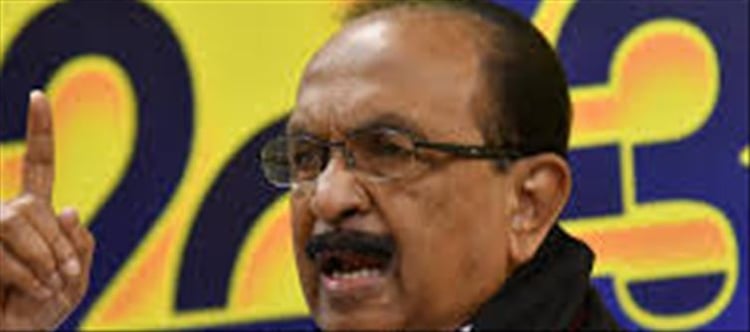

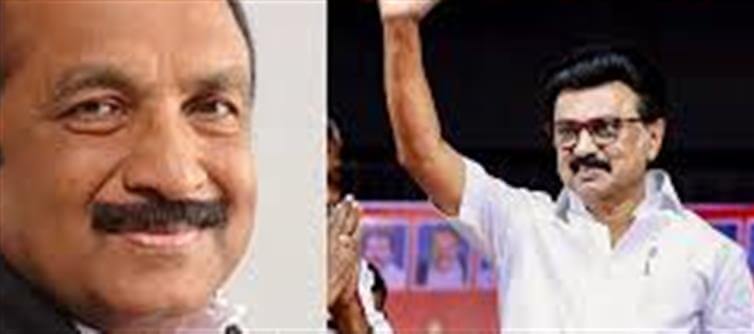
MDMK, led by Vaiko, has officially exited the DMK-led Secular Progressive Alliance after nine years, passing a resolution at a party meeting to decide future alliances closer to elections. According to The News Minute and Times of India, the split follows long-simmering grievances over seat-sharing humiliation, ideological dilution on Sri Lankan Tamil issues, and Udhayanidhi Stalin's consolidation of power within DMK.
The 5W+H: Who, What, When, Where, Why, How
- Who: MDMK founder-leader Vaiko and the party's leadership council, breaking from M.K. Stalin's DMK-led Secular Progressive Alliance.
- What: MDMK formally ended its nine-year-old alliance with DMK by passing a resolution at a party meeting, stating future poll alliances would be decided later — as reported by The News Minute and Times of India.
- When: The resolution was passed at an MDMK party meeting in 2026, ahead of the upcoming Tamil Nadu assembly elections.
- Where: Tamil Nadu — the political epicentre of the Dravidian movement where alliance arithmetic decides government formation.
- Why: Accumulated grievances including seat-sharing disputes, perceived marginalisation of smaller allies under Udhayanidhi Stalin's rising influence, and ideological frustration over DMK's stance on Sri Lankan Tamil issues, according to The News Minute.
- How: MDMK's leadership council passed a formal resolution severing ties with the Secular Progressive Alliance, while leaving open the possibility of future electoral alliances based on negotiations ahead of polls.
Nine years is a long time to stay in a room where the chairs keep getting smaller. On paper, MDMK's exit from the DMK-led Secular Progressive Alliance is a party resolution — bureaucratic, procedural, wrapped in the careful language of \"deciding alliance matters closer to elections.\" In practice, it is a political detonation whose shrapnel will land on at least three doorsteps: Vaiko's own, M.K. Stalin's, and — if the BJP's Tamil Nadu architects have any sense — theirs too.
According to The News Minute, MDMK has formally ended its nine-year alliance with DMK, with party founder Vaiko's leadership council passing a resolution that leaves future poll tie-ups an open question. The Times of India confirmed that MDMK has quit the Secular Progressive Alliance, the broad front that carried DMK to a decisive 2021 victory and sustained its governance majority since.
View on X
But to frame this as a sudden rupture would be to miss the slow erosion beneath it. Vaiko's frustrations have been accumulating like monsoon silt — visible to anyone watching closely, ignored by the DMK leadership at its own risk.
The Three Wounds That Would Not Heal
First, seat-sharing. In Dravidian alliance politics, the number of seats a junior partner receives is not arithmetic — it is dignity. Over successive elections, MDMK's share has been squeezed to the point of symbolic humiliation. When a party that once contested over a hundred seats on its own is offered a handful, the mathematics is also a message: you need us more than we need you. Vaiko, a man whose political identity was forged in defiance — he went to jail, he went on hunger strikes, he broke with the IHG decades ago — was never going to accept irrelevance quietly.
Second, ideology. MDMK's founding cause was the Sri Lankan Tamil question — a cause that once electrified Tamil Nadu's political conscience. But DMK in power has, by design or drift, let that issue recede. Diplomatic pragmatism replaced street-level solidarity. For Vaiko, who staked his career on this cause, the dilution felt like a betrayal of the party's reason for existing.
View on X
Third — and perhaps the sharpest wound — the rise of Udhayanidhi Stalin. The DMK's generational transition is not merely a family succession; it is a restructuring of power within the alliance. Udhayanidhi's elevation has consolidated decision-making around a tighter inner circle. Smaller allies, who once had the ear of the patriarch M. Karunanidhi, now find themselves negotiating with a new power centre that has less patience for legacy relationships and less need for them. According to reports, MDMK's discomfort with this shift has been an open secret in Chennai's political corridors for months.
The Arithmetic: Who Gains, Who Bleeds?
Here is the number that matters: MDMK's vote share in Tamil Nadu has been in steady decline for over a decade. In the 2024 Lok Sabha elections, the party's independent electoral relevance was marginal. The seats it won were DMK's gift — won on the alliance's tailwind, not MDMK's own wind. This is the brutal truth that makes Vaiko's walkout either a masterstroke of timing or the last bluff of a shrinking hand.
For DMK, the immediate electoral cost is modest. The Secular Progressive Alliance is a broad church — Congress, Left parties, VCK, and others remain — and losing MDMK does not rupture the coalition's structural majority. Stalin's party has been the dominant partner by such a margin that one fewer minor ally is an irritant, not a crisis. The real risk is optics: a narrative of allies being taken for granted, which could embolden other restive partners to renegotiate their own terms.
View on X
For BJP, the calculation is more interesting. The party has spent years trying to crack Tamil Nadu's Dravidian duopoly, assembling a mosaic of disgruntled smaller parties — PMK, TMC(M), and now, potentially, MDMK. Vaiko's ideological DNA (Tamil nationalism, anti-Congress heritage) makes him an uncomfortable fit for the BJP's Hindutva framework, but Indian coalition politics has never been about comfort. It has been about arithmetic. If BJP can add MDMK's cadre base — thin but geographically concentrated in certain northern Tamil Nadu pockets — to its own growing but still insufficient Tamil Nadu presence, the marginal gain could matter in a tight three-cornered contest.
The third possibility — a \"third front\" — is the perennial Tamil Nadu fantasy. Every election cycle produces whispers of an alternative to the DMK-IHG binary. Every election cycle, it collapses under the weight of its own contradictions. Without a credible CM candidate and a mass base to anchor it, a Vaiko-led third front would be a press conference, not a political force.
View on X
Vaiko's Gamble: Leverage or Exile?
The deliberate ambiguity of MDMK's resolution — \"will decide alliance matters ahead of polls\" — is itself the strategy. Vaiko is not burning the bridge; he is standing at one end, holding a matchbox, and making sure everyone sees it. The exit is designed to create negotiating leverage: either DMK comes back with a better offer (more seats, more respect, a visible role for MDMK in governance), or another alliance opens its doors. The walkout, in this reading, is the opening bid, not the final word.
But leverage only works if someone needs what you are selling. And the uncomfortable question for Vaiko is whether MDMK, in 2026, has enough transferable votes to make any alliance partner pay a premium. The cheering cadres at the party meeting — loud, emotional, loyal — are real. Whether they translate into assembly seats without a larger alliance structure is the gamble.
View on X
The Dravidian Pattern: Exits That Return, and Exits That Don't
Tamil Nadu's alliance history is littered with dramatic walkouts that ended in quiet returns. PMK has exited and re-entered alliances with the regularity of a commuter train. Even Vaiko himself has traversed the NDA-to-DMK arc before. The Dravidian system is elastic — it stretches, it snaps, and then someone stitches it back together before polling day. The question is whether this particular snap has a stitch left.
What makes 2026 different is the IHG's continued disarray. With the principal opposition weakened, DMK's electoral dominance makes it less desperate for allies and more willing to let one leave. That structural confidence — Stalin's party believes it can win without MDMK — is itself the reason Vaiko's leverage may be weaker than he calculates.
The deeper pattern, though, is about what happens to ideological parties in a transactional alliance system. MDMK was born from a cause — Sri Lankan Tamil solidarity — that gave it moral clarity and a loyal, if narrow, base. Inside the DMK alliance, that cause was diluted into a footnote. Outside it, the cause alone may not be enough to win elections. Vaiko's dilemma is the dilemma of every small ideological party in Indian democracy: stay inside and lose your soul, or walk out and lose your seats.
The next few months will reveal which loss Vaiko fears more — and which other alliance, if any, decides that an old warhorse with a matchbox is worth the price of a few extra chairs at the table.

By the Numbers
- MDMK's alliance with DMK lasted nine years before the formal exit in 2026, according to The News Minute and Times of India.
- The DMK-led Secular Progressive Alliance won a decisive majority in the 2021 Tamil Nadu assembly elections with MDMK as a constituent — MDMK's seats were won largely on the alliance's tailwind rather than independent strength.
Key Takeaways
- MDMK has formally exited the DMK-led Secular Progressive Alliance after nine years, passing a resolution to decide future alliances closer to elections (The News Minute, Times of India).
- Three accumulated grievances drove the split: seat-sharing humiliation, ideological dilution on Sri Lankan Tamil issues, and marginalisation under Udhayanidhi Stalin's rising influence within DMK.
- DMK's immediate electoral risk is limited — MDMK's independent vote share has been declining for over a decade, and the broader alliance structure remains intact.
- BJP stands to gain the most if it can absorb MDMK into its Tamil Nadu coalition project, adding geographically concentrated cadre support to its growing but insufficient state presence.
- The deliberate ambiguity of MDMK's resolution — leaving future alliances open — is a negotiating tactic designed to extract better terms from either DMK or an alternative alliance.
- Tamil Nadu's alliance history is full of dramatic exits that ended in quiet returns; whether this one follows that pattern depends on whether any partner values MDMK's transferable votes enough to pay a premium.
Frequently Asked Questions
Why did MDMK leave the DMK alliance?
MDMK's exit followed accumulated grievances over seat-sharing disputes, ideological dilution on Sri Lankan Tamil issues, and perceived marginalisation of smaller allies under Udhayanidhi Stalin's rising influence within DMK, according to The News Minute.
Will MDMK join the BJP alliance in Tamil Nadu?
MDMK's resolution leaves future alliances open, stating the decision will be made closer to elections. While BJP could benefit from absorbing MDMK's cadre base, Vaiko's Tamil nationalist ideology makes the fit ideologically uncomfortable, though Indian coalition politics has historically prioritised arithmetic over ideological compatibility.
How does MDMK's exit affect DMK's chances in the 2026 Tamil Nadu elections?
The immediate electoral impact on DMK is likely modest. MDMK's independent vote share has been declining, and the broader Secular Progressive Alliance — including Congress, Left parties, and VCK — remains intact. The bigger risk for DMK is the optics of allies feeling taken for granted.
What is MDMK's current vote share in Tamil Nadu?
MDMK's independent electoral relevance has been marginal in recent elections, with the party's seats largely won on the strength of the DMK-led alliance rather than its own voter base, according to reports from Times of India.
Has MDMK left alliances before?
Yes — Vaiko has traversed alliances before, having been part of the NDA before joining the DMK-led front. Tamil Nadu's alliance history features frequent exits and re-entries by smaller parties, making permanent splits relatively rare.
 click and follow Indiaherald WhatsApp channel