

-

Assembly
-
Beijing
-
BUSINESS
-
China
-
Cinema
-
Congress
-
court
-
Degree
-
Delhi
-
Digital Payments
-
Digital Wallet Platform
-
Episode
-
European Union
-
Government
-
House
-
India
-
Indian
-
Indians
-
INTERNATIONAL
-
June
-
Leader
-
Loksabha
-
Maldives
-
Mauritius
-
media
-
Minister
-
Party
-
police
-
Population
-
Prime Minister
-
Prize
-
ram mandir
-
ram pothineni
-
READ
-
Seychelles
-
Sri Lanka
-
Tamil
-
Telangana
-
victoria
-
WhatsApp

Modi's Seychelles state visit — the first by an Indian PM to address its National Assembly — is Delhi's most deliberate move yet to lock island nations into India's security and economic orbit before what critics call China's infrastructure-for-influence model gains further traction. According to The Hindu, 19 agreements spanning defence, UPI, and climate resilience were signed, signalling a counter-strategy built on soft power, not debt.
The 5W+H: Who, What, When, Where, Why, How
- Who: Prime Minister Narendra Modi and Seychelles President Wavel Ramkalawan, according to The Hindu and India Today.
- What: India and Seychelles signed 19 agreements spanning defence, digital payments (UPI), maritime security, and climate resilience, and Modi became the first Indian PM to address the Seychelles National Assembly, as reported by Telangana Today.
- When: During Modi's state visit to Seychelles in June 2025, according to The Hindu.
- Where: Victoria, Seychelles — an archipelago of 115 islands in the western Indian Ocean, according to India Today.
- Why: To deepen India's strategic footprint in the Indian Ocean and counter what analysts have described as China's growing influence through infrastructure lending in island nations, according to Indian Express and India Today.
- How: Through bilateral agreements covering defence cooperation, UPI digital payment integration, climate resilience funding, diaspora engagement, and Modi's address to the National Assembly framing the Indian Ocean as an 'Ocean of Opportunity,' as reported by The Hindu and Telangana Today.
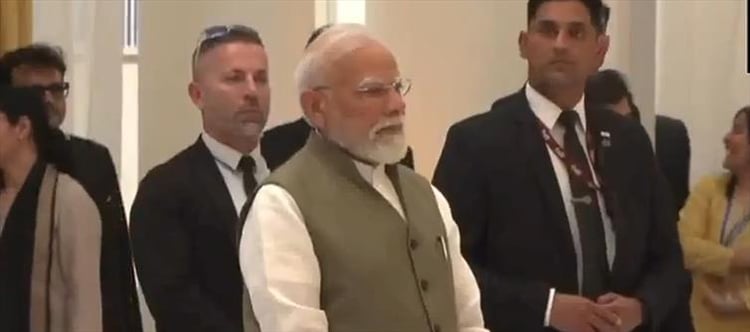
Five Indians. That is how the story begins — five labourers who landed on an archipelago of 115 islands sometime in the colonial fog. Today, Indians constitute five percent of the Seychelles population. And on a June morning in 2025, the Prime Minister of 1.4 billion people stood in the Seychelles National Assembly and delivered a speech that was, by every diplomatic measure, far too large for the room it was in.
View on X
The room was small. The signal was not.
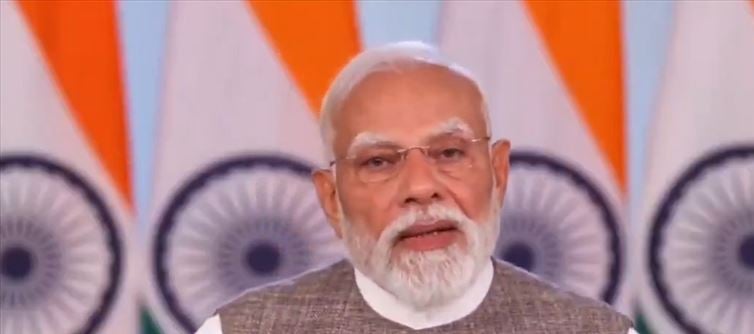
According to The Hindu, PM Narendra Modi became the first Indian Prime Minister to address the Seychelles National Assembly — a chamber more accustomed to debating fishing quotas and tourism levies than geopolitical chess. He spoke of an 'Ocean of Opportunity.' He invoked centuries of shared maritime heritage. He signed 19 agreements. He accepted the honorary title of 'Blue Guardian.' And behind each of these choreographed gestures, India Herald's read of what is really driving this is a strategic calculation so pointed it might as well have been addressed not to Victoria but to Beijing.
Key Takeaways From Modi's Seychelles Visit
- Modi became the first Indian PM to address the Seychelles National Assembly, signing 19 agreements spanning defence, UPI, maritime security, and climate resilience, according to The Hindu.
- India is exporting UPI digital payments to Seychelles as a lighter, debt-free alternative to what critics call China's Belt and Road infrastructure-for-influence model, per Indian Express.
- Seychelles' exclusive economic zone spans 1.37 million sq km — India is positioning itself as its primary security guarantor through coastal radar and patrol vessel cooperation, according to India Today.
- The Indian diaspora constitutes 5% of Seychelles' population, giving Delhi a permanent soft-power lobby in the micro-state, as reported by Telangana Today.
- The visit is part of a broader Indian Ocean sequence — Mauritius (Agalega facility), Maldives (post-'India Out' reset), and Sri Lanka (post-default courtship) — designed to create an aggregate architecture of strategic dependence on Indian systems.
- China, which has reportedly expanded its diplomatic and fisheries engagement in Seychelles in recent years, has repeatedly denied accusations of debt-trap diplomacy, calling its lending mutually beneficial.
The 19 Pacts: What India Is Actually Buying
Strip away the ceremony and the agreements tell a blunt story. According to India Today, the pacts span defence cooperation, maritime domain awareness, digital payment infrastructure (UPI integration), climate resilience, and hydrography. The defence component is not new — India has long maintained a coastal surveillance radar station on Seychelles' Mahé island and gifted patrol vessels to the Seychelles Coast Guard. But the 2025 tranche, as reported by Indian Express, deepens the integration to a degree that makes a quiet but unmistakable claim: India intends to be the primary security guarantor for Seychelles' exclusive economic zone, one of the largest in the world relative to its land area — 1.37 million square kilometres of ocean.
The UPI integration is the subtler play. Where China's Belt and Road Initiative offers hard infrastructure — ports, roads, convention centres — and what analysts at the Center for Global Development and Chatham House have called the sovereign-debt overhang that can follow, India is exporting a digital payments ecosystem. It is lighter, cheaper, and carries no collateral. For a micro-state whose GDP depends on tourism and tuna, UPI means every visiting Indian tourist becomes a node in an Indian financial architecture. It is influence without the hangover of a large bilateral loan.
Seychelles President Wavel Ramkalawan, according to The Hindu, described the agreements as reflecting the 'deep and historic partnership' between the two nations and emphasised that Seychelles views India as a 'trusted partner' in maritime security and climate adaptation. India Herald was unable to independently verify additional Seychelles government commentary beyond official protocol statements reported in Indian media.
View on X
Political Pulse
In New Delhi's diplomatic corridors, the chatter around the Seychelles visit is less about the bilateral relationship — warm but modest in trade terms — and more about the sequencing. Modi visited Sri Lanka in 2024 amid Delhi's push to counter the Colombo Port City's Chinese financing. The Maldives reset, after the bruising 'India Out' episode under former President Muizzu, remains a work in progress. Mauritius, with its Agalega airstrip that India quietly developed, is the other anchor. The talk in South Block, according to diplomatic observers, is that Seychelles is the proof-of-concept: show the island chain that India offers security and digital infrastructure without the kind of debt burden that critics have flagged in other Belt and Road recipient states, and let Malé, Colombo, and Port Louis draw their own conclusions.
There is also a domestic arithmetic that seldom gets said aloud. With Lok Sabha 2029 still distant but the narrative already being set, Modi's foreign policy optics — the 'Blue Guardian' title, the National Assembly address, the visual of a leader welcomed where no Indian PM has stood before — feed a strongman-diplomat brand that BJP's electoral machine converts into vote-bank currency. In this columnist's assessment, the opposition currently lacks a comparable foreign-policy image to counter this narrative — a gap that is strategic as much as it is visual. Every handshake on a foreign tarmac is, in some measure, a campaign photo in waiting.
View on X
China's Shadow: The Model India Is Trying To Short-Circuit
The elephant — or, more precisely, the dragon — in every room of this visit is China. According to India Today, Modi explicitly framed the Indian Ocean as a zone where 'cooperative security' must prevail, a formulation that diplomatically avoids naming Beijing while unmistakably targeting its method. China's approach in the Indian Ocean has followed what researchers at the Lowy Institute and Center for Strategic and International Studies (CSIS) have described as a recognisable pattern: fund a port (Hambantota in Sri Lanka), build convention infrastructure (the Maldives), extend concessional loans that can become less concessional over time, and convert economic leverage into strategic access.
It is important to note: China has repeatedly denied accusations of so-called 'debt-trap diplomacy,' with Beijing officials and state media characterising Chinese lending as mutually beneficial development cooperation that respects sovereign decision-making. India Herald did not seek comment from the Chinese embassy for this analysis piece.
Seychelles has so far resisted the heaviest Chinese overtures — partly because its small scale makes mega-infrastructure unnecessary, and partly because India got there first with security cooperation. But the competition is not static. According to diplomatic observers and regional media reports, China has been expanding its diplomatic presence and fisheries and marine research engagement in Seychelles in recent years. The 19 agreements signed during Modi's visit, according to The Hindu, are designed to fill the gaps before Beijing can.
The climate resilience component is particularly telling. Seychelles faces existential sea-level threats. Whoever helps the archipelago adapt owns a relationship that no future government can easily undo. India is positioning itself as that partner — not with billion-dollar loans but with technical cooperation and capacity building, the kind of engagement that creates institutional dependency without the political backlash of visible debt.
View on X
The Diaspora Card: Soft Power With A Hard Edge
According to Telangana Today, the Indian diaspora in Seychelles — descendants of those original five labourers and subsequent waves of traders and professionals — played a visible role in the visit's choreography. Modi addressed diaspora gatherings and invoked the community's contribution to Seychelles' economy and society. This is not merely sentiment. In micro-states, a five-percent population share translates into genuine political weight — votes, business networks, cultural institutions. The diaspora is India's permanent lobby, operating long after the diplomatic plane has left.
The business community's expectation, as reported by Telangana Today, is that the visit will open new trade and investment channels, particularly in tourism, IT services, and renewable energy. For Seychelles, the value proposition is diversification — less dependence on European tourism, more integration with a growing Indian middle class that is increasingly choosing island destinations.
View on X
What Comes Next: The Indian Ocean Chessboard In 2025-26
The Seychelles visit does not exist in isolation. It is one move in a sequence that India Herald assesses will accelerate through the next twelve months. The Mauritius relationship — anchored by the Agalega facility that gives India surveillance reach deep into the southwestern Indian Ocean — is due for a leadership-level reset. The Maldives, where President Muizzu's initial pivot toward Beijing has softened under economic reality, remains the most contested square on the board. And Sri Lanka, still navigating its post-default recovery, is a prize both Delhi and Beijing are actively courting.
The pattern Delhi is building is clear: bilateral agreements that are individually modest but collectively create an architecture of dependence — on Indian radar, Indian coast guard training, Indian digital payments, Indian climate adaptation. No single agreement is a headline. The aggregate is a strategic position.
But here is the question the 'Ocean of Opportunity' rhetoric does not answer: can India sustain this level of engagement across a dozen island states simultaneously, with a defence budget that is a fraction of China's and a foreign aid apparatus that remains chronically under-resourced? The charm offensive works when the PM is in the room. The test is what happens when he leaves — whether the patrol vessel gets maintained, whether the UPI integration actually processes transactions, whether the climate-resilience training produces results.
China's advantage has never been charm. It has been, as analysts at CSIS and the Brookings Institution have observed, the sheer scale of its chequebooks and construction capacity. India's counter-offer — values, democracy, shared heritage, digital ecosystems — may be more appealing on paper. Whether it is more durable in practice is the question the Indian Ocean will answer over the next decade.
Modi flew out of Victoria with a 'Blue Guardian' title and 19 signed documents. The real question is not what India signed — it is whether Delhi can deliver faster than Beijing can lend. In the Indian Ocean, the race is not between navies. It is between models. And the next contested square — Malé, Colombo, or Port Louis — will tell us which model the island chain actually trusts with its future.



By the Numbers
- 19 bilateral agreements signed between India and Seychelles covering defence, UPI, climate resilience, and maritime security (The Hindu).
- Seychelles' exclusive economic zone: 1.37 million square kilometres, one of the largest relative to land area globally.
- Indian diaspora constitutes approximately 5% of Seychelles' total population (Telangana Today).
- Modi is the first Indian PM to address the Seychelles National Assembly (Telangana Today).
Key Takeaways
- Modi became the first Indian PM to address the Seychelles National Assembly, signing 19 agreements spanning defence, UPI, maritime security, and climate resilience, according to The Hindu.
- India is exporting UPI digital payments to Seychelles as a lighter, debt-free alternative to what critics call China's Belt and Road infrastructure-for-influence model, per Indian Express.
- Seychelles' exclusive economic zone spans 1.37 million sq km — India is positioning itself as its primary security guarantor through coastal radar and patrol vessel cooperation, according to India Today.
- The Indian diaspora constitutes 5% of Seychelles' population, giving Delhi a permanent soft-power lobby in the micro-state, as reported by Telangana Today.
- The visit is part of a broader Indian Ocean sequence — Mauritius (Agalega facility), Maldives (post-'India Out' reset), and Sri Lanka (post-default courtship) — designed to create an aggregate architecture of strategic dependence on Indian systems.
- China has repeatedly denied accusations of debt-trap diplomacy; analysts at CSIS, Chatham House, and the Center for Global Development have used the framing — India Herald did not seek comment from the Chinese embassy for this analysis.
Frequently Asked Questions
Why is Modi's Seychelles visit strategically significant for India?
According to The Hindu and India Today, Modi's visit — the first by an Indian PM to address the Seychelles National Assembly — deepened India's security and economic integration with the archipelago through 19 agreements, positioning India as Seychelles' primary security partner and countering what analysts have called China's growing Indian Ocean influence.
What agreements did India and Seychelles sign during Modi's 2025 visit?
According to The Hindu, 19 agreements were signed spanning defence cooperation, UPI digital payment integration, maritime domain awareness, climate resilience, and hydrography.
How is India countering China's influence in the Indian Ocean?
According to Indian Express and India Today, India is offering security cooperation (coastal radar, patrol vessels), digital infrastructure (UPI), and climate resilience support — what analysts describe as a lighter, debt-free alternative to China's Belt and Road model. China has denied that its lending constitutes a debt trap.
What is India's 'Ocean of Opportunity' vision?
According to The Hindu, Modi framed the Indian Ocean as an 'Ocean of Opportunity' emphasising cooperative security, shared maritime heritage, and economic integration through trade, digital payments, and climate adaptation — positioning India as a partner that offers opportunity without large bilateral debt.
What does the 'Blue Guardian' title given to Modi signify?
The honorary title, conferred by Seychelles during Modi's state visit, symbolises India's role as a maritime security partner and environmental steward in the Indian Ocean region, according to reports from Telangana Today.
Has China responded to debt-trap diplomacy accusations?
China has repeatedly denied accusations of debt-trap diplomacy, with Beijing officials characterising Chinese lending as mutually beneficial development cooperation that respects the sovereignty of recipient nations.
 click and follow Indiaherald WhatsApp channel