
-

2020
-
Assembly
-
Banking
-
barack obama
-
Beijing
-
Bharatiya Janata Party
-
Bobby
-
BUSINESS
-
Delhi
-
Donald Trump
-
European Union
-
Government
-
Governor
-
gulf countries
-
India
-
Indian
-
Iran
-
June
-
Mamata Benerjee
-
Minister
-
Office
-
Parents
-
Population
-
Press
-
Prime Minister
-
READ
-
Smart phone
-
Thiruvananthapuram
-
war
-
Washington DC
-
WATCH
-
West Bengal - Kolkata

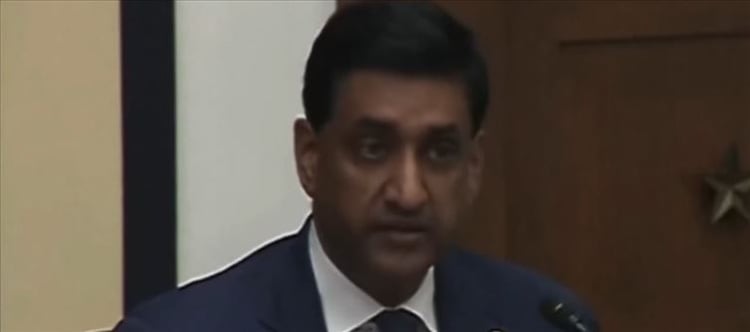
Democratic congressman **Ro Khanna** has publicly declared US-India relations at their lowest point in three decades, citing **Donald Trump**'s unilateral tariff regime and broader policy disruptions. According to News18, Khanna pointed to collapsed trust across trade, immigration, defence, and diplomatic channels — an assessment that, notably, neither the **MEA** nor **South Block** has publicly rebutted or addressed.
The 5W+H: Who, What, When, Where, Why, How
- Who: US Representative Ro Khanna (D-California), President Donald Trump, Prime Minister Narendra Modi, and diplomatic establishments in Washington and New Delhi.
- What: Khanna publicly declared that US-India relations have sunk to their lowest level in 30 years, blaming Trump's unilateral policies across tariffs, immigration, and foreign affairs.
- When: June 2025, amid ongoing trade tensions and the fallout from Trump's second-term policy recalibrations.
- Where: Washington DC and New Delhi.
- Why: A convergence of pressure points — reciprocal tariffs, H-1B visa restrictions, stalled defence procurement, the Gurpatwant Singh Pannun extradition demand, and the indefinite postponement of a Trump state visit to India — has eroded the bipartisan goodwill that sustained ties since the 1990s nuclear détente.
- How: Trump's second-term 'America First' recalibration imposed punitive tariffs on Indian goods, tightened H-1B pathways, and delayed defence deliveries including the MQ-9B Predator drone deal, while the Pannun assassination-plot case introduced an unprecedented legal overhang and diplomatic scheduling signals — a state visit pushed toward 2027 — suggest the relationship is being managed rather than nurtured.
Key Takeaways
- Ro Khanna declares US-India ties at their 'lowest in 30 years,' the most explicit public acknowledgment of the chill by a prominent US lawmaker, according to News18.
- Five simultaneous fracture points — tariffs, H-1B restrictions, defence procurement delays, the Pannun extradition demand, and a state visit pushed to 2027 — represent an unprecedented convergence of bilateral stress.
- Neither the MEA nor South Block has publicly responded to Khanna's specific characterisation of the relationship.
- Diplomatic sources describe US-India backchannels as 'professional but transactional,' stripped of the warmth of the Obama and early Trump-1.0 eras.
- India Herald's forward read: watch the MQ-9B timeline, the next tariff response, and any formal Indian response on the Pannun case as the three tells that will define the relationship's trajectory through 2026.
According to News18, Ro Khanna, the Democratic representative from California's 17th district, declared that US-India relations have sunk to their "lowest in three decades" — a phrase calibrated to land precisely where it hurts, because three decades ago is when the relationship was being rebuilt from the wreckage of post-Pokhran sanctions. The implication is devastating: everything constructed since Clinton's 2000 visit, the nuclear deal, the defence logistics agreements, the Quad — all of it now sits on thinner ice than at any point since India tested its bombs.
View on X
Khanna did not stop at a soundbite. He framed Trump's second-term foreign policy posture as a wrecking ball swung without consulting allies — India very much included. It is worth noting that some of Khanna's broader critiques of Trump's executive overreach — including his invocation of the War Powers Resolution in the context of Iran — date back to Trump's first term in 2020 and reflect a longstanding pattern of opposition, not a new grievance. What is new is Khanna's explicit linking of that pattern to the current deterioration of the India relationship under Trump's second term.
View on X
The Five Fracture Lines Nobody in South Block Will Name
Strip away the diplomatic pleasantries and the joint-statement vocabulary, and five distinct pressure points emerge — each serious on its own, collectively constituting the most comprehensive stress test the relationship has faced since the 1998 sanctions era. Notably, the Ministry of External Affairs has not publicly responded to Khanna's specific characterisation. India Herald has reached out for comment; this article will be updated if a response is received.
1. Tariffs: The Blunt Instrument. Trump's reciprocal tariff regime has hit Indian exports — particularly in IT services, pharmaceuticals, and textiles — with a severity that trade analysts say goes well beyond the 2018-19 skirmishes. India's retaliatory posture has been cautious, but the damage to business confidence is already measurable. The old formula — India buys American defence hardware, America tolerates Indian trade barriers — has been unilaterally rewritten.
2. H-1B: The People Pipeline Under Siege. For decades, the H-1B visa programme was the human connective tissue of the relationship — hundreds of thousands of Indian professionals embedded in American tech, finance, and healthcare, sending remittances, building networks, creating the constituency that made the relationship bipartisan. Trump's second-term tightening of H-1B pathways does not just affect individual applicants; it erodes the demographic base of the pro-India lobby in America itself.
3. Defence Procurement: Deals on Ice. The MQ-9B Predator drone deal, once showcased as the crown jewel of defence interoperability, remains in procurement limbo. Delivery timelines have slipped, co-production discussions have stalled, and Pentagon sources — speaking to multiple outlets — suggest India is being deprioritised in favour of European and Pacific allies. For a country that shifted its defence procurement decisively toward Washington over the past decade, the signal is unmistakable.
4. The Pannun Shadow. The Gurpatwant Singh Pannun assassination-plot case — in which American prosecutors allege an Indian government operative was involved in a plot to kill a Sikh separatist on US soil — has moved from an embarrassing diplomatic footnote to an active extradition demand. South Block's public silence on this front is itself a data point: the matter is too sensitive to address and too consequential to ignore. It reportedly poisons every back-channel conversation, according to sources familiar with the diplomatic track.
5. The Vanishing State Visit. Perhaps the most telling signal is what has not happened. A Trump state visit to India — the kind of spectacle both sides have historically used to reset optics — has been quietly pushed toward 2027. Sergio Gor, a Trump associate involved in diplomatic scheduling, reportedly used the phrase "visit next year" in recent interactions, a formulation diplomats recognise as managed delay, not genuine planning. When the photo opportunity itself is being deferred, the relationship is being maintained, not advanced.
View on X
Political Pulse
Here is the part the press releases will not carry. The talk in South Block corridors, according to sources who track the US-India diplomatic channel closely, is that the backchannels are running colder than at any point since the Modi government took office in 2014. The usual interlocutors — National Security Advisor-level contacts, the defence secretary track, the commerce ministry back-and-forth — are described as "professional but transactional," stripped of the warmth that characterised the Obama and early Trump-1.0 years.
The speculation among Delhi's strategic community is pointed: is Modi's much-vaunted "strategic patience" — the posture of absorbing provocations without public retaliation, banking on personal rapport to outlast policy cycles — still a viable doctrine when the provocations are structural, not episodic? Tariffs can be rolled back with a phone call; an extradition demand and a collapsed visa pipeline cannot.
The whisper in Lutyens' drawing rooms — and this reflects insider speculation and diplomatic corridor talk, not confirmed government policy — is that the Prime Minister's inner circle may be quietly gaming two scenarios: one in which a Democratic administration returns in 2028 and resets the architecture, and another in which Trump or a Trump successor entrenches the new normal. In the second scenario, India's pivot toward diversified partnerships — with France, Japan, the UAE, and even a carefully managed détente with Beijing — becomes not a hedge but a necessity.
Khanna's Credibility — and His Calculus
Ro Khanna is not a disinterested observer. A second-generation Indian-American, born in Philadelphia to parents who emigrated from Punjab, he represents Silicon Valley — the single largest concentration of Indian-origin professionals in the United States. His constituency is, in a very literal sense, the human infrastructure of the US-India relationship.
View on X
Khanna is also a politician with ambitions beyond the House. Speculation about a future presidential run has followed him for years, and his willingness to publicly name the US-India chill — while Trump remains popular with sections of the Indian-American diaspora — is a calculated risk. He is betting that the evidence is now too overwhelming for the "all is well" narrative to hold, and that being the first prominent voice to say so publicly positions him as prescient rather than disloyal.
View on X
His invocation of "electability" and establishment complacency in a separate context carries a subtext for the India relationship too: the establishment in both Washington and Delhi, he implies, is too invested in the myth of an unshakeable partnership to acknowledge that the foundations are cracking.
India Herald's Vantage: The Clock Is Running on Strategic Patience
India Herald's read of what is really driving this moment is not the individual fractures — each of which has a precedent and, theoretically, a resolution — but their simultaneity. Never in the post-Cold War era have trade, immigration, defence, legal, and diplomatic irritants all peaked at the same time. The old playbook — compartmentalise, resolve one track while parking another — depends on goodwill reserves. Those reserves, by every available indicator, are depleted.
The forward projection is uncomfortable but necessary: if the Trump administration maintains its current trajectory through 2026 and into a potential second midterm recalibration, India faces a window of 18-24 months in which the relationship drifts without an anchor. The Quad remains a structural asset, but it is an institutional framework, not a substitute for bilateral trust. Defence interoperability stalls without deliveries. Trade diversification takes years, not quarters. And the Pannun case has a legal clock of its own that no amount of strategic patience can slow.
What should the reader watch for? Three tells in the next six months: whether the MQ-9B delivery timeline is formally renegotiated, whether India's response to the next round of tariff escalation is retaliatory or absorptive, and whether the Pannun extradition track produces a formal Indian government response or continued silence. The first will signal whether the defence relationship is salvageable on its current terms. The second will reveal whether South Block has abandoned strategic patience for strategic assertion. The third will determine whether the legal overhang becomes a permanent structural impediment.
The question Ro Khanna has placed on the table is not whether the relationship is in trouble — that much is now bipartisan consensus. The question is whether anyone in Delhi or Washington has a plan for what comes after the patience runs out, or whether both capitals are simply waiting for the other to blink first in a game neither can afford to lose.



By the Numbers
- Ro Khanna frames the current US-India relationship as the weakest in 30 years — placing it below even the post-Pokhran 1998 sanctions period in diplomatic terms.
- The Trump state visit to India has reportedly been pushed toward 2027, with the phrase 'visit next year' used in recent diplomatic scheduling interactions — a signal of managed delay.
- India Herald identifies an 18-24 month window of bilateral drift if the current trajectory holds through 2026, with no structural reset mechanism in place.
Key Takeaways
- Ro Khanna declares US-India ties at their 'lowest in 30 years,' the most explicit public acknowledgment of the chill by a prominent US lawmaker, according to News18.
- Five simultaneous fracture points — tariffs, H-1B restrictions, defence procurement delays, the Pannun extradition demand, and a state visit pushed to 2027 — represent an unprecedented convergence of bilateral stress.
- Neither the MEA nor South Block has publicly responded to Khanna's specific characterisation of the relationship.
- Diplomatic sources describe US-India backchannels as 'professional but transactional,' stripped of the warmth of the Obama and early Trump-1.0 eras.
- India Herald's forward read: watch the MQ-9B timeline, the next tariff response, and any formal Indian response on the Pannun case as the three tells that will define the relationship's trajectory through 2026.
Frequently Asked Questions
Why does Ro Khanna say US-India relations are at a 30-year low?
According to News18, Khanna cites Trump's unilateral tariff policies, H-1B restrictions, stalled defence deals, the Pannun extradition demand, and broader second-term foreign policy disruptions as collectively dragging the relationship to its weakest point since the post-Pokhran sanctions era of the mid-1990s.
What are the five main pressure points in US-India relations in 2025?
The five fracture lines are: reciprocal tariffs hitting Indian exports, H-1B visa pathway tightening, defence procurement delays including the MQ-9B Predator drone deal, the Gurpatwant Singh Pannun extradition demand, and the indefinite postponement of a Trump state visit to India.
Is Ro Khanna Indian?
Ro Khanna is an American citizen of Indian descent, born in Philadelphia to parents who emigrated from Punjab. He represents California's 17th congressional district, which includes much of Silicon Valley.
Could Ro Khanna run for president?
Khanna, a natural-born US citizen, is constitutionally eligible for the presidency. Speculation about a future presidential bid has followed him for years, and his willingness to publicly critique both establishment Democrats and Trump's foreign policy positions him as a progressive voice with national ambitions.
What is Modi's 'strategic patience' approach to the US?
Strategic patience refers to India's posture of absorbing provocations — tariffs, visa restrictions, diplomatic slights — without public retaliation, banking on personal rapport between leaders and long-term structural convergence. Analysts now question whether this doctrine works when the provocations are structural and simultaneous rather than episodic.
Has the Indian government responded to Ro Khanna's remarks?
As of publication, neither the Ministry of External Affairs nor South Block has issued a public response to Khanna's specific characterisation of the relationship as being at a 30-year low.
 click and follow Indiaherald WhatsApp channel