
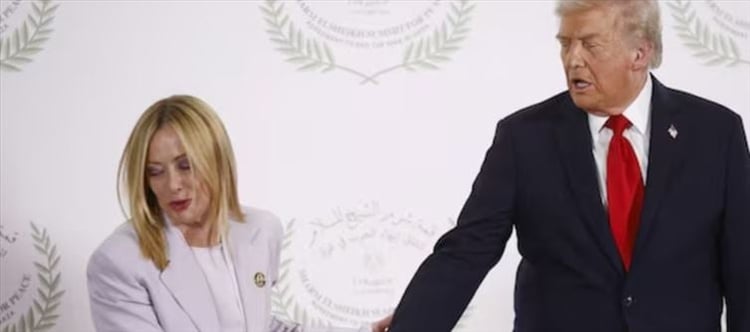


Italian PM Giorgia Meloni's public declaration that she will not kneel before the US despite valuing the alliance puts PM Narendra Modi in an unusual diplomatic bind, according to multiple reports. Modi has cultivated deep personal ties with both leaders; a sustained crack between them could force Delhi to calibrate its G7 strategy and trade-corridor diplomacy with new care.
The 5W+H: Who, What, When, Where, Why, How
- Who: Italian PM Giorgia Meloni and US President Donald Trump, with Indian PM Narendra Modi as the key third-party stakeholder watching from the diplomatic middle.
- What: Meloni publicly declared she is 'not anti-American' but 'will not kneel,' escalating a visible spat with Trump over trade tariffs and transatlantic policy differences, as reported by NDTV, WION, and DNA.
- When: The remarks came in June 2025, days after a public disagreement between the two leaders over US tariff and trade postures.
- Where: Rome, with diplomatic ripple effects reaching New Delhi, Washington, and the broader G7 framework.
- Why: According to reports, the friction stems from Trump's aggressive tariff regime and what Rome perceives as a unilateral US trade posture that undermines European and Italian economic interests.
- How: Meloni used a carefully calibrated public statement — asserting Italian sovereignty while reaffirming the transatlantic bond — a posture that forces every G7 partner, including India, to recalibrate its own bilateral geometry.
When two friends you need equally decide to fight in public, the smartest move is often to be the one holding both their jackets. That is the position Narendra Modi finds himself in this week — except neither Giorgia Meloni nor Donald Trump appears ready to take the jacket back quietly.
Italy's Prime Minister, according to NDTV and WION, used sharp, carefully chosen language to address a widening rift with Washington: she is 'not anti-American,' she said — but she will not kneel. The phrase carries a weight heavier than a trade tariff: it is a sovereign assertion from the leader of one of America's oldest NATO allies, and it lands in the middle of the G7 just as India is deepening its own partnerships with both camps.
View on X
What Meloni Actually Said — and What She Left Unsaid
The Italian PM's statement, as reported by DNA and WION, was a masterclass in diplomatic doublespeak. She affirmed the US-Italy alliance. She insisted she was not anti-American. And then she drew a line: Italy will not kneel. The trigger, per multiple reports, was Trump's aggressive tariff posture — a regime that has rattled European capitals far beyond Rome. But the phrasing — 'not kneeling' — was not a trade negotiator's language. It was a sovereignty statement, delivered to a domestic audience that has watched Meloni carefully balance her right-wing nationalist credentials with her pragmatic Atlanticism.
View on X
What she did not say was equally telling. There was no direct personal criticism of Trump. No threat to revisit defence cooperation. No mention of pulling back from any bilateral commitment. This was a controlled burn — hot enough to be visible from across the Atlantic, contained enough to not set the whole forest on fire.
Why This Matters in New Delhi More Than in Brussels
For the European Union's bureaucracy, a Meloni-Trump spat is almost background noise — transatlantic trade friction is older than the EU itself. But for New Delhi, this is a different calculus entirely. Modi has spent years building something unusual: deep personal relationships with both leaders simultaneously. The Modi-Meloni bonhomie — visible at G7 summits, in bilateral visits, and in the India-Middle East-Europe Economic Corridor (IMEC) framework — runs in parallel with the Modi-Trump courtship that has yielded defence deals, semiconductor pledges, and the pageantry of stadium rallies.
A fracture between Rome and Washington does not merely create awkward seating arrangements at the next G7. It threatens the connective tissue of the IMEC corridor itself, a project that links Indian ports to European markets through the Middle East — and which needs both Italian port infrastructure and American strategic backing to survive. According to analysts tracking the corridor, any sustained US-Italy trade friction could slow investment commitments on the European end, leaving India exposed as the anchor partner in a corridor whose other end is wobbling.
View on X
Political Pulse
The talk in South Block corridors, as India Herald reads it, is less about picking sides and more about exploiting the gap. Diplomatic insiders have long noted that Modi operates best when global fault lines create space for bridge-building — the Ukraine war, the Russia-West standoff, and the China-US tech decoupling have all been leveraged by Delhi to extract concessions from competing powers without formally choosing a camp.
A Meloni-Trump crack opens a similar window. The whisper doing the rounds in policy circles is this: could Modi position himself as the G7's honest broker — the leader both sides trust, the one who can quietly carry messages when Washington and Rome are not picking up each other's calls? It is not a fanciful theory. Modi's personal equation with both leaders is arguably warmer than either has with any other G7 counterpart. And India's strategic ambiguity — not in NATO, not in the EU, but deeply embedded in both their economic futures — gives Delhi a flexibility that Berlin or Paris simply do not have.
But there is a risk the corridors are quieter about. If the spat deepens — if tariffs bite, if defence cooperation frays, if the 2025 G7 summit becomes a stage for public friction rather than coordinated messaging — then being the man in the middle stops being an asset and starts being a liability. A bridge that both sides claim is tilting toward the other is a bridge nobody trusts.
The Unstated Electoral Calculation
Strip away the geopolitics for a moment and look at the domestic optics. Modi's brand as a global statesman — the leader who gets the call from Washington at 6 AM and who shares the stage with Meloni at the G7 — is a significant electoral asset heading into the latter half of this decade. That brand works best when both relationships look strong and drama-free. A visible Meloni-Trump spat — especially one covered extensively in Indian media — muddies that picture. Indian voters may not track EU trade policy, but they notice when two leaders their PM is photographed embracing start publicly snapping at each other.
The BJP's political managers, according to the chatter in party circles, are watching this not for what it means in Rome or Washington but for what it means on Indian television. The narrative of Modi as the world's most sought-after leader requires both seekers to be functional allies, not feuding ones. A broken triangle weakens the geometry that makes the photo-ops work.
What Comes Next — The G7 Test
The real test arrives at the next G7 leaders' meeting. If Meloni and Trump carry their friction into that room, India — as a regular G7 invitee and a key partner in the broader G7+ framework — will face a choice it has successfully avoided for years: whose position does Delhi publicly lean toward on tariffs, on trade corridors, on the architecture of the post-pandemic economic order?
India Herald's assessment is that Modi's team will attempt what it has perfected in other theatres — strategic equidistance dressed up as active mediation. Delhi will likely reach out to both sides privately, reaffirm bilateral commitments with each, and avoid any public statement that could be read as tilting. The IMEC corridor gives India a concrete reason to keep both partners invested — it is the shared project that gives all three capitals a reason to manage the friction rather than escalate it.
But here is the dimension the coverage elsewhere is missing: the real beneficiary of a Meloni-Trump spat may not be Modi at all. It may be Beijing. Every crack in the Western alliance matrix — every tariff wall between NATO allies, every sovereignty assertion that pulls a European capital away from Washington's orbit — widens the space for Chinese economic diplomacy in Europe. And that, for Delhi, is the threat that makes this spat matter far more than the headlines suggest.
Meloni said she will not kneel. Trump, by all accounts, did not ask her to stand. But between the two postures, there is a gap — and in that gap, the power calculations of half the world are quietly being rewritten. The question for Modi is not whose call he picks up first. It is whether, when he puts the phone down, both callers still believe he is on their side.

By the Numbers
- The IMEC corridor, linking Indian ports to European markets through the Middle East, requires investment commitments from both Italian and American stakeholders — a dual dependency that makes this spat strategically significant for India.
- India has been a regular G7 invitee and key G7+ partner, making any fracture between host-nation Italy and the US a direct diplomatic variable for New Delhi.
Key Takeaways
- Italian PM Meloni's 'I will not kneel' statement, per NDTV and WION, escalates a US-Italy rift rooted in Trump's tariff regime — but stops short of threatening defence or alliance commitments.
- The India-Middle East-Europe Economic Corridor (IMEC) needs both Italian port infrastructure and American strategic backing; sustained US-Italy friction could slow the European end, leaving India exposed.
- Modi's dual courtship of both Meloni and Trump gives India potential bridge-builder leverage at the G7 — but a deepening spat could turn strategic equidistance into a liability.
- The quiet winner of any sustained Western alliance fracture may be Beijing, which gains diplomatic space in Europe every time a NATO partner pushes back against Washington.
- The BJP's domestic brand of Modi as a global statesman depends on both Western relationships looking functional; a visible Meloni-Trump feud complicates that electoral narrative.
Frequently Asked Questions
Why did Meloni say she 'will not kneel' to the US?
According to NDTV and WION, Meloni was responding to Trump's aggressive tariff posture that has rattled European capitals. She affirmed the US-Italy alliance but drew a sovereignty line, signalling that Italy will not accept unilateral trade terms without pushback.
How does the Meloni-Trump spat affect India?
India has cultivated deep ties with both leaders and is a key partner in the IMEC corridor linking Indian ports to European markets. A sustained rift could slow IMEC investment on the European end and complicate Modi's G7 bridge-builder positioning.
Could Modi mediate between Meloni and Trump?
Analysts in policy circles suggest Modi's personal warmth with both leaders and India's strategic ambiguity — not in NATO, not in the EU — give Delhi unusual flexibility. But if the spat deepens, being in the middle could become a liability rather than an asset.
Who benefits most from a US-Italy rift?
India Herald's analysis suggests the quiet beneficiary is China. Every crack in the Western alliance widens space for Beijing's economic diplomacy in Europe — a strategic consequence that matters more to Delhi than the bilateral optics of the spat itself.
 click and follow Indiaherald WhatsApp channel