

-

Application
-
Bharatiya Janata Party
-
Calcutta
-
CM
-
Congress-NCP
-
court
-
Election
-
Election Commission
-
Elections
-
engineer
-
Event
-
Government
-
House
-
India
-
Indian
-
Kalyan Banerjee
-
Kolkata
-
Leader
-
local language
-
Lockdown
-
Mamata Benerjee
-
Party
-
police
-
Rajya Sabha
-
READ
-
salt
-
Shiv Sena
-
shiv sena party
-
Stalin
-
Supreme Court
-
udhayanidhi stalin
-
Venkatesh
-
war
-
WATCH
-
West Bengal - Kolkata
-
workers
-
youth
-
zero

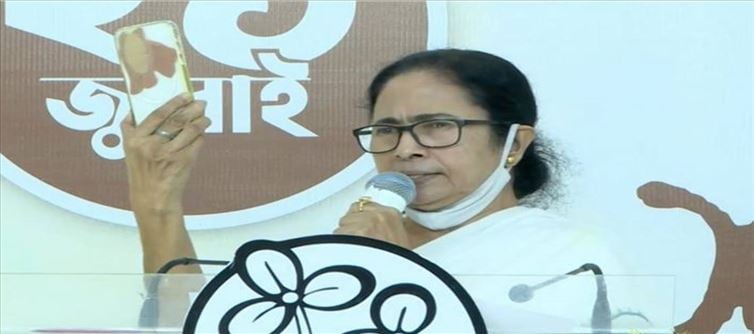
Kolkata Police have denied permission to both rival TMC factions — Mamata Banerjee's camp and the rebel group — to hold the party's annual Martyrs' Day rally at Esplanade on July 21, according to the Times of India. The denial, citing law-and-order concerns over competing claims to the same venue, is an extraordinary admission that the ruling party's internal split has become a civic security liability.
The 5W+H: Who, What, When, Where, Why, How
- Who: Kolkata Police, and both the Mamata Banerjee-led TMC faction and the rival TMC faction that applied for Martyrs' Day rally permission.
- What: Denied permission to both TMC factions to hold the iconic Martyrs' Day rally at Esplanade, Kolkata, according to the Times of India.
- When: The denial was communicated ahead of July 21, the date of the annual Martyrs' Day observance, as reported by the Times of India and ANI.
- Where: Esplanade, central Kolkata — the traditional venue for TMC's flagship political rally.
- Why: Kolkata Police cited law-and-order concerns arising from two rival factions of the same ruling party claiming the same venue on the same date, per the Times of India.
- How: Both factions formally approached police for permission; police assessed the competing claims as a public-order risk and rejected both applications, according to ANI reporting.
Two applications. One rally ground. Zero permissions. And a ruling party forced to watch its own police force stamp 'Denied' on the event that once defined its identity.
When Kolkata Police refused permission to both TMC factions — Mamata Banerjee's loyalists and the rival camp — to hold the annual Martyrs' Day rally at Esplanade on July 21, they did something no opposition party has managed in a decade of trying: they made TMC's internal fracture an official, notarised fact on a government file. According to the Times of India, the police cited law-and-order concerns arising from two competing claims to the same iconic venue on the same date. The administrative language is polite. The political humiliation is not.
View on X
Martyrs' Day is not just another rally for TMC. It is the party's founding mythology — the annual commemoration of the July 21, 1993 firing on Youth Congress workers that propelled Mamata Banerjee from a street agitator into a party-builder. Esplanade is not just another maidan; it is the party's emotional Mecca, the one stage where Banerjee has, for decades, delivered the speech that sets TMC's political calendar for the year. To lose access to Esplanade on July 21 is, in TMC's own symbology, to lose custody of the party's soul.
And that is precisely what the factional war is now about.
The Mechanics of a Split That Cannot Be Hidden
The fact that two rival TMC camps both submitted formal applications to police tells its own story. This is not backroom manoeuvring or corridor whispers; this is two letterheads, two delegations, two sets of party functionaries each claiming to be the real TMC — and doing so before the very state machinery that Mamata Banerjee controls. According to ANI, both factions formally approached police for the Esplanade venue, each asserting its right to the Martyrs' Day legacy.
View on X
For Kolkata Police — an arm of the state government that Mamata Banerjee leads — the situation was a political landmine dressed as a permissions request. Granting one faction's application would mean the state's own police endorsing one side of an intra-party war, effectively choosing who is the 'real' TMC. Granting both would risk a physical confrontation at a venue with decades of volatile political history. The only administratively safe option — denying both — is also the most politically devastating for the Chief Minister, because it treats her party's internal crisis as a law-and-order problem indistinguishable from a communal clash or a rival-party standoff.
Political Pulse
The talk in Kolkata's political corridors, as sources familiar with TMC's inner workings describe it, is that the Esplanade denial is less about crowd control and more about a signal from within the state apparatus. The whisper is pointed: elements within the administration — some say even within the police leadership — are no longer willing to paper over the factional cracks. For years, the unwritten code in Bengal governance has been that TMC's internal arguments stay internal, and the machinery accommodates whoever Banerjee designates. That code, the chatter suggests, is fraying.
There is also a harder, more cynical read circulating: that the denial may suit Banerjee herself. If neither faction gets Esplanade, the rebel camp cannot claim a symbolic victory by holding the rally independently at the party's most sacred venue. But this reading has a cost — because Banerjee's own faction, led by senior leader Kalyan Banerjee, has already called the denial 'undemocratic' and announced plans to move court, according to the Times of India. When a ruling party's senior parliamentarian uses the word 'undemocratic' against his own government's police force, the factional wound is not merely open — it is being performed for the public.
View on X
Why This Is Not Just a Bengal Story
India Herald's read of what is really driving this goes beyond Kolkata. The Esplanade denial is a case study in what happens when a personality-driven regional party's succession anxieties cross the threshold from political management into administrative paralysis. TMC is not the first Indian party to fracture — the Shiv Sena split, the NCP division, and the AIADMK's post-Jayalalithaa implosion all followed similar arcs. But in each of those cases, the split was formalised through legal battles, Election Commission hearings, and eventually separate party symbols. TMC's split has not reached that stage — and that ambiguity is precisely what makes it more dangerous. The state machinery, designed to deal with rival parties, has no protocol for a ruling party at war with itself. Kolkata Police's denial is not a solution; it is an admission that no solution exists within the current administrative toolkit.
The factional arithmetic matters beyond symbolism. TMC controls 215 of 294 seats in the Bengal Assembly, according to the latest legislative data. But a party that cannot agree on who gets the microphone at Esplanade is a party whose legislative majority is a number, not a mandate. Bengal's municipal elections, widely expected in the coming months, will be the first real test of whether the split translates into seat losses or whether Banerjee's organisational grip can contain the damage at the ballot box.
The Forward View: What Happens Next
If the Mamata faction moves court — as Kalyan Banerjee has indicated, per the Times of India — the case will force a judiciary already wary of political entanglements to adjudicate on a question no court wants to answer: which TMC is the TMC? That judicial intervention, if it comes, sets a precedent that could embolden the rebel faction to seek formal recognition from the Election Commission, potentially triggering the same party-symbol battle that reshaped Maharashtra's political landscape.
Watch for the venue shift. If Banerjee's camp relocates its Martyrs' Day rally to an alternative Kolkata venue — Brigade Parade Ground, perhaps, or the newer rally sites in Salt Lake — it concedes the Esplanade symbolism. If it insists on Esplanade and wins a court order, it establishes a legal footprint that the rival faction can cite in its own future claims. Either path costs something. And that is the quiet devastation of the Esplanade denial: it has turned a permissions form into a political trap with no clean exit.
The last time TMC failed to hold its Martyrs' Day rally at Esplanade was during the pandemic, when the virus provided political cover. This time, the virus is inside the party. And there is no lockdown for that.
By the Numbers
- TMC controls 215 of 294 seats in the Bengal Assembly, but the Esplanade denial reveals a party whose legislative majority does not translate into organisational unity.
- July 21, 1993 — the date of the firing on Youth Congress workers that became TMC's founding mythology and the origin of the annual Martyrs' Day rally at Esplanade.
Key Takeaways
- Kolkata Police denied Martyrs' Day rally permission to BOTH rival TMC factions at Esplanade, treating the ruling party's internal split as a law-and-order threat — per the Times of India.
- Senior TMC leader Kalyan Banerjee called the police denial 'undemocratic' and announced the Mamata faction will move court, per the Times of India — a ruling party challenging its own state machinery.
- The Esplanade denial follows the pattern of personality-driven Indian party splits (Shiv Sena, NCP, AIADMK) but is uniquely dangerous because TMC's fracture remains informal, leaving state administration with no protocol for a ruling party at war with itself.
- A court battle over the rally could force judicial adjudication on which faction is the 'real' TMC, potentially triggering a formal Election Commission party-symbol dispute similar to Maharashtra's Shiv Sena split.
- Bengal's upcoming municipal elections will be the first ballot-box test of whether the TMC split translates into real seat losses or remains a contained intra-party drama.
Frequently Asked Questions
Why did Kolkata Police deny permission for TMC's Martyrs' Day rally at Esplanade?
According to the Times of India, Kolkata Police denied permission to both rival TMC factions citing law-and-order concerns, as two competing camps claimed the same venue on the same date, making any single grant a factional endorsement and a dual grant a physical-confrontation risk.
What is the significance of Esplanade for TMC's Martyrs' Day rally?
Esplanade is the traditional venue for TMC's annual July 21 Martyrs' Day rally, commemorating the 1993 police firing on Youth Congress workers — the event that became the party's founding mythology under Mamata Banerjee.
Will TMC challenge the Kolkata Police denial in court?
Yes — senior TMC leader Kalyan Banerjee has called the denial 'undemocratic' and announced plans to move court to secure permission for the Mamata faction's rally, according to the Times of India.
How does the TMC split compare to the Shiv Sena split in Maharashtra?
Both involve factional wars within personality-driven regional parties, but TMC's split remains informal — no Election Commission adjudication or separate symbols yet — making the administrative paralysis more acute because the state machinery has no formal protocol for it.


 click and follow Indiaherald WhatsApp channel