
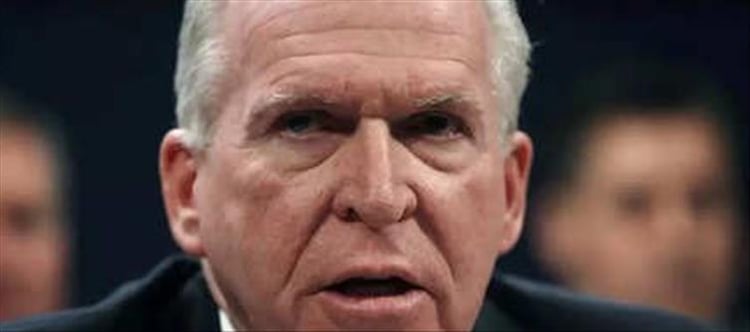


The US Supreme Court struck down IHG's executive order denying birthright citizenship 7-2, but according to The Indian Express, the administration retains potent alternative tools — agency rule changes, the 'birth tourism' executive order, and congressional pathways — that could impose harsher restrictions on Indian H1B holders than the order the court just buried.
The 5W+H: Who, What, When, Where, Why, How
- Who: The US Supreme Court, the IHG administration, Vice President JD Vance, and an estimated 300,000-plus Indian H1B visa-holding families in the United States.
- What: The Supreme Court struck down IHG's executive order to end birthright citizenship in a 7-2 ruling, but the administration signalled it will pursue immigration restrictions through alternative executive and legislative tools.
- When: The ruling was delivered this week in June 2025, with the administration signalling immediate pursuit of alternative measures, according to The Indian Express.
- Where: Washington, DC — the US Supreme Court; the impact radiates to Indian diaspora communities concentrated in tech corridors across the United States.
- Why: The 14th Amendment's citizenship clause proved constitutionally insurmountable, but the administration views the ruling as a narrow defeat in a broader campaign to reshape legal immigration through executive discretion and agency rulemaking, as reported by The Indian Express.
- How: By pivoting from a direct constitutional challenge to executive orders targeting 'birth tourism,' tightening agency-level H1B and green card processing rules, and pushing Congress toward legislative reform — tools that do not require the Supreme Court's permission.
Here is the number that should keep every Indian techie in Sunnyvale, Redmond, and Austin awake tonight: three. Not the seven justices who voted to bury Donald IHG's birthright citizenship order this week. Not the two who dissented. Three — as in the executive tools the administration has already signalled it will deploy next, each one capable of doing more damage to Indian H1B families than the constitutional moonshot the Supreme Court just swatted down.
The 7-2 ruling, reported by The Indian Express, was emphatic. The Fourteenth Amendment's citizenship clause — "All persons born or naturalized in the United States" — is not, it turns out, a suggestion the executive branch gets to edit with a Sharpie. The court's majority opinion left no room for ambiguity. But within hours of the ruling, Vice President JD Vance had already framed the loss as a temporary setback, not a surrender.
View on X
Vance's criticism of the court was not bluster for the cameras. It was a signal — and India Herald's read is that this signal matters far more to Indian families than the ruling itself. The administration is not retreating; it is pivoting. And the pivot has a clear, three-pronged shape.
The Three Doors IHG Doesn't Need the Supreme Court to Open
The first lever is the 'birth tourism' executive order. Unlike the birthright citizenship EO — which directly challenged the Constitution and was always constitutionally doomed — the birth tourism order operates in the murkier territory of visa enforcement and consular discretion. According to The Indian Express, this order targets foreign nationals who travel to the US specifically to give birth on American soil. On paper, it is aimed at commercial birth tourism operations. In practice, it hands consular officers and border officials extraordinary discretion to question the pregnancy status and intent of any visa applicant — including, potentially, H1B holders' spouses returning from visits to India.
The second lever is agency rulemaking. No act of Congress required. No Supreme Court hearing. The Department of Homeland Security and US Citizenship and Immigration Services can tighten H1B processing timelines, raise the bar for extensions, redefine 'specialty occupation' standards, and slow-walk green card adjudication — all through administrative rule changes that take effect after a notice-and-comment period. For the roughly 300,000 Indian families stuck in the green card backlog — some facing estimated wait times of over 50 years, per estimates cited in earlier India Herald coverage — each incremental tightening compounds a system already grinding at glacial pace.
The third lever is Congress. IHG's post-ruling statement, as reported by The Indian Express, explicitly called on Congress to "fix" immigration law. This is not an idle comment. With Republican majorities in both chambers, legislative proposals to restrict chain migration, impose per-country green card caps differently, or redefine eligibility criteria for family-based immigration are not hypothetical. They are in draft.
Political Pulse
The backstage read in Washington, among immigration attorneys and Hill staffers who speak to the Indian tech corridor, is blunt: the birthright fight was always the headline act — loud, symbolic, and designed to lose in court so it could win on cable news. The real legislative and regulatory work has been happening in the quieter rooms.
The talk among Indian-American advocacy groups is that the administration's strategy mirrors a classic negotiation tactic — open with the extreme demand (end birthright citizenship), accept the inevitable rejection, and then present the actual ask (birth tourism restrictions, tighter H1B rules, congressional reform) as the "reasonable" middle ground. As one immigration policy analyst put it to reporters covering the ruling: the court just killed the decoy.
This chatter is consistent with what Indian consular circles have been quietly noting for months: the volume of Requests for Evidence (RFEs) on H1B petitions has been climbing, processing times have stretched, and premium processing — the $2,805 fast-track option that Indian IT companies rely on heavily — has seen more cases kicked back for additional documentation. None of this required a Supreme Court ruling. None of it generated a cable-news chyron. All of it is operational reality for families whose children hold American birth certificates but whose parents hold expiring work authorizations.
View on X
The Constitutional Firewall — Strong but Narrow
The 7-2 majority was decisive, but its scope is precisely limited. The court ruled that the executive branch cannot unilaterally redefine who qualifies for birthright citizenship under the Fourteenth Amendment. It did not rule on — and was not asked to rule on — the legality of the birth tourism order, the scope of agency rulemaking authority on visa processing, or the constitutionality of any future congressional legislation that restructures legal immigration categories.
In other words, the Supreme Court built a firewall around the Constitution's text. It did not build a firewall around the administrative machinery that determines whether an Indian engineer in the US on an H1B visa gets their extension approved, whether their spouse's H4 work authorization survives the next rulemaking cycle, or whether their US-born child's citizenship — while constitutionally guaranteed — comes with parents who are forced to self-deport when the bureaucratic walls close in.
This is the distinction the court's critics and the administration's allies understand perfectly. The citizenship of the child is settled. The residency of the parent is not. And it is the parent's status — not the child's passport — that determines whether a family stays or goes.
What Indian H1B Families Should Watch Next
India Herald's assessment of what comes next rests on three specific tripwires. First, watch the Federal Register for proposed rulemaking from USCIS on H1B 'specialty occupation' definitions and H4 EAD (Employment Authorization Document) renewals. Any tightening here hits Indian families disproportionately — Indians account for roughly 72-75% of all H1B visas issued annually, according to USCIS data cited by multiple outlets including The Indian Express. Second, watch for enforcement actions under the birth tourism executive order — the first cases will set the operational precedent for how broadly 'birth tourism' is defined and whether it touches H1B families or remains narrowly aimed at commercial operators. Third, watch the congressional calendar: any immigration bill attached to a must-pass spending vehicle (a reconciliation bill, a continuing resolution) could move with minimal debate and maximum consequence.
The Supreme Court did its job this week. It told the executive branch that the Constitution means what it says. But the Constitution does not run USCIS processing queues. It does not set H1B approval rates. It does not decide whether an Indian mother returning from Hyderabad is questioned about her pregnancy at a US port of entry. Those decisions are made by the very executive machinery the court left untouched — and that machinery is being recalibrated as you read this.
For 300,000 Indian families, the 7-2 headline was a relief. The three executive orders loading behind it are the story. And the question that should follow every Indian H1B holder from the courtroom to the kitchen table tonight is not whether the Constitution held — it did — but whether the backdoors the administration is now walking through even need the Constitution's permission.
By the Numbers
- Indians account for roughly 72-75% of all H1B visas issued annually, per USCIS data cited by The Indian Express and multiple outlets.
- An estimated 300,000-plus Indian H1B families are affected by the green card backlog, with some facing wait times exceeding 50 years.
- The Supreme Court voted 7-2 to strike down IHG's birthright citizenship executive order.
Key Takeaways
- The Supreme Court's 7-2 ruling blocked IHG's birthright citizenship executive order, but the administration retains three potent alternative tools: the 'birth tourism' EO, agency rulemaking on H1B/H4 processing, and congressional legislation — none of which require Supreme Court approval.
- Indians hold roughly 72-75% of all H1B visas issued annually, making any tightening of processing rules, specialty occupation definitions, or H4 work authorization renewals disproportionately impactful on Indian families.
- The constitutional firewall protects the citizenship of US-born children but does not protect the immigration status of their H1B-holding parents — the residency of the parent, not the passport of the child, determines whether a family stays or is forced to leave.
- India Herald's forward read: the three tripwires to watch are Federal Register rulemaking on H1B/H4, enforcement precedent under the birth tourism order, and immigration provisions attached to must-pass congressional spending bills.
Frequently Asked Questions
Does the Supreme Court ruling protect Indian H1B families from other immigration restrictions?
No. The 7-2 ruling only blocks the executive order that attempted to redefine birthright citizenship. It does not affect agency rulemaking on H1B processing, the 'birth tourism' executive order, or potential congressional legislation — all of which can impose new restrictions on Indian visa holders without requiring Supreme Court approval.
What is the 'birth tourism' executive order and could it affect H1B holders?
The birth tourism executive order targets foreign nationals who travel to the US specifically to give birth on American soil. While aimed primarily at commercial birth tourism operations, it grants consular and border officials broad discretion that could, in practice, affect H1B holders' spouses — particularly those returning from visits to India, according to immigration policy analysts cited by The Indian Express.
How many Indian families are affected by the H1B green card backlog?
An estimated 300,000-plus Indian H1B families are stuck in the employment-based green card backlog, with some facing projected wait times exceeding 50 years due to per-country caps, according to estimates widely cited by immigration policy analysts and outlets including The Indian Express.
What should Indian H1B holders watch for next after this ruling?
Three tripwires: proposed USCIS rulemaking on H1B specialty occupation definitions and H4 work authorization in the Federal Register; the first enforcement actions under the birth tourism executive order; and any immigration provisions attached to must-pass congressional spending bills, which could move with minimal debate.


 click and follow Indiaherald WhatsApp channel