
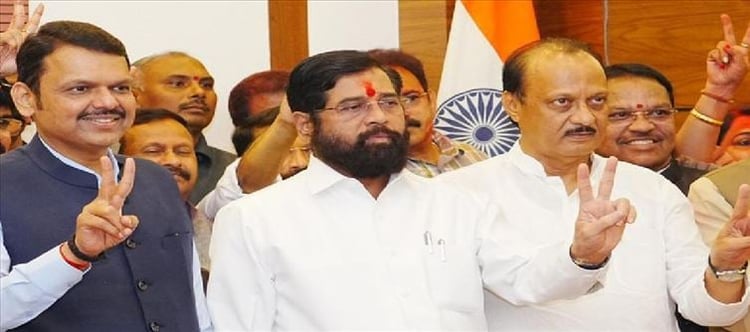


Aaditya Thackeray's rebranding of the 2022 Shiv Sena split as 'Operation Devendra Fadnavis' is a deliberate pivot in the Thackeray Sena's narrative — shifting the villain from Eknath Shinde, the man who walked out, to the BJP leader accused of engineering it. The move aims to exploit growing insecurity within the Mahayuti alliance ahead of crucial political battles in Maharashtra.
The 5W+H: Who, What, When, Where, Why, How
- Who: Aaditya Thackeray, executive leader of Shiv Sena (UBT), directly targeting Maharashtra Chief Minister Devendra Fadnavis and, by calculated omission, sidelining Eknath Shinde from the narrative.
- What: Aaditya publicly termed the June 2022 Shiv Sena split as 'Operation Devendra Fadnavis,' attributing the engineering of the rebellion not to Shinde but to Fadnavis and the BJP's political apparatus.
- When: In 2026, amid intensifying Mahayuti coalition tensions and ahead of upcoming political cycles in Maharashtra.
- Where: Maharashtra — the statement radiates from Matoshree, the Thackeray family residence in Mumbai, toward the corridors of Mantralaya and Varsha bungalow.
- Why: To reframe the 2022 split narrative, drive a wedge between Fadnavis and Shinde within Mahayuti, and consolidate the Maratha sympathy vote around the Thackeray camp by painting the BJP — not a Sena rebel — as the real architect of betrayal.
- How: By publicly rebranding the split as a BJP-engineered operation rather than an internal Sena rebellion, Aaditya shifts the moral blame from a party insider (Shinde) to an external power-broker (Fadnavis), making Shinde appear a puppet rather than an agent — a framing designed to humiliate both men differently.
There is a reason Aaditya Thackeray did not say 'Operation Eknath Shinde.' He could have. The name would have been factually closer to the surface event — it was Shinde, after all, who marched forty-odd MLAs out of the Shiv Sena in June 2022, who flew them to Guwahati, who brought down the Uddhav Thackeray government. For three years, the Thackeray camp's entire political vocabulary revolved around one word: gaddaar — traitor. Shinde was the villain, the faithless lieutenant, the man Balasaheb's family could not forgive.
And then, in one public statement in 2026, Aaditya Thackeray changed the script. The villain is no longer the man who walked out. The villain is the man who allegedly held the door open. According to a report by India Today, Aaditya explicitly described the 2022 split as 'Operation Devendra Fadnavis,' pinning the architecture of the rebellion squarely on the BJP leader and current Maharashtra Chief Minister — not on the rebel who executed it.
On the surface, it sounds like rhetorical escalation. Underneath, it is a grenade lobbed with surgical precision into the most fragile joint of the Mahayuti coalition.
The Calculated Demotion of Shinde
Consider what Aaditya's reframing actually does. By naming the operation after Fadnavis, Shinde is demoted — from a powerful rival who seized the party, to a mere instrument, a pawn moved across the board by someone else's hand. This is not an accident. It is designed to sting in two directions at once.
For Shinde's camp, the message is corrosive: you did not even have the agency to betray us on your own. Your rebellion was not yours. You were a tool. In Maharashtra's intensely ego-driven political culture — where every leader carries the self-image of a mass leader with independent stature — being called someone else's puppet is a deeper wound than being called a traitor. A traitor, at least, is feared. A puppet is pitied.
For Fadnavis, the message is different but equally pointed: you are the real villain of this story, the cold strategist who dismantled a legacy party for electoral arithmetic. In the Maratha political imagination — where the Shiv Sena's founding mythology still carries weight even among voters who have drifted — being cast as the sutradhar (puppeteer) of a family's humiliation is a potent charge. It reframes 2022 not as an organic political realignment but as a hostile corporate takeover.
Political Pulse
The corridors of Mantralaya and the drawing rooms of Nagpur are reading this move through the same lens, according to political observers tracking Maharashtra's coalition dynamics. The whisper in BJP circles, as reported by senior political commentators, is uneasy: Fadnavis's dominance within Mahayuti has already been a source of friction, with Shinde's faction feeling sidelined in governance and credit-sharing. By branding the split as Fadnavis's 'operation,' Aaditya is pouring kerosene on a fire that was already smouldering.
The talk among political analysts in Mumbai is that Matoshree's strategists have made a cold-eyed calculation: attacking Shinde yields diminishing returns. The 'traitor' narrative has been milked for three years; it energises the Sena (UBT) base, but it does not expand it. What expands it — what actually converts undecided Maratha voters and disenchanted Shinde-faction supporters — is the larger story of BJP overreach. The narrative that the BJP, under Fadnavis, has been systematically hollowing out regional parties to consolidate power is one that resonates far beyond the Thackeray loyalist base. It touches Sharad Pawar's NCP supporters, it echoes in the ears of smaller Mahayuti allies, and it feeds into the broader opposition frame nationally.
(This section reflects political corridor chatter, analyst speculation, and unverified insider talk — not confirmed strategic admissions from any party.)
The Coalition Arithmetic Aaditya Is Targeting
The Mahayuti alliance — BJP, Shinde's Shiv Sena, and Ajit Pawar's NCP — won a massive mandate in the 2024 Maharashtra assembly elections. But mandates and marriages are different things. The alliance's internal contradictions have been visible in seat-sharing friction, ministerial portfolio disputes, and the persistent question of who gets credit for governance outcomes.
Fadnavis, as Chief Minister, holds the commanding position. But that very dominance, political analysts have noted, makes Shinde and Ajit Pawar's factions increasingly restive. Both leaders need to demonstrate independent political muscle to justify their relevance — and both are acutely aware that an alliance that exists only at the BJP's pleasure can be dissolved at the BJP's convenience.
India Herald's read of the underlying dynamic is this: Aaditya is not merely attacking Fadnavis. He is speaking to Shinde's MLAs, to the Shinde faction's rank and file, with a message crafted to trigger their deepest insecurity — that they are expendable. The subtext is unmistakable: 'Fadnavis used you once. When he no longer needs you, what makes you think he won't discard you?' It is an invitation to doubt, wrapped in an accusation aimed at someone else.
The Maratha Sympathy Vote Equation
There is a larger electoral board at play. The Maratha reservation agitation — which surged powerfully through Maharashtra in 2023-24 under Manoj Jarange-Patil's leadership — remains a live emotional current. The BJP's handling of the issue has drawn criticism from multiple quarters. By framing the Sena split as a BJP operation rather than an internal Sena affair, Aaditya aligns the Thackeray Sena's grievance with the broader Maratha sense of being outmanoeuvred by a party perceived to prioritise national consolidation over regional self-respect.
This is the deeper play. The 'traitor Shinde' narrative is a Sena family affair. The 'puppeteer Fadnavis' narrative is a Maharashtra story — one in which every regional identity group that feels squeezed by BJP dominance can see its own reflection. Aaditya is trying to turn a party wound into a civilisational argument about Maharashtra's political autonomy.
What This Sets in Motion
If the 'Operation Fadnavis' framing catches fire — and in Maharashtra's politically charged atmosphere, catchy phrases have a habit of becoming permanent shorthand — it forces responses that are damaging regardless of which direction they take. Fadnavis can ignore it, which lets the narrative harden unchallenged. He can deny it, which keeps the story alive and implicitly elevates Aaditya as a worthy opponent. Or he can counter-attack the Thackerays, which risks confirming the charge by appearing defensive.
For Shinde, the trap is even more acute. If he stays silent, the 'puppet' framing goes uncontested. If he pushes back and insists the rebellion was his own decision, he is effectively claiming ownership of the 'betrayal' — validating the very narrative Matoshree spent three years building. Either way, the Shinde faction's position within Mahayuti becomes more precarious, more dependent on BJP goodwill that Aaditya is working methodically to make look like a leash rather than an alliance.
Watch for the next signal: if Shinde's camp responds with unusual warmth toward the Thackeray faction — or, conversely, with an aggressive public assertion of independence from the BJP — it will confirm that the grenade landed exactly where Aaditya aimed it. The deeper question Maharashtra's political class is now quietly asking: is Matoshree playing for the next election, or for the realignment after it?
By the Numbers
- Approximately 40 Shiv Sena MLAs crossed over in the June 2022 split, according to widely reported accounts at the time.
- Mahayuti won a commanding majority in the 2024 Maharashtra assembly elections, but internal seat-sharing and portfolio disputes have been reported by multiple outlets including NDTV and Indian Express.
Key Takeaways
- Aaditya Thackeray's 'Operation Fadnavis' rebranding shifts the Sena split's villain from Shinde (the rebel) to Fadnavis (the alleged architect) — a deliberate narrative escalation targeting Mahayuti's internal fault line.
- The framing demotes Shinde from a feared traitor to a mere puppet — a psychologically devastating move in Maharashtra's ego-driven political culture, designed to trigger insecurity within the Shinde faction.
- By casting the split as a BJP operation, Aaditya connects the Thackeray grievance to the broader Maratha sentiment against BJP centralisation, expanding the audience from Sena loyalists to all regional identity voters who feel squeezed.
- The move creates a no-win trap for both Fadnavis and Shinde: any response — silence, denial, or counter-attack — risks deepening the very coalition fracture Aaditya is exploiting.
- India Herald's assessment: this is not just electoral rhetoric — it is a long-term play to make the Shinde faction's dependence on BJP patronage look like subjugation, potentially seeding a future realignment.
Frequently Asked Questions
What is 'Operation Devendra Fadnavis' that Aaditya Thackeray referred to?
Aaditya Thackeray used the phrase to describe the June 2022 Shiv Sena split, attributing its engineering to BJP leader and Maharashtra CM Devendra Fadnavis rather than to Eknath Shinde, the leader who actually led the rebel MLAs out. The framing is designed to cast Fadnavis as the mastermind and Shinde as a mere instrument.
Why did Aaditya Thackeray stop targeting Eknath Shinde directly?
Political analysts suggest the 'traitor Shinde' narrative has yielded diminishing returns after three years. By targeting Fadnavis instead, Aaditya broadens the Thackeray Sena's appeal beyond party loyalists to the wider Maratha electorate concerned about BJP centralisation and regional political autonomy.
How does this affect the Mahayuti coalition's stability?
The framing is designed to deepen existing tensions between Fadnavis and Shinde within the alliance. It forces both leaders into difficult response positions — silence lets the narrative harden, while pushback risks either confirming the 'puppet' charge (for Shinde) or elevating Aaditya as a credible opponent (for Fadnavis).
What is the Maratha sympathy vote angle in Aaditya's strategy?
By recasting the Sena split as a BJP-engineered operation rather than an internal party affair, Aaditya connects his family's political grievance to the broader Maratha sentiment — intensified by the reservation agitation — that the BJP prioritises national consolidation over Maharashtra's regional self-respect.

 click and follow Indiaherald WhatsApp channel