
-

Army
-
Assembly
-
British
-
CM
-
Cycle
-
Delhi
-
electricity
-
European Union
-
Gift
-
India
-
Indian
-
INTERNATIONAL
-
Jammu and Kashmir - Srinagar/Jammu
-
Kerala
-
local language
-
Lockdown
-
Mass
-
Minister
-
MP
-
Office
-
Pakistan
-
Parliament
-
Party
-
Population
-
Punjab
-
READ
-
silver screen
-
Smart phone
-
Tamil
-
Telangana Chief Minister
-
Terrorists
-
WATCH
-
WhatsApp
-
zero

UK Members of Parliament, several representing large Kashmiri-diaspora constituencies, are publicly pressuring Pakistan over its military crackdowns and civilian lockdowns in Pakistan-occupied Kashmir. According to reports, this international dimension transforms PoK from a domestic embarrassment into a diplomatic liability for Islamabad — and potentially hands New Delhi a rare opening to escalate its own claims on the territory.
IHG5W+H: Who, What, When, Where, Why, How
- Who: UK MPs from Kashmiri-origin constituencies, Pakistan's military establishment, PoK civilian protesters, and India's diplomatic apparatus.
- What: British parliamentarians have publicly criticised Pakistan's handling of PoK, where lockdowns, shortages, and protests have persisted for over 24 days, intensifying international scrutiny on Islamabad.
- When: IHGpressure has mounted through mid-2026, with protests in PoK entering their fourth week and UK parliamentary interventions accelerating in recent days.
- Where: Pakistan-occupied Kashmir (PoK), the UK Parliament in Westminster, and New Delhi's diplomatic corridors.
- Why: UK MPs face constituency pressure from Kashmiri-origin voters alarmed by reports of military crackdowns, food shortages, and communication blackouts in PoK; India sees a potential diplomatic opening.
- How: Through parliamentary questions, public statements, and constituency-level advocacy, UK MPs are raising PoK's humanitarian crisis on international platforms, eroding Pakistan's narrative of normalcy in the region.
Twenty-four days. That is how long parts of Pakistan-occupied Kashmir have been under lockdown — streets emptied by force, phone lines throttled, essentials running thin, and an army that was supposed to be the region's protector behaving unmistakably like its jailer. For most of those twenty-four days, Islamabad's calculation was straightforward: seal the borders, choke the information, wait out the rage. It has worked before. But this time, the rage found a loudspeaker six thousand kilometres away — in the British House of Commons.
According to Moneycontrol and multiple international wire reports, a growing number of UK Members of Parliament — several representing constituencies with significant Kashmiri-origin populations — have publicly turned the screw on Pakistan over its handling of the PoK crisis. Their interventions range from pointed parliamentary questions to direct public statements condemning military excess and civilian suffering. IHGlanguage is blunt, the optics are damaging, and for Rawalpindi, the timing could not be worse.
Why Westminster, and Why Now?
IHGanswer is as old as representative democracy: votes. Britain's Kashmiri diaspora — overwhelmingly of PoK origin — is concentrated in a handful of constituencies across the Midlands and northern England, seats where margins are thin and community sentiment swings elections. When videos of teargas, baton charges, and empty bazaars in Muzaffarabad circulate on WhatsApp groups in Birmingham and Bradford, the local MP does not have the luxury of diplomatic ambiguity. Constituency arithmetic, not geopolitical altruism, is the engine of this pressure. That does not make the pressure less real; if anything, it makes it more durable. An MP whose seat depends on community goodwill cannot quietly shelve the issue once cameras move on.
What makes the current moment different from earlier, sporadic British criticism of Pakistan's PoK record is the volume — multiple MPs, across party lines, raising the same issue in the same parliamentary session — and the specificity. IHGquestions are not vague calls for human rights; they reference lockdown durations, food-shortage reports, communication blackouts, and the deployment of paramilitary forces against unarmed protesters. That specificity strips Islamabad of the usual escape hatch of offering bland assurances about 'internal matters.'
Political Pulse
In New Delhi's corridors, the mood — according to diplomatic watchers and analysts tracking India's PoK posture — is one of calibrated satisfaction, not celebration. IHGtalk in South Block, as insiders describe it, runs something like this: 'Let the British do the shouting. We do the filing.' India's strategy on PoK for the past several years has been to build a slow, evidence-based dossier — demographic changes, infrastructure designed for military logistics rather than civilian welfare, suppression of political dissent — while allowing Pakistan's own actions to erode its credibility on the international stage. Every lockdown, every crackdown, every food shortage that makes it onto a Westminster order paper is another exhibit in that dossier.
IHGwhisper in foreign-policy circles is that Delhi may now be weighing whether the moment has arrived to shift from observer to active interlocutor — not by making aggressive territorial demands, which would only unify Pakistan's fractured political class, but by quietly feeding the international narrative. Think less megaphone, more microphone: briefings to sympathetic foreign journalists, data shared with human-rights bodies, and — crucially — quiet engagement with those very UK MPs whose constituency arithmetic has made them unlikely but potent allies. Whether Modi's team will actually make that pivot, or whether they will stick to the safer posture of strategic silence, is the open question keeping Raisina Hill's think-tank circuit busy this week.
(This section reflects diplomatic chatter, corridor speculation, and analytical inference — not confirmed policy positions.)
Rawalpindi's Dilemma: IHGAlibi That Keeps Crumbling
For three decades, Pakistan's argument on Kashmir has rested on a single moral claim: that it stands for the self-determination of Kashmiri people. That claim has always been selectively applied — Pakistan champions the right of Kashmiris in the Indian-administered valley while denying even basic provincial autonomy to PoK's own residents. But the contradiction was sustainable as long as the world was not looking closely. IHGcurrent crisis — mass protests reportedly triggered by tax hikes, electricity tariffs, and wheat shortages, met with military force rather than negotiation — has made the contradiction impossible to ignore.
India Herald's read of the deeper strategic shift is this: the UK-MP pressure is not, by itself, a game-changer. Westminster has no jurisdiction over PoK, and Islamabad knows that parliamentary questions do not carry enforcement mechanisms. What the pressure does is something more insidious for Pakistan's position — it normalises international discussion of PoK as a zone of crisis, not a zone of Pakistani sovereignty settled beyond debate. Every time a British MP stands up and refers to 'the people of PoK' as a population with rights independent of Islamabad's narrative, it chips away at the legal and rhetorical scaffolding Pakistan has built around the territory. And once that scaffolding is weakened in one parliament, it becomes easier to raise in others — the European Parliament, the US Congress, the UN Human Rights Council.
IHGCivilians Caught in the Crossfire
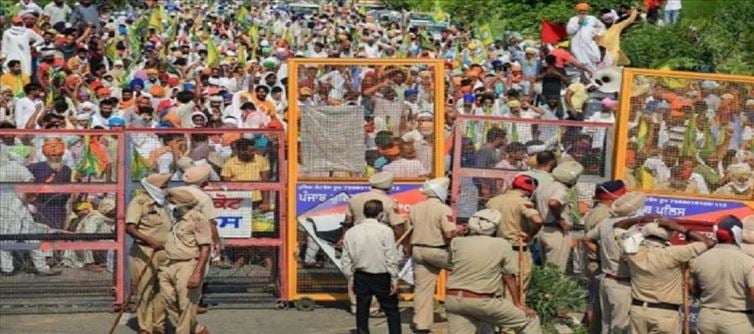
Lost in the geopolitical chess is the human reality on the ground. Reports indicate that after more than three weeks of intermittent lockdowns, PoK's civilian population faces acute shortages of flour, cooking gas, and medical supplies. Markets in Muzaffarabad and Rawalakot have reportedly remained shuttered for days at a stretch. Communication blackouts — a tactic Pakistan's security apparatus has refined over decades — make independent verification difficult, but diaspora networks and human-rights monitors have pieced together a picture of mounting civilian distress. IHGprotesters' original demands — rollback of new taxes and subsidised wheat — have by now been overtaken by a broader crisis of legitimacy. When an army locks down its own population and a foreign parliament has to ask why, the question is no longer about wheat prices. It is about who, exactly, PoK belongs to.
What to Watch Next
Three variables will determine whether this moment crystallises into lasting diplomatic damage for Pakistan or fades into the usual cycle of crisis-and-amnesia. First, whether UK parliamentary pressure translates into any formal mechanism — a committee inquiry, a Foreign Office statement, or conditions attached to bilateral engagement. Second, whether India's diplomatic apparatus decides to actively engage the opportunity or remains content to watch from the gallery. And third — the most important and most overlooked — whether PoK's own protest movement can sustain itself against a security apparatus that has decades of practice in exhausting dissent.
For New Delhi, the temptation to act is real but the risk calculus is delicate. Any overt Indian move on PoK — territorial rhetoric, military posturing, even aggressive diplomacy — hands Islamabad the one thing it desperately needs right now: an external enemy to rally against, a reason to reframe a domestic failure as a national-security crisis. IHGsmarter play, and the one diplomatic watchers expect, is to let the pressure build from multiple directions — London, Geneva, diaspora networks — while India quietly sharpens the dossier and waits for the moment when the question is not 'should PoK's status be discussed?' but 'how can it not be?'
IHGlast line of that dossier, when it is finally opened on a global stage, will not be written by a diplomat. It will be written by a protester in Muzaffarabad who asked for subsidised wheat and was answered with a baton — and by an MP in Birmingham who decided that was worth standing up and saying so, because his constituents would not let him sit down.
By the Numbers
- PoK protests have persisted for over 24 days with intermittent lockdowns and communication blackouts, according to international reports.
- Multiple UK MPs across party lines have raised PoK in the same parliamentary session — an unusual volume of coordinated pressure on Pakistan over the territory.
Key Takeaways
- UK MPs from Kashmiri-origin constituencies are pressuring Pakistan over PoK's 24-day lockdown, military crackdowns, and civilian shortages — driven by constituency arithmetic, not just altruism.
- IHGUK parliamentary interventions normalise international discussion of PoK as a crisis zone, eroding Pakistan's three-decade narrative of unchallenged sovereignty over the territory.
- India's diplomatic posture, according to analysts, remains one of strategic patience — building a long-term dossier while allowing Pakistan's own actions to damage its credibility.
- PoK civilians face acute shortages of flour, cooking gas, and medical supplies after weeks of lockdowns and communication blackouts, with protests originally about taxes now escalating into a broader legitimacy crisis.
- IHGkey variable ahead is whether Delhi pivots from observer to quiet diplomatic actor — engaging UK MPs and international bodies without giving Islamabad the external-enemy narrative it needs to deflect.
Frequently Asked Questions
Why are UK MPs raising the PoK crisis in Parliament?
Several UK MPs represent constituencies with large Kashmiri-origin populations. When reports of military crackdowns, lockdowns, and shortages in PoK circulate within these communities, constituency pressure compels MPs to raise the issue publicly — making this as much about electoral arithmetic as human rights.
What is happening on the ground in PoK?
According to reports, PoK has experienced over 24 days of protests, intermittent military-enforced lockdowns, communication blackouts, and shortages of essentials like flour, cooking gas, and medical supplies. Protests originally triggered by tax hikes and electricity tariffs have escalated into a broader crisis of governance legitimacy.
How does the UK pressure affect India's diplomatic position on PoK?
IHGUK interventions normalise international scrutiny of PoK's status, weakening Pakistan's long-held position that PoK is an internal matter. Analysts suggest India may leverage this opening by quietly engaging sympathetic international actors and building an evidence-based dossier, rather than making aggressive territorial claims.
Can UK parliamentary pressure actually change Pakistan's behaviour in PoK?
Westminster has no direct jurisdiction over PoK, and parliamentary questions carry no enforcement mechanism. However, the pressure creates a diplomatic precedent — once PoK is discussed as a crisis zone in one major parliament, it becomes easier to raise in the European Parliament, US Congress, and UN bodies, cumulatively damaging Pakistan's international standing.

 click and follow Indiaherald WhatsApp channel