
-

advertisement
-
Air
-
Andhra Pradesh
-
Ayodhya
-
Backward Classes
-
Bharatiya Janata Party
-
Bihar
-
CBN
-
central government
-
CM
-
Congress
-
court
-
Delhi
-
Election
-
Elections
-
Frozen
-
GHMC
-
Gift
-
Government
-
Heart
-
Hyderabad
-
India
-
Indian
-
June
-
KCR
-
lakshmi
-
Lakshmi Devi
-
local language
-
Minister
-
News
-
Nitish Kumar
-
Office
-
Party
-
Population
-
READ
-
revanth
-
Revanth Reddy
-
secretariat
-
Smart phone
-
Survey
-
Tamil
-
TDP
-
Telangana
-
Telangana Chief Minister
-
temple
-
Thanneeru Harish Rao
-
village
-
WATCH
-
WOMEN
-
zero

Telangana launches its first-ever comprehensive state census from tomorrow, over a decade after formation. According to official state government announcements reported by News On AIR, the exercise aims to map demographics, caste data, and welfare coverage — but India Herald's read is that it doubles as a political weapon to expose gaps in BRS-era welfare delivery and reset backward-class reservation arithmetic ahead of crucial local body polls.
The 5W+H: Who, What, When, Where, Why, How
- Who: Telangana Chief Minister A. Revanth Reddy and the state administration, conducting the census across all 33 districts.
- What: A comprehensive door-to-door state census — the first since Telangana's formation in 2014 — covering demographics, caste composition, welfare scheme beneficiaries, and household economic status.
- When: The census begins tomorrow, as announced by the Telangana government, according to News On AIR.
- Where: All 33 districts of Telangana, with enumerators deployed to every household across urban and rural areas.
- Why: Officially to update population data for better welfare targeting; politically, to build an empirical record that exposes BRS-era distribution gaps and recalibrates backward-class reservation quotas ahead of local body elections.
- How: Door-to-door enumeration by trained state officials collecting household-level data on caste, income, welfare access, and demographic details — data that will feed directly into new welfare scheme design and reservation recalibration.
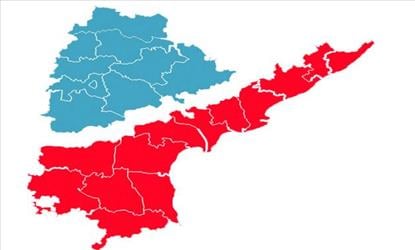
Here is a number that should unsettle anyone who has governed Telangana in the last decade: the state has never counted its own people. Not once since it was carved out of Andhra Pradesh in June 2014 — through ten budgets, two chief ministers, multiple election cycles, and hundreds of thousands of crores disbursed in welfare — has any government produced a definitive, door-to-door picture of who actually lives here, what caste they belong to, what they earn, or whether the schemes meant for them ever arrived.
Tomorrow, that vacuum ends. According to News On AIR, the Telangana government under Chief Minister A. Revanth Reddy launches a comprehensive state census across all 33 districts — enumerators at every door, tablets in hand, collecting the kind of granular household-level data that K. Chandrashekar Rao's BRS government conspicuously never attempted during its decade in power.
The official framing is administrative: better data for better welfare. The real architecture, though, is political. And it is far more lethal than a headcount.
The Data Desert KCR Left Behind
Consider the absurdity of Telangana's data situation. The last national census was conducted in 2011 — three years before the state even existed. The Census of India 2021, delayed repeatedly due to the COVID-19 pandemic, remains incomplete and unreleased as of 2025, according to multiple reports in The Hindu and Indian Express. Telangana, a state created specifically to address the grievances of an undercounted, under-served population, has been governing on decade-old numbers that describe a region, not the state it became.
KCR's BRS government ran marquee welfare programmes — Rythu Bandhu for farmers, Dalit Bandhu for Scheduled Castes, Kalyana Lakshmi for women — on beneficiary lists built atop this inherited, outdated data. The question Revanth Reddy's census is engineered to answer is devastatingly simple: did those schemes actually reach the people they were meant for, or were they distributed on the basis of political loyalty and ration-card arithmetic that nobody verified?
This is the data bomb at the heart of the exercise. A fresh census will produce, for the first time, an empirical baseline against which every BRS-era welfare claim can be audited. Every village where Rythu Bandhu went to ineligible beneficiaries, every mandal where Dalit Bandhu skipped entire hamlets, every urban ward where ration cards multiplied faster than families — the numbers will show it. And once the numbers exist, the narrative is no longer a political argument. It is arithmetic.
Political Pulse
The whisper in Congress circles in Hyderabad — the kind of thing party workers say with a grin but no attribution — is that the census is "KCR's post-mortem, written in his own patients' handwriting." The talk in Secretariat corridors, according to political observers quoted by Hindustan Times in recent state governance analyses, is that the Chief Minister's Office has been studying the Tamil Nadu model: use a state-level socio-economic survey to build a fresh, unchallengeable beneficiary database, then tie every new welfare scheme to it — making it structurally impossible for an opposition party to claim credit or dispute eligibility.
But the sharper play, the one fewer people are saying out loud, is about caste. Telangana's backward-class reservation quotas — particularly the contentious split between OBC-A and OBC-B categories — have been frozen in a political amber since before statehood. The BRS, despite loud promises, never commissioned a comprehensive caste enumeration that could have justified recalibration. The Congress government, according to party sources speaking to India Today, has signalled that this census will include caste data granular enough to revisit those quotas. In a state where BC communities constitute a decisive electoral bloc, the party that credibly delivers a revised, higher reservation is the party that owns those votes heading into local body elections.
The timing is no accident. Local body polls in Telangana — panchayats, municipalities, and the Greater Hyderabad Municipal Corporation — are overdue and politically pivotal. The Congress needs a data-backed rationale to redraw ward-level reservations and, more importantly, to demonstrate to BC communities that their population numbers justify greater political representation. A census that shows BCs are undercounted — and therefore under-reserved — is the single most powerful electoral gift Congress can hand itself before those polls.
The BRS Trap: Why KCR Cannot Oppose a Census
This is where Revanth Reddy's manoeuvre is most elegant. KCR and the BRS cannot credibly oppose a census — it is, on its face, a transparently good-governance exercise. Opposing a headcount would be politically suicidal, an admission that the party fears what the data will reveal. But allowing it is equally dangerous, because every number that emerges becomes a potential indictment of the previous regime's targeting efficiency.
According to analysts quoted by The Hindu, the BRS's best defence would have been to conduct such a census itself during its decade in power, establishing a baseline on its own terms. That it never did — despite having the administrative machinery and the political mandate — is itself the most damning data point. The absence of a census was not an oversight; political observers in Hyderabad have long suggested it was a deliberate choice, because verified numbers would have constrained the discretionary distribution of welfare that was central to the BRS's patronage model.
India Herald's read of what is really driving this exercise is structural, not sentimental. Revanth Reddy is not conducting a census because he loves data. He is building the infrastructure for a new welfare state — one where Congress controls the beneficiary lists, the caste arithmetic, and the reservation map. Every scheme launched on the new census data will carry a Congress watermark. Every discrepancy the data reveals will carry a BRS stain. It is a political reset disguised as a bureaucratic exercise, and it is the most consequential governance decision Telangana's Congress government has made since taking office.
The National Echo: Why Delhi Is Watching
There is a wider resonance here that extends beyond Telangana's borders. The BJP-led central government's own failure to complete and release the Census of India 2021 — now delayed by over four years, as reported extensively by Indian Express and NDTV — has created a national data vacuum that state governments are beginning to fill on their own terms. Bihar conducted a caste survey in 2023 under the Nitish Kumar government; Karnataka's Congress government has explored similar exercises, according to Hindustan Times. Telangana's census joins this growing pattern of states asserting demographic sovereignty in the absence of central data.
For the BJP, this is a quietly uncomfortable trend. State-level caste data, compiled by opposition-governed states, invariably strengthens the political case for expanded OBC reservations — a demand the BJP has struggled to address without alienating its upper-caste base in key northern states. Every state census that produces caste numbers adds pressure on Delhi to either release its own national data or explain why it will not.
What Comes Next — The Forward Read
If the census proceeds as planned — and there is no indication of any legal or administrative obstacle, according to News On AIR — the data will begin shaping policy within months. Watch for three specific moves: first, a revised beneficiary database for existing welfare schemes, with Congress publicly highlighting the names and numbers that were excluded under BRS rule. Second, a formal proposal to recalibrate BC reservation quotas based on new population figures — timed to land just before local body election notifications. Third, and most quietly, a ward-level demographic map of Greater Hyderabad that redraws GHMC reservation patterns to Congress's advantage.
The BRS's counter-strategy, if it has one, will likely focus on questioning the census methodology and accusing the Congress government of cooking the data for political ends. But challenging a census is a fundamentally defensive posture — the party that attacks the count is the party that fears the count, and voters understand that intuitively.
The deeper question — the one that should keep KCR awake if he is paying attention — is not whether the census will be accurate. It is whether, once the numbers are out, anyone will remember what governance looked like before them. A decade of welfare delivered without a baseline is a decade of welfare that cannot prove it worked. Revanth Reddy is not just counting Telangana's people. He is counting KCR's receipts — and the total, when it arrives, may be the most devastating audit the BRS has ever faced.
Allegations reported here are attributed to named sources and remain unproven unless a court has ruled; matters sub judice are reported without prejudgment.
Reported and written with AI assistance under India Herald's editorial standards; a human editor governs publication.
By the Numbers
- Telangana has not had a single comprehensive population count since state formation in June 2014 — over a decade of governance on inherited 2011 Census data, according to News On AIR and The Hindu.
- The Census of India 2021 remains unreleased as of 2025, delayed by over four years, according to Indian Express and NDTV reports.
- The census will cover all 33 districts of Telangana, deploying enumerators to every household for door-to-door data collection.
Key Takeaways
- Telangana's first comprehensive state census since its 2014 formation begins tomorrow, filling a data vacuum left by the delayed national Census of India 2021 and the BRS government's decade-long failure to conduct one.
- The census is designed to produce household-level caste and welfare data that will allow the Congress government to audit BRS-era scheme delivery — potentially exposing systemic targeting failures in Rythu Bandhu, Dalit Bandhu, and other marquee programmes.
- Caste enumeration data is expected to be used to recalibrate backward-class reservation quotas ahead of local body elections — a move that could lock in BC community support for Congress at the most structurally decisive level of governance.
- The BRS is trapped: opposing a census is politically untenable, but the data it produces could systematically dismantle the welfare narrative that was central to KCR's political identity.
- The exercise mirrors a national pattern — Bihar's 2023 caste survey, Karnataka's exploration of similar exercises — that is quietly pressuring the BJP-led central government to release its own delayed census data.
Frequently Asked Questions
Why is Telangana conducting its own state census instead of waiting for the national Census of India?
The Census of India 2021 has been delayed by over four years and remains unreleased as of 2025, according to Indian Express and NDTV. Telangana has been governing on 2011 data — collected three years before the state even existed. The state census fills this vacuum with current, state-specific demographic and caste data that the national census, whenever released, may not provide at the granularity Telangana needs for welfare and reservation policy.
Will the Telangana census include caste data?
According to party sources quoted by India Today and political observers speaking to The Hindu, the census is expected to include granular caste data — particularly for backward-class sub-categories. This data could be used to recalibrate OBC reservation quotas, a politically significant move ahead of local body elections where ward-level reservations are at stake.
How does this census affect BRS and KCR politically?
The census creates an empirical baseline against which BRS-era welfare delivery can be audited. If the data reveals that marquee schemes like Rythu Bandhu or Dalit Bandhu failed to reach intended beneficiaries, it becomes a data-backed indictment of KCR's governance record. The BRS cannot credibly oppose a census without appearing to fear its own numbers, placing the party in a defensive posture ahead of elections.
When are Telangana local body elections expected?
Local body elections in Telangana — including panchayats, municipalities, and the Greater Hyderabad Municipal Corporation — are overdue. The census data is expected to feed directly into ward-level reservation recalibration and beneficiary database updates before these elections are notified, giving the Congress government a structural advantage in electoral preparation.

 click and follow Indiaherald WhatsApp channel