
-

Application
-
Arrest
-
Assembly
-
Bharatiya Janata Party
-
CM
-
Congress
-
court
-
Delhi
-
eenadu
-
Election
-
Election Commission
-
Father
-
House
-
India
-
Indian
-
K. Chandrashekar Rao
-
kavitha
-
KCR
-
Leader
-
Letter
-
media
-
Minister
-
Party
-
Pink
-
politics
-
Population
-
READ
-
Reddy
-
revanth
-
Revanth Reddy
-
students
-
Telangana
-
Telangana Chief Minister
-
Telangana Rashtra Samithi TRS
-
WATCH
-
WOMEN
-
zero

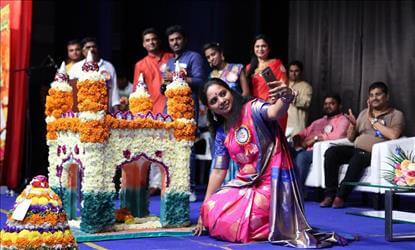
The Election Commission has directed K. Kavitha to rename her newly formed party, rejecting her bid to revive the Telangana Rashtra Samithi (TRS) brand. According to reports from Eenadu and HMTV, the EC ruled the name clashes with BRS's previously registered identity, effectively ending the KCR family's last claim to the movement's founding brand.
Think of it as a political funeral where the mourners are fighting over the coffin. The Election Commission of India has told K. Kavitha — former MLC, BRS rebel, and daughter of K. Chandrashekar Rao — that her newly formed party cannot carry the name Telangana Rashtra Samithi. According to reports from Eenadu, 10TV, and HMTV, the EC issued a formal directive asking Kavitha to choose a different name, ruling that 'TRS' creates an unacceptable overlap with BRS, the renamed entity her father still controls.
On the surface, this is a bureaucratic trademark dispute resolved by a rule book. Beneath it, the ruling is a death certificate — not for a party, but for a dynasty's last emotional asset.
The Name Was Never Just a Name
To understand why this stings, you have to remember what TRS once meant in Telangana. It was not a party symbol or a ballot marking. It was the movement itself — the years of agitation, the Sakala Janula Samme, the suicides of students who believed statehood was worth dying for. When KCR renamed TRS to BRS in 2022, hoping to project national ambitions, he made what many in Telangana's political circles now consider the single costliest branding mistake in modern Indian politics. The name change alienated a generation of loyalists who had marched under the pink flag with 'TRS' on their lips, not 'BRS.'
Kavitha's breakaway move was, at its core, a bid to reclaim that emotional equity. By registering a new party and applying for the TRS name, she was not building something new — she was trying to inherit the only asset from the KCR family's political empire that still carried sentimental weight with the Telangana electorate. The EC has now locked that vault shut.
Political Pulse
The corridors of Telangana's political establishment are buzzing with a question nobody is asking on camera: was this purely a rules-based EC decision, or did a quiet nudge help it along? The talk in political circles, as India Herald's read of the situation suggests, is layered. On one hand, the EC's reasoning is legally sound — you cannot register a name that causes voter confusion with an existing registered party. BRS holds the TRS legacy in the Commission's records, and Kavitha's application was always going to face this hurdle.
But the timing is what insiders find telling. Kavitha launched her breakaway faction at a moment when the KCR family's political fortunes are at their lowest ebb — KCR himself sidelined after the 2023 assembly loss to Congress, BRS reduced to a rump opposition, and Kavitha freshly out of judicial proceedings related to the Delhi liquor policy case. The EC ruling arrives precisely when it would do maximum damage to any attempt at a dynasty revival through a split-brand strategy.
One senior political commentator, speaking to the broader media landscape, put it sharply: the KCR family now has two parties and zero brands. BRS carries the national-ambition baggage that alienated the Telangana base. Kavitha's unnamed outfit carries no recognition at all. Between them, they have managed to lose the one thing that made their politics viable — the memory of the Telangana movement.
Who Actually Wins This Round?
Here is the part that deserves a slower read. The most obvious beneficiary is, paradoxically, BRS itself. The entire danger Kavitha posed to her father's party was the prospect of a TRS-branded spoiler on the ballot — a name that would siphon off nostalgic voters who never accepted the BRS rebrand. With the EC eliminating that possibility, BRS no longer faces the nightmare of vote-splitting among its own former base in 2029. The spoiler is disarmed before the race begins.
The second beneficiary is the ruling Congress in Telangana under Chief Minister Revanth Reddy. A divided KCR family was always useful to Congress, but a divided family fighting under two recognisable brands was a variable — it could split the opposition vote, or it could energise two separate anti-Congress constituencies. Now, with Kavitha's party stripped of brand recognition, Congress faces a weaker, more fragmented opposition landscape.
The third, less discussed beneficiary is the BJP. In Telangana, the saffron party has been quietly building its base, and any fracture in the KCR dynasty's support — particularly one that leaves both factions weakened — opens space in constituencies where BRS was the default anti-Congress vote. A Kavitha faction with no name recognition is a faction that bleeds voters to the nearest organised alternative, and in many urban and semi-urban seats, that alternative is increasingly BJP.
Kavitha's Narrowing Road
What does Kavitha do now? She must choose a new name, build recognition from scratch, and do so without the institutional machinery, the cadre, or the funds that BRS still nominally commands. Her personal brand — as a leader who fought the Telangana movement alongside her father, as someone who endured arrest and judicial scrutiny — has some residual sympathy, particularly among women voters and younger demographics. But sympathy without a ballot-recognisable name is sympathy that stays home on election day.
The deeper problem is strategic. Kavitha's entire pitch was that she, not KCR, is the true inheritor of the Telangana movement's spirit. Without the TRS name, that pitch becomes an argument she has to make from first principles — a far harder sell in a state where political brand loyalty is visceral and name recognition on the ballot is often the difference between a serious contender and a NOTA-adjacent also-ran.
(The speculation in political circles about whether external political forces quietly facilitated this EC decision remains unverified chatter — not confirmed fact.)
The Forward Read
India Herald's assessment of what this sets in motion: watch for Kavitha's next move on the name itself — the choice will reveal whether she pivots to a Telangana-identity brand (something evoking the movement without the trademark conflict) or goes generic. If she picks a movement-rooted name, it signals she is still playing for the loyalist base. If she goes generic, it signals she has accepted a longer, harder path to relevance.
Watch, too, for KCR's response. His silence so far has been conspicuous. A father watching his daughter's political project get its wings clipped by the same institutional machinery he once navigated with surgical precision — that silence may be strategic, or it may be the quiet of a dynasty that has run out of moves.
The TRS name is now, officially, a ghost. The question for Telangana's voters is simpler than the pundits make it: does the spirit of the movement belong to a name on a ballot, or to the people who remember why they fought? The answer to that will decide whether the KCR dynasty has any political future at all — or whether 2029 will be the election where Telangana's founding family discovers that a movement, once sold, cannot be bought back.
Allegations reported here are attributed to named sources and remain unproven unless a court has ruled; matters sub judice are reported without prejudgment.
Reported and written with AI assistance under India Herald's editorial standards; a human editor governs publication.
More from India Herald
Key Takeaways
- The Election Commission has formally rejected Kavitha's application to use the TRS name for her new party, citing confusion with the existing BRS registration — according to Eenadu, 10TV, and HMTV.
- The ruling eliminates the one asset — the TRS brand's emotional equity with Telangana movement loyalists — that gave Kavitha's breakaway faction its strategic rationale.
- BRS paradoxically benefits most: the name-confusion spoiler that could have split its vote base in 2029 is now neutralised before the race begins.
- Congress under Revanth Reddy and the BJP in Telangana both gain from a weaker, less recognisable opposition fragment.
- Kavitha must now build a new political brand from scratch — without institutional machinery, cadre, or the movement's founding name.
By the Numbers
- KCR renamed TRS to BRS in 2022, a rebranding that political analysts widely regard as having alienated a generation of Telangana movement loyalists.
- BRS was reduced to a rump opposition after the 2023 Telangana assembly elections, losing power to Congress under Revanth Reddy.
- The EC's directive in July 2026 effectively means neither KCR (via BRS) nor Kavitha now holds the TRS name as an active electoral brand.
The 5W+H: Who, What, When, Where, Why, How
- Who: K. Kavitha, daughter of former Telangana CM K. Chandrashekar Rao, and the Election Commission of India.
- What: The EC directed Kavitha to change the name of her new political party, rejecting her application to register it as 'Telangana Rashtra Samithi' (TRS), as reported by Eenadu and 10TV.
- When: The directive was issued in July 2026, according to reports from HMTV and 10TV.
- Where: The ruling applies to Telangana, where TRS was the founding brand of the statehood movement, now governed by the Congress party.
- Why: The EC held that the TRS name creates confusion with BRS (Bharat Rashtra Samithi), the renamed successor party still led by KCR, according to Eenadu.
- How: Kavitha had registered a new party and applied to use the TRS name; the EC reviewed the application and issued a formal letter directing a name change, as reported by HMTV.
Frequently Asked Questions
Why did the Election Commission reject Kavitha's TRS name?
According to Eenadu and HMTV, the EC ruled that the TRS name creates confusion with BRS (Bharat Rashtra Samithi), the renamed successor party still registered with the Commission under KCR's leadership. The EC directed Kavitha to choose a different name for her new party.
Can Kavitha appeal the EC's decision on the TRS name?
While the EC's directive is binding, Kavitha could theoretically challenge it in court. However, political analysts suggest such a legal battle would be prolonged and could further delay her party's registration and electoral preparations ahead of 2029.
How does this affect BRS and KCR politically?
Paradoxically, the ruling helps BRS by eliminating a potential vote-splitting spoiler. However, it also underscores the dynasty's diminished political standing — neither KCR's BRS nor Kavitha's unnamed party now carries the TRS brand that built the Telangana movement.
Who benefits most from the EC rejecting Kavitha's TRS name before 2029?
Congress under CM Revanth Reddy and the BJP in Telangana both benefit from a more fragmented, brand-weakened opposition. BRS also gains by avoiding vote-splitting, but the KCR family as a whole loses its last shared emotional asset with Telangana voters.
 click and follow Indiaherald WhatsApp channel