
-

Amaravati
-
Andhra Pradesh
-
Arrest
-
Arvind Kejriwal
-
Assembly
-
August
-
Bharatiya Janata Party
-
Cabinet
-
CBI
-
CBN
-
central government
-
CM
-
court
-
Delhi
-
Government
-
history
-
House
-
Hyderabad
-
India
-
Indian
-
Leader
-
Minister
-
Mumbai
-
National Democratic Alliance
-
Nitish Kumar
-
Office
-
oxygen
-
Parliament
-
Party
-
Patna
-
police
-
politics
-
Prime Minister
-
Rajnath Singh
-
READ
-
TDP
-
Telangana
-
Telangana Chief Minister
-
Train
-
zero

The proposed bill mandating removal of a Chief Minister or Prime Minister after 30 consecutive days in jail is widely read as a legislative response to Arvind Kejriwal's refusal to resign while incarcerated. But India Herald's assessment is that NDA allies TDP and JDU risk endorsing a permanent mechanism that could, in a future political realignment, be turned against their own regional leaders by the very central agencies the bill empowers.
Here is a question every coalition partner in the NDA should be asking themselves this week, and almost certainly is not: if you help build a trapdoor in the floor of every Chief Minister's office in India, what makes you so sure you will never be the one standing on it?
Parliament's monsoon session, scheduled from July 20 to August 13 according to Telangana Today, arrives loaded with two explosive flashpoints. One is the proposed bill that would automatically strip any Chief Minister or Prime Minister of office after 30 consecutive days in jail. The other is the escalating opposition row over whether Defence Minister Rajnath Singh misled Parliament — a charge the opposition intends to weaponise from day one, as reported by Hindustan Times. But it is the first item — the so-called 'Kejriwal Clause' — that carries the deeper, more permanent danger, the kind that outlives a single session and reshapes the grammar of Indian federalism.
The bill's provenance is no mystery. When Arvind Kejriwal was arrested in 2024 in connection with the Delhi excise policy case, he did something no Indian Chief Minister had done before: he refused to resign. He governed — or claimed to govern — from Tihar Jail, turning incarceration into a theatre of defiance that embarrassed the ruling establishment and created a constitutional grey zone no one had planned for. The proposed legislation is, at its most charitable reading, an attempt to close that grey zone. At its most cynical, it is a bespoke law stitched to fit one man's silhouette — and then left hanging in the national wardrobe for anyone who might need it later.
Political Pulse
The corridor talk in Lutyens' Delhi, as India Herald has been tracking, is not really about Kejriwal anymore. He is the occasion; the instrument is the point. What political insiders are quietly discussing is the breathtaking scope of what this bill normalises. Consider the mechanism: a Chief Minister is arrested by a central agency — the ED, the CBI, the NIA, all of which report to the Union Home Ministry. The CM spends 30 days in custody, which in India's judicial system, where bail hearings are routinely delayed and chargesheets can take months, is not a high bar to clear. On day 31, the CM is automatically removed. No floor test. No assembly vote. No governor's discretion exercised in public view. Just a calendar and a lock-up.
Now ask the question the bill's supporters do not want asked: who controls the arrest? The answer, in the current architecture of Indian law enforcement, is overwhelmingly the central government. The ED and CBI are not state police forces; they are Union instrumentalities. The power to arrest is, in practice, the power to start the 30-day clock. And the power to start the clock is, under this bill, the power to unseat.
This is where the alliance arithmetic turns from uncomfortable to genuinely alarming for leaders like Chandrababu Naidu of the TDP and Nitish Kumar of the JDU. Both men are battle-scarred veterans of Indian coalition politics. Both have switched alliance partners before — Naidu was part of the UPA-adjacent configuration before returning to the NDA fold, and Nitish Kumar's alliance history reads like a Mumbai local train timetable, with stops at every platform. Both currently prop up the Modi government's majority in the Lok Sabha. And both, precisely because of that history, know that today's ally is tomorrow's target.
The whisper in NDA circles — and it is still a whisper, not a shout — is that neither Naidu's nor Nitish's legislative teams have fully gamed out the second-order consequences of this bill. The first-order politics are simple: vote yes, keep the coalition happy, stick it to Kejriwal, move on. But the second-order question is the one that should keep a regional satrap awake at night. What happens when the alliance frays? What happens when a future central government — perhaps one that no longer needs TDP or JDU numbers — decides that a convenient ED case against a sitting CM in Amaravati or Patna would solve a political problem more neatly than a floor fight?
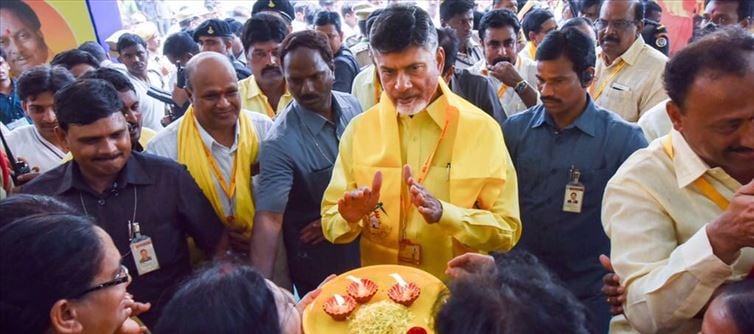
This is not paranoia. This is pattern recognition. Chandrababu Naidu himself was arrested by the Andhra Pradesh CID in 2023 in the Skill Development Corporation case. He spent weeks in custody. Had a law like this existed then, with the threshold set at 30 days, his political career could have been ended not by voters or legislators but by a custody clock. The irony of Naidu now potentially voting to institutionalise that very mechanism is the kind of thing that makes veteran political observers in Hyderabad and Patna wince.
[EMBED-SUGGESTION:tweet]
The Rajnath Row — Smoke and Mirrors, or Genuine Fire?
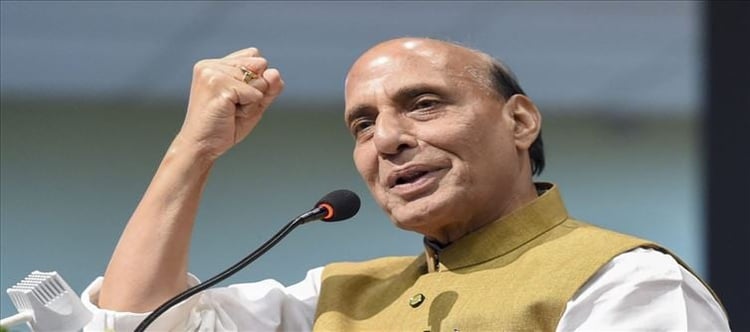
The second major fault line for the monsoon session, according to Hindustan Times, is the opposition's charge that Defence Minister Rajnath Singh misled Parliament. While the specifics of the allegation are still being sharpened for the session — and Rajnath Singh's camp has not publicly addressed the charge in detail as of this writing — the tactical intent is clear. The opposition, led by the INDIA bloc, wants to dominate the session's opening days with a privilege motion or adjournment demand, denying the government the oxygen to push through the CM-removal bill without a bruising public debate.
The political calculus here is layered. If the opposition succeeds in making the Rajnath row the lead story of the session, the government faces a choice: burn parliamentary time defending the Defence Minister, or bulldoze the Kejriwal Clause through in the chaos of disruptions, which hands the opposition the narrative of a law passed without scrutiny. Neither option is costless.
The Federalism Stakes Nobody Is Saying Out Loud
Strip away the personalities — Kejriwal, Naidu, Nitish, Rajnath — and what remains is a structural question about the Indian republic. The existing constitutional framework already provides mechanisms for a Chief Minister's removal: a floor test, a governor's recommendation, or the nuclear option of President's Rule under Article 356, which at least requires a cabinet decision and is subject to judicial review. What the proposed 30-day bill does is create a new, automatic trigger that bypasses all of these deliberative steps. It replaces a political process — messy, slow, publicly contestable — with a mechanical one. Arrest, clock, removal.
India Herald's assessment is that this is not a Kejriwal problem dressed up as a governance reform. It is a federalism problem dressed up as a Kejriwal problem. The 25 states not currently governed by the BJP should be paying close attention, and so should the ones that are — because in a country where no party has held uninterrupted national power forever, the weapon you forge today is the weapon someone else picks up tomorrow.
The sharpest irony may be this: the very leaders whose votes will be needed to pass this bill — the Naidus and the Nitishes, the regional chieftains who make coalition government possible — are the ones most vulnerable to its eventual use. They are being asked to hand the central government a key to their own office and trust that it will never be used against them. In Indian politics, that is not faith. That is amnesia.
Allegations reported here are attributed to named sources and remain unproven unless a court has ruled; matters sub judice are reported without prejudgment.
Reported and written with AI assistance under India Herald's editorial standards; a human editor governs publication.
More from India Herald



Key Takeaways
- The proposed bill creates an automatic 30-day jail trigger for removing any CM or PM — bypassing existing constitutional mechanisms like floor tests or Article 356, according to Hindustan Times reporting.
- NDA allies TDP and JDU face a strategic paradox: voting for a bill that could be turned against their own leaders in a future political realignment, given that central agencies like the ED and CBI are Union instrumentalities.
- The opposition plans to weaponise the Rajnath Singh 'misleading Parliament' charge to stall or complicate passage of the bill during the July 20–August 13 monsoon session.
- Chandrababu Naidu's own 2023 arrest makes his potential support for this bill a case study in the risks of short-term coalition loyalty over long-term institutional self-preservation.
By the Numbers
- Parliament's monsoon session runs July 20 to August 13, 2026 — a 25-day window for the government to push through one of the most consequential federalism bills in recent memory, per Telangana Today.
- The proposed 30-day consecutive jail threshold would create an automatic removal trigger, bypassing the existing Article 356 process that requires cabinet approval and is subject to judicial review.
The 5W+H: Who, What, When, Where, Why, How
- Who: The central government, with implications for NDA allies TDP (Chandrababu Naidu) and JDU (Nitish Kumar), and aimed squarely at AAP's Arvind Kejriwal, according to Hindustan Times.
- What: A proposed bill to mandate the removal of any Chief Minister or Prime Minister who spends 30 consecutive days in jail, expected to dominate Parliament's monsoon session, as reported by Hindustan Times.
- When: Parliament's monsoon session is scheduled from July 20 to August 13, 2026, according to Telangana Today.
- Where: Parliament of India, New Delhi.
- Why: The bill is widely seen as a legislative response to Arvind Kejriwal's precedent of continuing as Delhi CM while jailed on charges related to the excise policy case, according to Hindustan Times reporting.
- How: By introducing legislation that creates an automatic trigger — 30 days of consecutive incarceration — for the removal of a sitting CM or PM from office, bypassing the existing constitutional process that requires a floor test or governor's action.
Frequently Asked Questions
What is the proposed 30-day jail removal bill for CMs and PMs?
According to Hindustan Times, it is a proposed law that would automatically remove any sitting Chief Minister or Prime Minister from office after 30 consecutive days of incarceration, widely seen as a legislative response to Arvind Kejriwal continuing as Delhi CM while jailed.
When does Parliament's 2026 monsoon session begin?
Parliament's monsoon session is scheduled from July 20 to August 13, 2026, according to Telangana Today.
Why should NDA allies like TDP and JDU be concerned about this bill?
Because the bill converts central agency arrest power into an automatic CM-removal mechanism. Since agencies like the ED and CBI are Union instrumentalities, a future central government could theoretically use this law against any regional leader — including current NDA allies — if the political alignment shifts.
What is the controversy around Rajnath Singh expected in the monsoon session?
The opposition plans to raise charges that Defence Minister Rajnath Singh misled Parliament, potentially through a privilege motion or adjournment demand, according to Hindustan Times. This could consume session time and complicate the government's legislative agenda.
 click and follow Indiaherald WhatsApp channel