
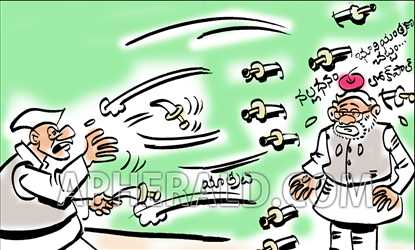


Anna Hazare has deferred his planned indefinite fast demanding rollback of amendments to the Right to Information Act, even as a judicial stay remains in place, according to The Indian Express. The deferral is tactical, not a retreat — Hazare's ultimatum to the Centre persists, turning the very transparency law that fuelled the 2011 anti-corruption movement into the NDA's most uncomfortable mirror.
There is a particular species of political irony that only Indian democracy produces with any regularity: the weapon you forged in opposition returns, years later, aimed at your own chest. Anna Hazare — 87, frail, stubbornly incorruptible, and possessed of the one currency no ruling party can print, which is moral credibility earned before the cameras ever arrived — has just reminded the NDA of this iron law. He has deferred his indefinite fast over RTI amendments. He has not, in any meaningful sense, stood down.
According to The Indian Express, Hazare's decision to defer the fast came despite — not because of — a judicial stay on certain provisions of the contested RTI amendments. His demand remains maximal: a complete rollback. The stay, in his framing, is not resolution; it is a pause button pressed by a court, not a concession earned from a government. And the distinction matters, because a man who sat at Ramlila Maidan in 2011 and brought a government to its knees understands — better than most sitting legislators — the difference between a tactical pause and a surrender.
The RTI Amendments: What Exactly Changed, and Why Hazare Won't Accept It
The amendments in question, which have drawn criticism from transparency advocates and opposition parties alike, are understood to alter the terms of appointment, tenure, and salary of Information Commissioners — effectively making them dependent on the Centre's discretion rather than operating as autonomous quasi-judicial officers. Critics, including former Chief Information Commissioners, have argued that this turns what was designed as a watchdog into something closer to a government appointee with a leash. Hazare's contention, per The Indian Express, is blunt: you cannot amend the spine out of a transparency law and call it reform.
The RTI Act, enacted in 2005, was arguably the single most consequential piece of governance legislation India produced in the first decade of this century. It armed ordinary citizens — farmers questioning land acquisition, slum-dwellers tracking ration entitlements, journalists investigating defence procurement — with the legal right to demand answers from the state. The 2011 movement that Hazare led did not create the RTI, but it welded the law's promise to a national moral argument: if the government will not be transparent, we will make it be. That movement's gravitational pull cracked the UPA's credibility and, in the assessment of most political historians, laid significant ground for the NDA's 2014 mandate.
Political Pulse
And here is where India Herald's read of what is really driving this sharpens. The corridors of power in Delhi are not panicking about an 87-year-old man in a white cap sitting in a village in Maharashtra. They are nervous about what his reactivation signals to three distinct audiences.
First, the opposition. Congress and other parties have been quietly watching Hazare's RTI agitation with the careful attentiveness of a poker player who has just been dealt a card they did not expect. The talk in political circles, as multiple analysts have noted, is whether the opposition can co-opt Hazare's residual moral weight without being seen to instrumentalise it. It is a delicate game: Hazare's power has always come from his studied distance from partisan politics. The moment he is seen as a Congress asset, his currency collapses. But a man who embarrassed the UPA into near-oblivion and is now embarrassing the NDA on the same issue is, for the opposition, a walking, fasting argument that the rot is bipartisan — and that is a narrative they would dearly love to amplify without fingerprints.
Second, the NDA's own base. The 2011 movement drew heavily from the urban middle class and the aspirational voter who would, three years later, form the bedrock of the Modi mandate. These voters did not support Anna Hazare because they loved Congress less; they supported him because they believed in the promise of accountability. When the same man now says the government you elected is gutting the transparency law I fought for, the cognitive dissonance is not trivial. Social media chatter — which, while not a scientific poll, is a useful barometer of urban educated sentiment — suggests a significant strand of discomfort among NDA-sympathetic commentators who find it difficult to argue against Hazare on this specific issue.
Third, the judiciary. The stay on the amendments is itself a signal that the courts are not entirely comfortable with the legislative changes. Hazare's public agitation, deferred or not, keeps the judicial spotlight warm. A judge reading the newspaper — and judges do read the newspapers, whatever the legal fiction says — registers that the original architect of the public demand for this law is back on the street.
The Backchannel: What Is Not Being Said Publicly
The deferral of the fast, in the grammar of Indian protest politics, is itself a communication. It says: I am giving you time, but not permission. The speculation in informed circles, per reports, is that backchannel conversations between Hazare's associates and representatives of the Centre have been ongoing — the kind of quiet, deniable engagement that both sides need and neither will acknowledge. The government's calculus is straightforward: a fasting Hazare generates national television coverage, invites unflattering 2011 comparisons, and hands the opposition a readymade narrative. A deferred fast is manageable. An indefinite fast by the face of India's anti-corruption movement, on prime-time television, in a year when state elections are looming, is not.
Hazare's calculus is equally clear. He is 87. The body does not cooperate the way it did at Ramlila Maidan. A deferred fast preserves the threat without the physical cost, keeps the government at the negotiating table, and — crucially — allows him to escalate if the backchannels fail. It is Gandhian brinksmanship executed by a man who has studied the playbook longer than most of his critics have been alive.
What Comes Next: The Fork the NDA Cannot Avoid
The NDA now faces a fork with no comfortable path. Concede on the RTI amendments, and it admits — publicly, irrevocably — that the changes were a mistake, handing a victory to both Hazare and the opposition and inviting scrutiny of every other transparency-adjacent decision. Refuse, and risk the spectacle of the man whose movement helped build the NDA's moral case in 2014 sitting on a hunger strike against the very government he helped into power. There is no third option that makes both problems disappear.
Watch, in the weeks ahead, for three signals. First, whether Hazare sets a new deadline — if he does, the backchannels have failed and the confrontation moves to prime time. Second, whether opposition leaders begin making pilgrimages to Ralegan Siddhi — that would signal a formal attempt to co-opt the movement, which Hazare has historically resisted but may, at 87, be less able to prevent. Third, whether the government attempts a cosmetic compromise — minor tweaks to the amendments framed as reform — and whether Hazare accepts it. His track record suggests he will not, but politics at this altitude is rarely about track records.
The deepest irony, the one the NDA would rather not confront, is structural. The RTI Act was supposed to be the permanent answer to the question: how do citizens hold power accountable? The amendments suggest the government's real answer is: only when it is convenient. And Anna Hazare, who has spent his political life asking that question louder than anyone else in the room, is not the kind of man who lets you change the subject. Whether his body can sustain what his conviction demands is the only uncertainty left. The question itself — does India still believe citizens have the right to make the state uncomfortable? — is one no deferred fast can defer.
Allegations and claims reported here are attributed to named sources and remain unverified unless independently confirmed; matters sub judice are reported without prejudgment.
Reported and written with AI assistance under India Herald's editorial standards; a human editor governs publication.
More from India Herald



Key Takeaways
- Anna Hazare has deferred his indefinite fast over RTI amendments but his demand for a complete rollback remains active — the threat is tactical leverage, not retreat, per The Indian Express.
- The RTI amendments are understood to undermine the autonomy of Information Commissions by making tenure, salary, and appointments dependent on the Centre — critics say this defangs India's most powerful transparency tool.
- The NDA faces a structural dilemma: conceding validates opposition criticism, while refusing risks a nationally televised hunger strike by the very activist whose 2011 movement helped build the BJP's moral mandate.
- Backchannel negotiations between Hazare's associates and the Centre are reportedly ongoing — the deferral buys time for both sides but resolves nothing.
- Opposition parties are watching closely for an opportunity to amplify Hazare's moral authority without being seen to instrumentalise it — a co-option attempt would likely backfire if it appears partisan.
By the Numbers
- The RTI Act, enacted in 2005, has been used by millions of Indian citizens to demand government accountability — Anna Hazare's 2011 movement at Ramlila Maidan is widely credited with catalysing the anti-corruption wave that helped dismantle the UPA's credibility ahead of the 2014 general election.
The 5W+H: Who, What, When, Where, Why, How
- Who: Anna Hazare, the 87-year-old anti-corruption activist and face of the 2011 India Against Corruption movement, as reported by The Indian Express.
- What: Hazare has deferred his indefinite fast but continues to demand a complete rollback of amendments to the Right to Information (RTI) Act, despite a judicial stay on certain provisions, per The Indian Express.
- When: The deferral and renewed ultimatum came in 2026, with Hazare keeping the threat of resuming the fast active, as reported by The Indian Express.
- Where: India — Hazare's base in Ralegan Siddhi, Maharashtra, remains the symbolic and operational centre of the agitation, per reports.
- Why: Hazare argues the RTI amendments dilute the independence and effectiveness of Information Commissions, undermining the transparency architecture his movement helped build, according to The Indian Express.
- How: By publicly deferring the fast while retaining the threat as leverage, Hazare is applying sustained pressure on the NDA government to negotiate a rollback — a classic Gandhian tactic of keeping the moral threat alive without immediate escalation, as reported by The Indian Express.
Frequently Asked Questions
Why has Anna Hazare deferred his fast over RTI amendments?
According to The Indian Express, Hazare deferred the fast as a tactical decision — the demand for a complete rollback of RTI amendments remains, and the deferral preserves the threat while allowing backchannel negotiations with the Centre to continue.
What do the RTI amendments change?
The amendments are understood to alter the appointment terms, tenure, and salary of Information Commissioners, making them more dependent on the Centre's discretion rather than functioning as independent quasi-judicial officers — critics argue this fundamentally weakens the RTI Act's accountability architecture.
How did Anna Hazare's 2011 movement help the NDA?
Hazare's India Against Corruption movement at Ramlila Maidan in 2011 severely damaged the UPA government's credibility on corruption and transparency, creating a national anti-incumbency wave that political historians widely credit as a significant factor in the NDA's decisive 2014 electoral mandate.
Is the opposition trying to co-opt Anna Hazare's RTI agitation?
Political analysts have noted that opposition parties are watching Hazare's agitation closely, but co-option is risky — Hazare's moral authority derives from his distance from partisan politics, and any visible alignment with Congress or other parties would likely diminish his credibility and the movement's impact.
 click and follow Indiaherald WhatsApp channel