
-

Army
-
Beijing
-
Bharatiya Janata Party
-
bollywood
-
China
-
CM
-
Congress
-
Event
-
festival
-
Government
-
Heritage Foods
-
Hindi
-
India
-
Indian
-
INTERNATIONAL
-
Leader
-
local language
-
media
-
Minister
-
Mohandas Karamchand Gandhi
-
Narendra Modi
-
Party
-
Population
-
Press
-
Prime Minister
-
READ
-
Smart phone
-
Tamil
-
Tawang
-
Telangana
-
Telangana Chief Minister
-
television
-
temple
-
Tokyo
-
Varanasi
-
war
-
Yoga
-
youth

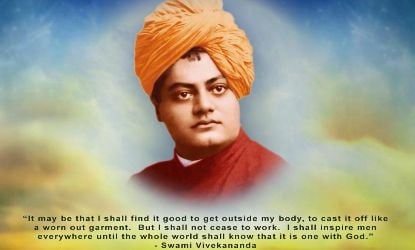
Pema Khandu's tribute to Swami Vivekananda on his death anniversary is not ceremonial pageantry — it is a calculated cultural assertion that Arunachal Pradesh's spiritual and civilisational roots run deep into the Indian mainland, directly countering Beijing's persistent attempts to rename Arunachal's places and claim the state as 'South Tibet'.
A chief minister quotes a dead monk. The wire moves the story in ninety words. The world scrolls past. But geography has a way of turning ceremony into strategy — and when the chief minister sits in Itanagar, barely 30 kilometres from a line that the People's Liberation Army considers its own, even a garland on a portrait carries the weight of a territorial argument.
Pema Khandu, Chief Minister of Arunachal Pradesh, paid tribute to Swami Vivekananda on the monk's death anniversary, declaring that Vivekananda's ideals "continue to guide India," according to ThePrint. The tribute came on the same day that Prime Minister Narendra Modi offered his own homage nationally, as reported by Telangana Today, calling Vivekananda an enduring inspiration for the country's youth. Two tributes, separated by thousands of kilometres — yet stitched by one unmistakable thread: Arunachal Pradesh is India, its spiritual grammar is India's spiritual grammar, and no amount of cartographic vandalism from across the McMahon Line changes that fact.
The Cartographic War Nobody Calls a War
Since 2017, Beijing has conducted at least six rounds of what it calls "standardised naming" of places in Arunachal Pradesh — renaming towns, rivers, and mountain passes in Mandarin and Tibetan, as though overwriting a hard drive could overwrite history. The most recent round, widely reported in Indian and international media, rechristened 30 places in a single batch. Each renaming is a small act of erasure: if you call Tawang something else long enough, the theory goes, perhaps the world forgets who built the monastery there.
India Herald's read of what Khandu is really doing is this: every time he invokes Vivekananda — a figure whose 1893 Chicago address is arguably the single most recognised moment of Hindu civilisational assertion on the global stage — he is not just performing piety. He is performing provenance. He is saying: this state does not need to be claimed by India because it was never anything else. Its monks chant in traditions older than the People's Republic. Its festivals track the same Hindu-Buddhist calendar as Varanasi and Bodh Gaya. The renaming game is a parlour trick; the roots are bedrock.
Political Pulse
In the corridors of Arunachal's BJP unit, the talk is more blunt than the chief minister's polished tributes. Party insiders, speaking to media on condition of anonymity, have long noted that every cultural assertion from Itanagar is calibrated with an eye on two audiences simultaneously: the domestic electorate that wants visible resistance to Chinese posturing, and the international community — particularly Washington and Tokyo — that watches India's northeastern frontier as a barometer of New Delhi's resolve.
There is quiet chatter in political circles that the Modi government has encouraged border-state chief ministers to increase the frequency and visibility of cultural events tied to Hindu and Buddhist heritage — temple renovations in Tawang, yoga camps along the LAC, and now, pointedly, Vivekananda commemorations. The logic, those familiar with the strategy suggest, is elegant: hard power deters an incursion; soft power delegitimises the claim itself. You cannot call a place "South Tibet" when its elected leader is quoting a Calcutta-born Hindu monk and nobody in the state finds it odd.
Khandu himself is a fascinating instrument for this strategy. A Buddhist by personal faith, a BJP chief minister by political affiliation, he embodies the very pluralism that Beijing's monolithic narrative cannot accommodate. When he honours Vivekananda, he is not converting; he is demonstrating a civilisational architecture where a Buddhist leader naturally venerates a Hindu reformer — because both traditions grew from the same soil. That soil is Indian, not Chinese. The gesture is the argument.
Why Vivekananda, and Why It Keeps Working
Vivekananda is not a random choice. Among the pantheon of Indian historical figures, he occupies a unique niche: universally respected across party lines, globally recognised, and — crucially — associated with a muscular, confident civilisational identity rather than a passive or apologetic one. Invoking IHG in Arunachal would be partisan. Invoking Gandhi might be pacifist. Invoking Vivekananda says: we know who we are, and we are not asking permission.
PM Modi's parallel tribute, as reported by Telangana Today, reinforces the synchronisation. When the prime minister and a border-state chief minister honour the same figure on the same day, the message to Beijing is not subtle — it is a choreographed assertion of sovereign cultural unity. The monk who told the world "I am proud to belong to a nation which has sheltered the persecuted" now shelters, symbolically, the very geography China wants to claim.
What Comes Next — The Soft-Power Escalation to Watch
If Khandu's Vivekananda tribute is a single note, the melody India is composing is longer. Expect more of this: more temple inaugurations in border districts, more cultural festivals with national media coverage, more invitations to foreign diplomats to visit Tawang and see for themselves what "South Tibet" actually looks like — a place where people vote in Indian elections, carry Indian passports, and quote Indian monks.
The next likely flashpoint, political observers suggest, is Beijing's probable seventh round of renamings. When it comes — and the pattern suggests it will, likely before or during the next major bilateral engagement — Arunachal's response will not be a diplomatic note. It will be a cultural event, attended by saffron-robed monks and national television cameras, in a town Beijing just tried to rename. The press release will quote Vivekananda. The cameras will show Indian flags. And the renamed town will not notice it was ever called anything else.
That is the whole point. The most devastating answer to a cartographic insult is not a counter-map. It is a people who do not even look up from their prayers.
Allegations and claims reported here are attributed to named sources and remain unverified unless independently confirmed; matters of geopolitical dispute are reported without prejudgment.
Reported and written with AI assistance under India Herald's editorial standards; a human editor governs publication.
More from India Herald

Key Takeaways
- Pema Khandu's Vivekananda tribute functions as a soft-power counterstrike against Beijing's repeated attempts to rename Arunachal Pradesh's towns and geography in Mandarin and Tibetan.
- The synchronisation of Khandu's tribute with PM Modi's national homage signals a choreographed assertion of sovereign cultural unity aimed at both domestic and international audiences.
- Khandu — a Buddhist leader invoking a Hindu monk — embodies a civilisational pluralism that Beijing's monolithic 'South Tibet' narrative structurally cannot accommodate.
- Expect escalation on the cultural front: more heritage events, temple inaugurations, and foreign diplomat visits to border districts, timed to counter Beijing's next expected round of renamings.
By the Numbers
- Beijing has conducted at least 6 rounds of 'standardised naming' of Arunachal Pradesh places since 2017, renaming approximately 30 locations in the most recent batch alone, according to widely reported Indian and international media accounts.
The 5W+H: Who, What, When, Where, Why, How
- Who: Pema Khandu, Chief Minister of Arunachal Pradesh, paying tribute to Swami Vivekananda; PM Narendra Modi also paid parallel tribute nationally, according to Telangana Today.
- What: Khandu publicly honoured Swami Vivekananda on his death anniversary, invoking the monk's ideals as a continuing guide for India — a gesture that carries strategic cultural weight given Arunachal's contested geopolitical position.
- When: July 4, 2026 — the death anniversary of Swami Vivekananda, observed annually as National Youth Day's companion remembrance.
- Where: Arunachal Pradesh, India's northeastern frontier state that China claims as 'Zangnan' or 'South Tibet' and periodically attempts to rename on its official maps.
- Why: The tribute functions as a soft-power counter to Beijing's cartographic aggression, reinforcing Arunachal's civilisational integration with the Indian heartland through a shared Hindu-spiritual heritage symbolised by Vivekananda.
- How: By publicly invoking Vivekananda — a figure whose legacy is inseparable from Hindu reformism and Indian nationhood — Khandu binds Arunachal's identity to a pan-Indian cultural narrative, making any external claim on the state a claim against India's civilisational fabric itself.
Frequently Asked Questions
Why does China keep renaming places in Arunachal Pradesh?
Beijing claims Arunachal Pradesh as 'South Tibet' (Zangnan). The renaming — conducted in Mandarin and Tibetan — is a cartographic strategy to assert historical and administrative ownership over territory India governs. It serves both domestic Chinese audiences and international bodies by creating an alternative nomenclature, according to geopolitical analysts widely quoted in Indian media.
How does invoking Vivekananda counter China's claims on Arunachal?
Swami Vivekananda is a globally recognised symbol of Indian civilisational identity. When Arunachal's chief minister invokes him, it reinforces the state's cultural and spiritual continuity with the Indian mainland — making it harder to frame the region as historically separate or 'Tibetan'. The gesture binds Arunachal's identity to a pan-Indian narrative that predates the People's Republic of China.
Is Pema Khandu Hindu or Buddhist?
Pema Khandu is Buddhist by personal faith and serves as a BJP chief minister. His honouring of Vivekananda — a Hindu reformer — demonstrates the shared civilisational architecture of Hindu and Buddhist traditions in India, which is itself a rebuttal to any monolithic external claim on the region.
 click and follow Indiaherald WhatsApp channel