
-

Amaravati
-
Andhra Pradesh
-
Assembly
-
Backward Classes
-
Bank
-
Bigil
-
Blockbuster hit
-
Cabinet
-
CBN
-
Cinema
-
CM
-
Delhi
-
Deputy Chief Minister
-
East
-
Fire
-
Gang Leader
-
Gift
-
Government
-
Guna 369
-
history
-
Hyderabad
-
India
-
Indian
-
Jagan
-
kakinada
-
kalyan
-
karthikeya
-
krishna
-
Leader
-
Minister
-
MLA
-
monday
-
Mudragada Padmanabham
-
Murder
-
Murder.
-
National Democratic Alliance
-
padmanabham
-
Party
-
Pawan Kalyan
-
police
-
politics
-
Population
-
Prime Minister
-
Rajahmundry
-
READ
-
Reddy
-
RX100
-
TDP
-
Telangana Chief Minister
-
Telugu
-
Thota Chandrasekhar
-
Train
-
Tuni
-
TV9
-
VIEW
-
WATCH
-
West Godavari

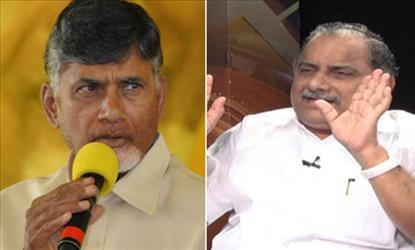
Veteran Kapu leader Mudragada Padmanabham has died, according to reports from NTV Telugu and TV9 Telugu. His passing leaves the organised Kapu reservation agitation without its founding patriarch, and India Herald's read is that the vacuum effectively consolidates Pawan Kalyan's claim over the community's political loyalty — but only if the Jana Sena chief can deliver what Mudragada never could: a statutory BC classification.
A man who could fill the streets of Tuni and Kakinada with lakhs of angry Kapus — and who once ordered an entire railway line set ablaze to prove it — is gone. Mudragada Padmanabham, the patriarch of the Kapu reservation movement in Andhra Pradesh, has died, according to reports from NTV Telugu, TV9 Telugu, and 10TV. NTV Telugu described his passing as the end of an era — "రాజకీయాల్లో ఓ శకం ముగిసింది" — and for once, the cliché is earned.
But here is the question his death forces upon the Godavari delta and beyond: what happens to a movement when the man who was its face, its fury, and its only real bargaining chip with every ruling party is no longer at the negotiating table? The answer, India Herald's assessment suggests, may already be written — and it is spelled P-A-W-A-N K-A-L-Y-A-N.
The Arc: From Tuni Flames to YSRCP's Embrace
To understand the vacuum Mudragada leaves, you have to understand the fire he once commanded — literally. The 2016 Tuni train-burning agitation remains the single most dramatic act of community mobilisation in post-bifurcation Andhra Pradesh. Padmanabham did not merely demand Kapu inclusion in the backward classes list; he weaponised the demand, turning highways and railway tracks into stages for a rage that successive governments found impossible to ignore. The TDP under Chandrababu Naidu offered committees; the YSRCP under Jagan Mohan Reddy offered a ticket. Padmanabham, aging and politically cornered, accepted the latter.
That decision — contesting on a YSRCP ticket — is where the patriarch's story turns from epic to cautionary tale. For a man who had built his stature on being the community's independent voice, aligning with a party widely seen by Kapus as hostile to their reservation demand was, in the view of many within the community, an act of self-cancellation. According to political observers quoted by NTV Telugu, Padmanabham's YSRCP innings alienated a significant section of his core base, particularly in the East and West Godavari districts where the Kapu movement had its deepest roots.
Political Pulse
The backstage chatter across coastal Andhra, particularly in the corridors of Rajahmundry and Kakinada, has been blunt for years now: Mudragada sold out. Whether that is fair or not — and there are those who argue the old man simply ran out of options — the political damage was done well before his death. The talk in Kapu-dominated mandals, according to sources familiar with the community's mood, is that the reservation agitation lost its credibility the moment its leader wore a rival party's scarf.
What made the erosion irreversible was the simultaneous rise of Pawan Kalyan. The Jana Sena chief, himself a Kapu, offered something Mudragada never could: electoral muscle that actually won seats. When Jana Sena swept into the NDA alliance and Pawan Kalyan secured a cabinet berth in the Chandrababu Naidu-led government, the implicit message to every Kapu voter in the Godavari belt was unmistakable — power delivers what protests cannot.
(This section reflects political corridor chatter and attributed analysis, not confirmed internal party positions.)
The Inheritance: Movement or Ashes?
Here is what the obituary columns will not say plainly, so India Herald will: Mudragada Padmanabham's death does not create a leadership vacuum in the Kapu movement. It formalises one that has existed since at least 2024. The organised agitation had already been hollowed out — partly by the YSRCP misadventure, partly by the sheer gravitational pull of Pawan Kalyan's electoral success, and partly by the absence of a credible second-rung leader who could keep the streets mobilised.
The Kapu community, concentrated heavily in the East Godavari, West Godavari, and Krishna districts, constitutes roughly 24-26% of the coastal Andhra population according to various caste census estimates — a vote bank no party can afford to ignore. Mudragada's genius was in making that demographic weight felt through street power. Pawan Kalyan's genius has been in converting it into ballot-box power. The question now is whether the ballot-box route can actually deliver the one thing the community has demanded for decades: statutory reservation under the BC category.
This is where the inheritance gets complicated. Pawan Kalyan, as a sitting deputy chief minister in the NDA government, faces the classic insider's dilemma. He cannot lead street agitations against his own coalition. He cannot promise reservation without the centre's concurrence on constitutional amendments. And he cannot ignore the demand without risking the very community loyalty that Mudragada's exit now deposits at his feet. The Kapu vote is a gift — but it comes wrapped in an obligation no previous leader has been able to fulfil.
The Forward Read: What to Watch
If history is any guide, the weeks after a community patriarch's death are when rival factions attempt to claim the mantle. Watch for two things. First, whether any second-rung Kapu leader — possibly from the Mudragada family itself — attempts to revive the agitational wing independent of Jana Sena. Second, and more critically, whether Pawan Kalyan uses this moment to make a concrete move on the reservation front: a commission, a cabinet note, a public commitment with a timeline. The absence of such a move would signal that the community's political consolidation under Jana Sena is tactical, not ideological — and tactical consolidations fracture the moment the tactic stops delivering.
The broader lesson here is not about one man or one community. It is about the shelf life of protest movements in Indian democracy. Mudragada proved that you can shut down a national highway and burn a train and force a chief minister to pick up the phone. What he could not prove — and what Pawan Kalyan has yet to prove — is that any of it translates into a gazette notification. The Kapu patriarch is gone. The Kapu question remains unanswered. And the man who now owns that question sits inside the very government that must answer it.
That is either the most powerful position in the room — or the most trapped one.
Allegations and political claims reported here are attributed to named sources and remain the positions of the respective parties; matters sub judice are reported without prejudgment.
Reported and written with AI assistance under India Herald's editorial standards; a human editor governs publication.
More from India Herald

Key Takeaways
- Mudragada Padmanabham's death formalises a Kapu movement leadership vacuum that has existed since his controversial YSRCP alliance alienated his core base in the Godavari districts.
- Pawan Kalyan now inherits near-undisputed claim over the Kapu vote bank — roughly 24-26% of coastal Andhra's population — but also inherits the unfulfilled demand for BC reservation that no leader has delivered.
- The organised Kapu street agitation, which peaked with the 2016 Tuni train-burning, had already been hollowed out by Mudragada's political choices and Jana Sena's electoral rise.
- Watch for whether a second-rung leader attempts to revive the agitational wing, and whether Pawan Kalyan makes a concrete reservation move — the absence of either signals a community in drift.
By the Numbers
- Kapus constitute roughly 24-26% of coastal Andhra Pradesh's population according to various caste census estimates, making them a decisive electoral bloc in the Godavari and Krishna districts.
The 5W+H: Who, What, When, Where, Why, How
- Who: Mudragada Padmanabham, the veteran Kapu reservation movement leader and former MLA from Andhra Pradesh, according to NTV Telugu.
- What: Padmanabham has passed away, marking the end of a decades-long agitation for Kapu inclusion in the backward classes list, as reported by TV9 Telugu and 10TV.
- When: His death was reported on this date in 2026, according to NTV Telugu and TV9 Telugu.
- Where: Andhra Pradesh, where Padmanabham led the Kapu movement across the Godavari and coastal districts.
- Why: His death leaves a leadership vacuum in the organised Kapu reservation movement at a time when the community's political loyalties are already shifting toward Jana Sena and Pawan Kalyan.
- How: Years of political agitation, a controversial stint with YSRCP, and advancing age culminated in the passing of the leader who defined Kapu identity politics for a generation.
Frequently Asked Questions
Who was Mudragada Padmanabham?
Mudragada Padmanabham was a veteran Andhra Pradesh politician and the founding patriarch of the Kapu reservation movement, best known for leading the 2016 Tuni agitation demanding Kapu inclusion in the backward classes list. He later contested on a YSRCP ticket, a move that alienated much of his base, according to NTV Telugu.
What happens to the Kapu reservation movement after Mudragada's death?
The organised street agitation wing effectively loses its only figurehead. Political observers note that Pawan Kalyan and Jana Sena have already absorbed much of the Kapu community's political loyalty, but the core demand — statutory BC reservation — remains unmet and no leader has delivered on it.
Does Pawan Kalyan now control the Kapu vote bank?
With Mudragada's passing, Pawan Kalyan is widely seen as the undisputed political leader of the Kapu community, particularly in the Godavari districts. However, as a sitting deputy CM in the NDA government, he faces the insider's dilemma of being unable to lead street agitations while being expected to deliver reservation, according to India Herald's analysis.
 click and follow Indiaherald WhatsApp channel