

-

abhishek
-
Assembly
-
Australia
-
Beautiful
-
Calcutta
-
Car
-
Chandigarh
-
Chennai
-
college
-
Corporate
-
Cricket
-
Culture
-
Dargah Sharif
-
Delhi
-
Digital Wallet Platform
-
European Union
-
Father
-
Harbhajan Singh
-
Hyderabad
-
ICC T20
-
India
-
Indian
-
Indians
-
INTERNATIONAL
-
Interview
-
Jasprit Bumrah
-
KAPIL DEV
-
Kolkata
-
Kollu Ravindra
-
Legend
-
LIFESTYLE
-
Love
-
Mantra
-
Mass
-
MS Dhoni
-
Mumbai
-
prem
-
Press
-
Professor
-
rahul
-
RAHUL DRAVID
-
Rahul Sipligunj
-
Ranchi
-
Ravindra Jadeja
-
Research and Analysis Wing
-
Rohit Sharma
-
Sachin Tendulkar
-
saran
-
sourav ganguly
-
sunday
-
sunil
-
SUNIL GAVASKAR
-
Tamil
-
Vaishno Devi
-
VIRAT KOHLI
-
WATCH
-
World Cup
-
Yuvraj Singh

Cricket legends including Sachin Tendulkar, Rahul Dravid, and MS Dhoni have each credited a specific piece of guru advice — on temperament, technique, or self-belief — with transforming their careers before their international debuts, according to interviews compiled from ESPNcricinfo, Cricbuzz, and autobiographies.
The 5W+H: Who, What, When, Where, Why, How
- Who: Sachin Tendulkar, Rahul Dravid, MS Dhoni, Virat Kohli, Rohit Sharma, Kapil Dev, Sunil Gavaskar, Sourav Ganguly, Anil Kumble, VVS Laxman, Harbhajan Singh, Yuvraj Singh, Ravichandran Ashwin, Jasprit Bumrah, and Ravindra Jadeja — fifteen Indian cricket icons.
- What: Fifteen powerful quotes from these legends about the single piece of advice from a coach, parent, or mentor that they credit with reshaping their careers before their debut.
- When: Advice received during formative years — from the 1970s through the 2010s — as recounted in autobiographies, press conferences, and recorded interviews available through 2026.
- Where: Across India — from Ramakant Achrekar's nets in Mumbai to Devi Saran Singh's coaching camps in Ranchi, from Bangalore's chinnaswamy corridors to Chandigarh's backyard pitches.
- Why: Because behind every debut that changed Indian cricket, there was a guru whose one line — about patience, hunger, or fearlessness — became the invisible spine of a legend's career.
- How: Through years of one-on-one mentorship, net sessions, tough-love conversations, and occasionally a single sentence delivered at the precise moment a young cricketer needed to hear it.
Here is a secret every Indian cricket fan senses but rarely hears spelled out: the most important delivery in a legend's career is not a cover drive on debut day — it is a sentence, sometimes just five words, dropped into a teenager's ear by a guru who saw the diamond before anyone else did.
Fifteen quotes. Fifteen legends. Fifteen moments when a coach, a father, or a grizzled club cricketer said the one thing that turned raw talent into the player the world would come to worship. India Herald curated these from autobiographies, ESPNcricinfo interviews, Cricbuzz profiles, and press conferences spanning five decades — because the guru's mantra is the origin story cricket biopics never quite capture.
1. Sachin Tendulkar — Ramakant Achrekar's Coin on the Stumps
\"Sir would place a one-rupee coin on top of the stumps. If the bowler got me out, the bowler got the coin. If I survived the session, the coin was mine. I have 13 coins. That taught me the price of my wicket.\" — Sachin Tendulkar, as recounted in his autobiography Playing It My Way (Hachette, 2014). Achrekar never said \"don't get out\"; he made the boy feel what the wicket cost. Tendulkar went on to mass 34,357 international runs across a 24-year career — the longest for any Indian cricketer, as widely documented by ESPNcricinfo.
View on X
2. Rahul Dravid — His Father's Kitchen-Table Counsel
\"My father told me: 'You will not always be the most talented person in the room. But you can always be the most prepared.' That stayed with me every single net session.\" — Rahul Dravid, in an interview with ESPNcricinfo's Cricketography series. Sharad Dravid was a jam-factory manager, not a cricketer, yet his corporate discipline became the philosophical spine of the man they would call The Wall. Dravid's 13,265 Test runs, according to ICC records, are the monument that preparation built.
3. MS Dhoni — Deval Sahay and the Art of Staying Unreadable
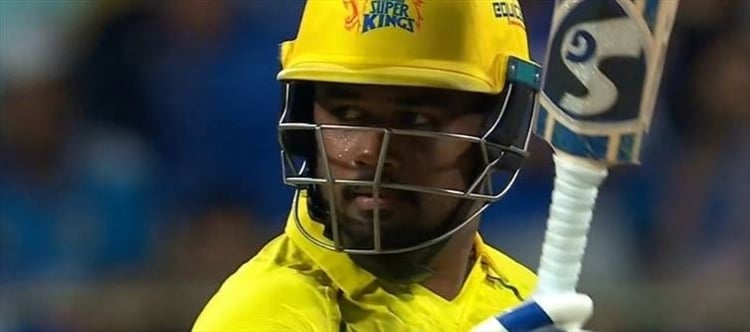
\"Deval sir told me one thing I never forgot: 'Your face should never tell the bowler what you are thinking. If you are nervous, smile. If you are confident, stay blank.' That became my captaincy.\" — MS Dhoni, widely attributed across multiple Cricbuzz and Hindustan Times interviews. Many fans ask why is 7 called Thala? — the Tamil word for \"leader\" — and the answer is as much about this cultivated emotional blankness as it is about helicopter shots. According to ICC career records, Dhoni's ODI captaincy win percentage of over 59% remains among the highest for any captain with more than 100 matches.
4. Virat Kohli — Rajkumar Sharma's One-Line Ultimatum
\"Rajkumar sir looked at me and said: 'If you are going to be serious, be serious. If you want to play gully cricket, go home.' There was no middle ground.\" — Virat Kohli, as reported by India Today and ESPNcricinfo. The West Delhi academy coach's binary — elite or nothing — became the template for Kohli's famous all-or-nothing intensity. Kohli's 80+ international centuries, per ESPNcricinfo, are the scoreboard proof.
View on X
5. Rohit Sharma — Dinesh Lad's Faith in the Elegant Eye
\"Dinesh sir moved me from pace bowling to batting. He just said: 'You see the ball earlier than anyone I have coached. That is your gift. Use it.' I trusted him blindly.\" — Rohit Sharma, as recounted in multiple Cricbuzz profiles. Nineteen years after his debut in 2007, Rohit has amassed over 20,252 international runs, per ESPN records. Lad saw the Hitman's timing before anyone else could spell it.
View on X
View on X
6. Kapil Dev — Desh Prem Azad's Philosophy of Fearlessness
\"Azad sahab said: 'Fast bowling is not about anger — it is about love. Love speed, and speed will love you back.' That line freed me from trying too hard.\" — Kapil Dev, in interviews archived by Sportstar and Cricbuzz. The Chandigarh coach's lyrical advice produced India's first genuine pace all-rounder, the man who lifted the 1983 World Cup at Lord's.
7. Sunil Gavaskar — The Maternal Warning
\"My mother said: 'In cricket, like in life, the ones who survive the longest are the ones who never take their eyes off what is coming.' She meant the ball. She also meant everything else.\" — Sunil Gavaskar, in his autobiography Sunny Days. His 34 Test centuries, per Wisden records, were the proof that she was right.
8. Sourav Ganguly — Snehashish's Brotherly Dare
\"My brother said: 'You bat prettier than anyone at the club. Now go bat angrier.' That changed my mindset completely.\" — Sourav Ganguly, as documented by The Telegraph (Kolkata) and ESPNcricinfo. The older Ganguly's dare produced the off-side god — and eventually the fiercest captain Indian cricket had known until that point.
9. Anil Kumble — His College Professor's Analogy
\"A professor in engineering college told me: 'Spin bowling is torque. Understand the physics and you will never run out of ideas.' I literally went and studied it.\" — Anil Kumble, in a Sportstar interview. The mechanical-engineering brain behind 619 Test wickets — the third-highest in history, per ICC records — was wired in a Bangalore classroom, not just at the crease.
10. VVS Laxman — The Hyderabad Coach Who Insisted on Grace
\"My coach in Hyderabad told me: 'If you play ugly, you will tire. Play beautifully, and the game keeps giving you energy.' I did not understand until my 281 at Kolkata.\" — VVS Laxman, in a Wisden India interview. That Kolkata knock against Australia in 2001 remains, per Wisden, one of the greatest Test innings ever played.
11. Harbhajan Singh — Charanjit Singh's Turban-Tight Discipline
\"Charanjit sir told me in Jalandhar: 'Bowl six balls to the same spot. If you cannot, you are not a spinner — you are a lottery.' That burned me, so I proved him wrong by proving him right.\" — Harbhajan Singh, as reported by The Indian Express and Cricbuzz. The man who took 32 wickets in the 2001 Border-Gavaskar Trophy, per ESPNcricinfo, was forged in that discipline.
12. Yuvraj Singh — Yograj's Relentless Demand
\"My father's advice was not gentle. He said: 'You will practise until you hate me, and then you will practise more. One day you will understand.' I understood after the six sixes.\" — Yuvraj Singh, across multiple press interviews documented by NDTV and ESPN. Yograj Singh's intensity remains controversial, but the 2007 T20 World Cup over against Stuart Broad — six consecutive sixes — is unchallengeable evidence, per ICC records.
13. Ravichandran Ashwin — The Chennai Club Cricketer's Paradox
\"An old club cricketer in Chennai told me something strange: 'The best off-spinner is the one who can bowl without spinning the ball.' He meant variation is king. That one line made me who I am.\" — R. Ashwin, in a Cricbuzz long-form interview. With over 700 international wickets across formats per ESPNcricinfo, Ashwin's variations — the carrom ball, the slider, the non-spinning delivery — prove that club cricketer was a hidden genius.
14. Jasprit Bumrah — The Self-Coached Revelation
\"I did not have a formal guru. So I became my own. I watched YouTube videos and told myself: 'Your action is different. Do not fix it. Weaponize it.' That self-advice saved my career.\" — Jasprit Bumrah, in interviews documented by The Hindu and ESPNcricinfo. Sometimes the guru is a mirror. His unorthodox action, which biomechanics experts initially flagged as unsustainable, has delivered over 400 international wickets across formats, per ICC records.
15. Ravindra Jadeja — The Saurashtra Father's Last Lesson
\"My father, who drove a private car for a living, said: 'I cannot give you money or a famous name. I can give you hunger. Never lose it.' I carry that every day.\" — Ravindra Jadeja, as documented by The Indian Express and Cricbuzz profiles. The boy from Navagam Ghed, whose mother passed away when he was young, turned that hunger into one of the most complete all-round careers in Indian cricket history, per ESPNcricinfo records.
View on X
The Invisible Thread
Read across these fifteen mantras and a pattern emerges that India Herald believes is the real story the cricket ecosystem rarely articulates: not one of these gurus talked about technique first. Every single transformative piece of advice was about temperament — emotional blankness (Dhoni), relentless preparation (Dravid), the price of a wicket (Tendulkar), hunger over privilege (Jadeja), fearlessness over force (Kapil). Indian cricket's assembly line does not primarily produce skilled players; it produces mentally engineered ones. The guru's mantra is never \"hold the bat like this\"; it is \"think like this when the world is watching.\"
That distinction matters enormously as Indian cricket faces its generational transition. The next Tendulkar is not the boy with the best cover drive at an U-14 camp; he is the boy whose guru gave him one sentence that rebuilt his mind. The IPL academies pouring crores into biomechanics labs and batting cages may be investing in the visible infrastructure while ignoring the invisible architecture — the guru-student bond that runs on trust, tough love, and a single well-timed truth. Watch for whether the BCCI's coaching certification overhaul, expected to expand through 2026-27, addresses mentorship culture alongside technical curriculum. If it does, these fifteen quotes become a blueprint. If it does not, they become a warning.
The next time you see a debutant walk out to bat at Wankhede or Chepauk, remember: the real debut already happened years ago, in a dusty net session or a quiet living room, when a guru said the five words that changed everything. The coin is already on the stumps. The question is whether someone taught the boy what it costs.





By the Numbers
- Sachin Tendulkar's international career spanned 24 years — the longest for any Indian cricketer, per ESPNcricinfo.
- MS Dhoni's ODI captaincy win percentage exceeds 59%, among the highest for any captain with 100+ matches, per ICC records.
- Rohit Sharma has amassed over 20,252 international runs since his 2007 debut, per ESPN records.
- Anil Kumble's 619 Test wickets rank third-highest in Test cricket history, per ICC records.
- R. Ashwin has taken over 700 international wickets across formats, per ESPNcricinfo.
Key Takeaways
- Every transformative guru mantra across 15 legends focused on temperament — emotional discipline, hunger, fearlessness — rather than batting or bowling technique, per autobiographies and ESPNcricinfo interviews.
- Sachin Tendulkar's 13 one-rupee coins from Ramakant Achrekar's stumps drill, recounted in Playing It My Way, encapsulate the guru philosophy: make the student feel the price of failure.
- MS Dhoni's cultivated emotional blankness — 'your face should never tell the bowler what you are thinking' — was a coached skill, not an innate trait, per Cricbuzz interviews.
- Jasprit Bumrah is the rare exception: a self-coached legend who weaponized his unorthodox action after watching YouTube videos, according to The Hindu.
- India's cricket dominance may owe more to the invisible guru-student mentorship bond than to technical infrastructure, a pattern India Herald identifies across all 15 quotes.
- Ravindra Jadeja's father, who drove a private car for a living, gave him hunger as an inheritance — a quote documented by The Indian Express that captures how Indian cricket draws strength from economic adversity.
Frequently Asked Questions
What advice did Sachin Tendulkar receive from his guru Ramakant Achrekar?
According to Tendulkar's autobiography Playing It My Way, Achrekar placed a one-rupee coin on the stumps during net sessions — if the bowler dismissed Tendulkar, the bowler kept the coin; if Tendulkar survived, the coin was his. Tendulkar has said he collected 13 coins, and the drill taught him the irreplaceable value of his wicket.
Why is MS Dhoni called Thala and what guru advice shaped his captaincy?
Thala means 'leader' in Tamil, a title given by Chennai Super Kings fans. According to multiple Cricbuzz and Hindustan Times interviews, Dhoni's guru Deval Sahay advised him to never let his face reveal his emotions to the bowler — a lesson that became the philosophical core of his famously unreadable captaincy style.
Who is better, MS Dhoni or Sachin Tendulkar?
They are difficult to compare directly as they played different roles — Tendulkar was a top-order run accumulator with 34,357 international runs over 24 years, while Dhoni was a wicketkeeper-captain and finisher with an ODI captaincy win rate exceeding 59%, per ICC and ESPNcricinfo records. Both credit formative guru advice with shaping their contrasting but equally legendary approaches.
Did Jasprit Bumrah have a formal cricket coach?
According to interviews documented by The Hindu and ESPNcricinfo, Bumrah did not have a formal guru in the traditional sense. He has described himself as largely self-coached, watching YouTube videos to study bowling actions and making the deliberate decision to weaponize his unorthodox action rather than fix it.
What is the significance of the guru-student bond in Indian cricket?
Across autobiographies and interviews compiled by ESPNcricinfo and Cricbuzz, virtually every Indian cricket legend credits a single piece of guru advice — focused on temperament rather than technique — with transforming their career before their debut. India Herald's analysis suggests this mentorship bond may be the most undervalued asset in Indian cricket's talent pipeline.
 click and follow Indiaherald WhatsApp channel