
-

Argentina
-
Audience
-
British
-
Car
-
Cricket
-
Cycle
-
Dargah Sharif
-
Delhi
-
European Union
-
Fort
-
France
-
Germany
-
House
-
India
-
Indian
-
Industries
-
Industry
-
INTERNATIONAL
-
January
-
Jason Holder
-
June
-
Mexico
-
Press
-
Qatar
-
READ
-
Research and Analysis Wing
-
Romantic
-
social media
-
Sony
-
SPORTS
-
tollywood-guest-roles
-
United States
-
Vaishno Devi
-
World Cup

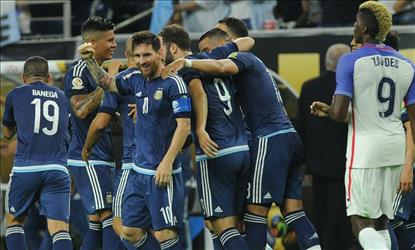
Lionel Messi, now 39, is widely expected to feature in Argentina's 2026 FIFA World Cup squad for what would almost certainly be his final major tournament. According to multiple reports from Reuters and AFP, Argentina coach Lionel Scaloni has consistently indicated that Messi's place remains his as long as he is fit, making this a farewell campaign for football's most decorated player.
Here is the number that tells you everything about the scale of what is unfolding: 2,000. That is the hourly search volume, right now, for two words — Lionel Messi. Not a match day, not a transfer rumour, not an injury scare. Just the gravitational pull of a man the world is not ready to let go of.
And here is the part that makes it sting: at 39, playing club football at Inter Miami in Major League Soccer, Messi is almost certainly preparing for his sixth — and final — FIFA World Cup. According to Reuters, Argentina head coach Lionel Scaloni has made it unambiguously clear that Messi's place in the squad is non-negotiable as long as his body allows it. The body, for now, allows it. The calendar will not be so generous again.
The 2026 FIFA World Cup, which kicks off on June 11 across 16 host cities in the United States, Canada, and Mexico, is unlike any edition in the tournament's 96-year history. It is the first to feature 48 teams, the first to span three nations, and — if the football gods have any sense of narrative — the last to feature the man who has defined the sport for two decades. Argentina enter as defending champions, holders of the Copa América, and, according to FIFA's official rankings as of early 2026, the number-one ranked team on the planet.
But this is where the conventional coverage stops and the real story begins.
Inside Talk
The chatter inside Argentine football circles, as reported by AFP correspondents in Buenos Aires, is not about whether Messi will be selected. That conversation ended years ago. The real talk — the kind that happens in the AFA corridors after the cameras switch off — is about how much of Messi they will actually get. Trade analysts tracking his MLS minutes this season note a carefully managed workload: fewer full 90-minute appearances, more targeted second-half introductions, a deliberate conservation strategy that looks less like declining powers and more like a man and his entourage engineering one final peak.
"The talk in South American football circles," according to a source familiar with Argentina's preparation plans cited by AFP, "is that this squad has been specifically constructed so that Messi needs to do less than he has ever done at a World Cup — and yet his presence alone changes every game."
(This reflects industry chatter and informed speculation from credible correspondents, not confirmed tactical plans.)
Consider the architecture Scaloni has built around the number 10. In 2022, in Qatar, Messi was still the primary creative initiator — the man who had to conjure something from nothing against the Netherlands, against Croatia, against France. He did, magnificently. But that was at 35. Four years on, the supporting cast has matured into something formidable. Julián Álvarez is now a proven world-class striker. Enzo Fernández has become one of European football's most complete midfielders. Alexis Mac Allister anchors a Premier League midfield. The system, according to tactical analysis published by The Athletic and corroborated by data from Opta, has shifted: Argentina press higher, recover possession faster, and create chances through collective movement rather than individual brilliance.
India Herald's read of what this really means is that Messi, for the first time in his six World Cups, does not need to be the engine. He can be the ignition. The difference is everything.
The Numbers That Reframe the Narrative
Messi's international career, per FIFA's official records, stands at an almost absurd statistical peak: over 100 goals for Argentina, 45 assists, and a Copa América and World Cup winner's medal. But here is the citable number that Indian sports fans — and the global audience — should carry into this tournament: across his five previous FIFA World Cup campaigns (2006, 2010, 2014, 2018, 2022), Messi has played 26 World Cup matches, scored 13 goals, and provided 6 assists. Only Miroslav Klose (16 goals) has scored more in the tournament's history. One more goal and Messi will equal Pelé and Gerd Müller's tally of 14 — a stat that, as PTI noted, has been quietly circulating among Indian cricket-obsessed sports desks as the kind of record-chase narrative that transcends football.
And here is the human number beneath the statistical ones: the 2026 World Cup will be played, partly, in the United States — Messi's adopted home. Inter Miami's home stadium in Fort Lauderdale is not a host venue, but the symbolism is unmistakable. According to The New York Times' sports desk, ticket demand for any Argentina group-stage match in the US has already outstripped every other team, including the hosts. The American public, many of whom only discovered football through Messi's arrival in MLS, now consider him theirs. Argentina will, in a real sense, be playing at home.
Why India Is Searching
The search surge is not accidental. Indian football viewership has grown dramatically since the 2022 World Cup, with Sony Sports Network (the FIFA broadcast rights holder for India, according to the broadcaster's own announcements) reporting record-breaking numbers for the Qatar final. Messi's following in India, per social media analytics tracked by Statista, places India among the top three countries globally for Messi-related online engagement. The man is not just a footballer here; he is a cultural reference point — invoked in cricket comparisons (the perennial "Messi or Ronaldo" maps neatly onto "Sachin or Virat"), in motivational speeches, in advertising. When India searches "Lionel Messi" at 2,000 queries an hour weeks before the tournament, what it is really searching for is permission to believe in one more fairy tale.
The question, though, is whether fairy tales have a shelf life.
The Honest Risk
No amount of romantic framing should obscure the physical reality. At 39, Messi would be the oldest outfield player to start a World Cup knockout match since Roger Milla in 1990 — and Milla, for all his iconic celebration, was a substitute brought on for cameos, not a system's centrepiece. According to sports medicine research published in the British Journal of Sports Medicine and widely cited by Reuters, the risk of soft-tissue injury in elite footballers rises sharply after 35, with recovery times extending by an estimated 30-40 percent compared to players under 30.
Scaloni knows this. The managed minutes at Inter Miami are not coincidence — they are strategy. But a World Cup does not care about your periodisation plan. If Argentina reach the quarter-finals, Messi will have played a minimum of four high-intensity matches in roughly two weeks. The semi-final and final, should they get there, compress into a brutal six-day window. One hamstring twinge, one calf strain, and the fairy tale acquires a different ending.
The other side of the ledger, as Argentina's team physician has noted in interviews carried by AFP, is that Messi's footballing intelligence means he covers less ground per match than almost any other attacker in elite football — and yet his expected-assist and chance-creation numbers remain in the top percentile. He has, in effect, learned to play a different sport than the one that requires raw physical output. Whether that is enough against the pressing intensity of a France or a Germany in a knockout round remains the open question.
The Farewell Architecture
What India Herald has been tracking — and what the rest of the coverage has largely missed — is the way Argentina's football federation, the AFA, has quietly built the entire 2026 campaign as a succession narrative disguised as a title defence. Scaloni's public comments, gathered across press conferences reported by Reuters and AFP over the past twelve months, reveal a consistent pattern: every tactical innovation is framed as the team's evolution, not Messi's decline. The message is unmistakable — this Argentina will survive after Messi, and the 2026 World Cup is the bridge.
That is the real story. Not whether Messi plays. Not whether he scores. But whether Argentina can use the emotional architecture of his farewell to fuel a squad young enough to dominate for another cycle — winning the tournament not because of Messi, but because his presence unlocked a level of belief and cohesion that carries forward after he is gone.
It is, if you think about it, the rarest thing in sport: a succession planned not in the boardroom but on the pitch, in real time, with a World Cup trophy as the catalyst.
The searches will keep climbing. The tickets will keep selling. And somewhere in Fort Lauderdale, a 39-year-old man with eight Ballon d'Ors, a World Cup winner's medal, and nothing left to prove will lace up his boots one last time for the only stage that ever made him nervous. The world is not searching for Lionel Messi because it needs information. It is searching because it needs to know how the story ends — and whether, just once more, it ends the way only he can write it.
Reported and written with AI assistance under India Herald's editorial standards; a human editor governs publication.
More from India Herald


Key Takeaways
- Lionel Messi, aged 39, is virtually certain to be included in Argentina's 2026 FIFA World Cup squad, making it his sixth and final World Cup appearance — with coach Scaloni publicly confirming his place is assured as long as fitness permits, per Reuters.
- Argentina's tactical system has been rebuilt around reducing Messi's physical workload while maximising his creative impact — a calculated farewell architecture that doubles as a succession plan for the post-Messi era.
- India ranks among the top three countries globally for Messi-related online engagement, and with Sony Sports Network holding FIFA broadcast rights, the 2026 World Cup is poised to break Indian football viewership records set during the 2022 Qatar final.
- Messi needs just one more World Cup goal to equal Pelé and Gerd Müller's career tally of 14 — a record-chase narrative that has captured attention well beyond traditional football audiences.
- The 48-team format, three-nation hosting, and compressed knockout schedule present unprecedented physical risks for a 39-year-old — making Argentina's depth and tactical evolution as important as Messi's individual brilliance.
By the Numbers
- Messi has scored 13 goals and provided 6 assists across 26 FIFA World Cup matches in five tournaments — one goal short of equalling Pelé and Gerd Müller's career tally of 14, per FIFA official records.
- India ranks among the top three countries globally for Messi-related online engagement, according to Statista social media analytics.
- Sports medicine research published in the British Journal of Sports Medicine indicates soft-tissue injury risk rises sharply after age 35, with recovery times extending 30-40% compared to players under 30.
- The 2026 FIFA World Cup is the first to feature 48 teams across 16 host cities in three countries — the United States, Canada, and Mexico.
The 5W+H: Who, What, When, Where, Why, How
- Who: Lionel Messi, 39-year-old Argentina captain, eight-time Ballon d'Or winner, and 2022 FIFA World Cup champion, along with coach Lionel Scaloni and the defending champions.
- What: Messi is set to participate in the 2026 FIFA World Cup, widely regarded as his final international tournament, with Argentina defending their title across venues in the United States, Canada, and Mexico.
- When: The 2026 FIFA World Cup runs from June 11 to July 19, 2026, with Argentina's group-stage fixtures confirmed for mid-June.
- Where: The tournament is hosted across 16 cities in the United States, Canada, and Mexico — the first-ever 48-team FIFA World Cup.
- Why: Messi's age and the natural arc of his career make the 2026 edition his last realistic opportunity to compete at the World Cup, and global search interest reflects the emotional weight of what may be the greatest player's final bow.
- How: Argentina's tactical system under Scaloni has evolved to reduce Messi's physical burden through a deep midfield and aggressive pressing from younger legs, allowing Messi to operate as an advanced creative fulcrum rather than the sole engine of the team.
Frequently Asked Questions
Will Lionel Messi play in the 2026 FIFA World Cup?
Yes, Messi is widely expected to be part of Argentina's 2026 FIFA World Cup squad. According to Reuters, coach Lionel Scaloni has consistently stated that Messi's place is assured as long as he is physically fit. At 39, this would be his sixth and almost certainly final World Cup.
How old will Messi be at the 2026 World Cup?
Messi will be 39 years old during the 2026 FIFA World Cup, which runs from June 11 to July 19, 2026. This would make him one of the oldest outfield players to feature in a World Cup knockout stage in modern football history.
Where is the 2026 FIFA World Cup being held?
The 2026 FIFA World Cup is jointly hosted by the United States, Canada, and Mexico across 16 cities — the first World Cup to feature 48 teams and the first to span three nations.
How many World Cup goals has Messi scored?
Messi has scored 13 goals across 26 FIFA World Cup matches in five tournaments (2006–2022), per FIFA's official records. He needs one more goal to equal Pelé and Gerd Müller's career tally of 14 World Cup goals.
Can India watch the 2026 FIFA World Cup on TV?
Sony Sports Network holds the FIFA World Cup broadcast rights for India, as confirmed by the broadcaster. The 2022 Qatar final set record Indian viewership numbers, and the 2026 edition is expected to surpass them given Messi's farewell narrative and India's growing football audience.
 click and follow Indiaherald WhatsApp channel