
-

Aam Aadmi Party
-
Ahmedabad
-
Andhra Pradesh
-
Arvind Kejriwal
-
Assembly
-
Audience
-
Bharatiya Janata Party
-
CBN
-
court
-
Criminal
-
Delhi
-
EDUCATION
-
Election
-
Elections
-
Gujarat - Gandhinagar
-
Guntur
-
Hanu Raghavapudi
-
High court
-
India
-
Indian
-
Jagan
-
Leader
-
Lokesh
-
Lokesh Kanagaraj
-
Loksabha
-
media
-
Minister
-
Mohan
-
Nara Lokesh
-
Narendra Modi
-
National Democratic Alliance
-
Party
-
politics
-
Prashant Kishor
-
READ
-
Research and Analysis Wing
-
Sakshi
-
Shiv Sena
-
shiv sena party
-
social media
-
Supreme
-
SV Mohan Reddy
-
TDP
-
Vijayawada
-
WATCH

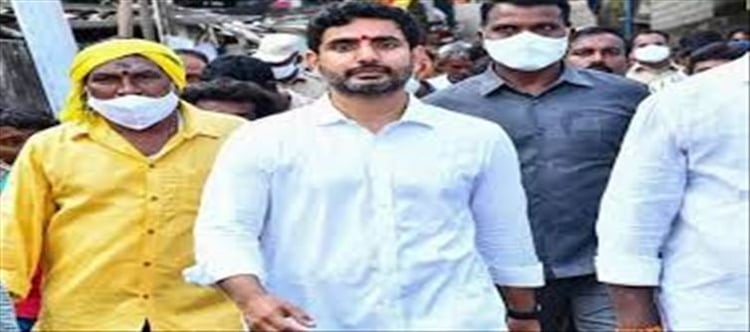
When Nara Lokesh told the Express Adda that 'NaMo in Andhra means Naidu ji and Modi ji ki jodi,' he was not paying a compliment — he was welding TDP's fortunes to Modi's personal prestige, making any BJP move against Chandrababu Naidu look like an attack on the Prime Minister's own brand, according to India Herald's political analysis.
Two syllables. That is all it took. At the Express Adda — the Indian Express's flagship conversation platform, where politicians usually speak in careful paragraphs calibrated by committee — Nara Lokesh dropped a line so compact it almost sounded like a throwaway. 'In Andhra, NaMo means Naidu ji and Modi ji ki jodi.' The studio audience chuckled. Delhi's political backrooms, India Herald's read suggests, did not.
Because what Lokesh did, in that single breath, was not flattery. It was annexation. He took the most jealously guarded brand asset in Indian politics — the two syllables that have been chanted at ten thousand rallies, stamped on a hundred crore election posters, and associated with one man and one man alone since 2014 — and quietly co-signed Chandrababu Naidu's name onto the trademark. As reported by The Indian Express, this was not an offhand quip but a deliberate articulation of how the TDP heir sees the NDA alliance in Andhra Pradesh: not as a junior-senior arrangement, but as a co-branded venture.
The arithmetic context makes the manoeuvre sharper. The TDP's return to power in Andhra Pradesh in 2024 was built on an alliance where Chandrababu Naidu's party contributed the bulk of assembly seats while delivering crucial Lok Sabha numbers that helped the BJP cross the majority mark at the Centre. In the current NDA government, TDP is not a marginal ally — it is one of two coalition partners without whom the government's majority dissolves. That leverage is real, but leverage without narrative is raw and fragile. Lokesh's wordplay supplies the narrative.
Political Pulse
Here is the backstage read that the polished Express Adda clip does not convey. In coalition circles, the persistent whisper — reported across multiple outlets tracking NDA dynamics, including analyses in The Hindu and Hindustan Times — is that the BJP's central leadership periodically evaluates whether it can cultivate alternatives to Naidu in Andhra, the way it has historically absorbed or sidelined regional allies in state after state. The spectre of Jagan Mohan Reddy's YSRCP, now in opposition but not dismantled, is the obvious card: a party that has shown willingness to support BJP on parliamentary votes in exchange for federal patronage.
Lokesh's 'NaMo' formulation is designed to make that card almost impossible to play — at least openly. If NaMo in Andhra is publicly accepted as the Naidu-Modi jodi, then any BJP outreach to Jagan becomes, by the grammar of the acronym, an act of betrayal against the Modi half of the brand. It is, in the corridors of Lutyens' Delhi, what operatives call a 'lock-in' — a rhetorical device that converts a political alliance into an identity claim. The talk among TDP insiders, according to those tracking the party's strategy, is that this was not improvised. It was tested.
(This reflects political corridor chatter and analytical speculation, not confirmed internal party communications.)
Consider the sheer audacity of the positioning. The BJP has spent over a decade building 'NaMo' as a shorthand for transformational governance, Hindu nationalism's softer electoral face, and one man's personal covenant with 140 crore Indians. For a 42-year-old from a regional party to walk into a national forum and casually staple his father's name onto that covenant — and do it in a way that sounds like a compliment — is either supreme confidence or supreme calculation. India Herald's assessment: it is both.
The deeper game is about succession. Lokesh is not just defending his father's current tenure; he is building his own political grammar for the day he inherits the party. By framing TDP's relationship with BJP as a personal bond between Naidu and Modi — two leaders, two legacies — he implicitly places himself as the natural custodian of that bond when the generational transition comes. The 'jodi' framing carries a hidden clause: if the partnership is personal, then it survives only through the families that forged it. This is dynastic politics dressed as alliance management, and it is remarkably effective.
There is a BJP counter-move, of course. The party's national leadership can simply ignore the redefinition, never acknowledge it publicly, and let it fade. But the problem with a viral quip in 2026 is that it does not fade. It circulates on WhatsApp, gets clipped for reels, becomes a chant at TDP rallies in Vijayawada and Guntur and Tirupati. Every time a BJP leader in Andhra shares a stage with Naidu and the crowd roars 'NaMo,' the ambiguity works in TDP's favour. The brand has been forked, and cleaning up a forked brand in a coalition is politically expensive.
The timing also matters. With the 2029 general elections still distant but state-level positioning already underway, Lokesh is staking early ground. The message to BJP's central strategists, decoded plainly, is this: we are not like your other allies. We are not the JD(U) that you absorbed, or the Shiv Sena that you split. We are the other half of your most sacred acronym. Touch us, and you damage yourselves.
The Forward Read
Where does this go next? India Herald's projection, grounded in the coalition dynamics visible today: watch for three signals. First, whether BJP's official social media handles in Andhra pick up or pointedly avoid the 'NaMo = Naidu-Modi' framing — silence will speak as loudly as endorsement. Second, whether Jagan Mohan Reddy's YSRCP attempts to counter by publicly offering BJP an alternative alliance framework, which would test how tightly the lock-in holds. Third, whether Lokesh escalates the branding — taking it from a quip at a Delhi forum to formal campaign material in Andhra, which would force BJP to either co-own it or visibly reject it.
The most likely outcome, based on how coalition politics has historically played out in India, is strategic ambiguity from Delhi. The BJP will neither accept nor reject the formulation. But that ambiguity itself is a win for TDP — because in the absence of a denial, the redefinition stands. And every day it stands, the cost of reversing it climbs.
Two syllables. Two names. One trap. The question Lokesh has left hanging — for Modi, for the BJP's strategists, for Jagan, and for every coalition watcher — is brutally simple: if NaMo really does mean Naidu-Modi in Andhra, then who, exactly, would dare to break the jodi?
Reported and written with AI assistance under India Herald's editorial standards; a human editor governs publication.
More from India Herald
Key Takeaways
- Lokesh's 'NaMo = Naidu-Modi' quip at Express Adda is a calculated brand annexation that binds TDP's political survival to Modi's personal prestige, making any BJP pivot toward Jagan Mohan Reddy's YSRCP reputationally costly.
- The formulation works as a rhetorical 'lock-in' — by reframing the alliance as a personal jodi, TDP positions itself as an identity partner rather than a transactional ally, which is historically harder for BJP to discard.
- The timing is strategic: with 2029 Lok Sabha positioning already underway, Lokesh is preemptively claiming co-ownership of the NDA's most potent brand asset before any alternative Andhra arrangement can crystallise.
- Watch BJP's response in Andhra — whether its state handles adopt, ignore, or reject the framing will reveal how comfortable Delhi is with the trap Lokesh has set.
By the Numbers
- TDP is one of two coalition partners whose Lok Sabha seats are essential for the BJP-led NDA government's parliamentary majority in 2024-onward.
- The 'NaMo' brand has been BJP's single most recognisable electoral identity since 2014, deployed across an estimated hundred crore election materials nationally.
The 5W+H: Who, What, When, Where, Why, How
- Who: Nara Lokesh, TDP national general secretary and son of Andhra Pradesh Chief Minister N. Chandrababu Naidu, speaking at the Indian Express Adda event.
- What: Redefined the iconic 'NaMo' acronym — universally associated with Narendra Modi — as standing for 'Naidu ji and Modi ji ki jodi' in Andhra Pradesh.
- When: During the Express Adda interaction in 2026, as reported by The Indian Express.
- Where: The Express Adda platform, New Delhi — a high-visibility national media forum.
- Why: To psychologically bind TDP's alliance with BJP so tightly to Modi's personal brand that any attempt to sideline Naidu in Andhra would carry reputational cost for Modi himself.
- How: By reframing the most recognisable political acronym in Indian politics as a joint brand, Lokesh created a rhetorical trap: accepting the formulation flatters Modi, but rejecting it would require BJP to publicly distance itself from TDP — a costly move in a coalition government.
Frequently Asked Questions
What did Nara Lokesh say about NaMo at Express Adda?
At the Indian Express Adda, Lokesh said 'In Andhra, NaMo means Naidu ji and Modi ji ki jodi,' redefining the acronym universally associated with Narendra Modi as a joint TDP-BJP brand.
Why is Lokesh's NaMo remark politically significant?
It binds TDP's alliance with BJP to Modi's personal prestige, making any BJP attempt to sideline Chandrababu Naidu or court Jagan Mohan Reddy look like an attack on the PM's own brand — a strategic lock-in.
How might BJP respond to Lokesh's NaMo redefinition?
The most likely response is strategic ambiguity — neither endorsing nor rejecting it. But silence itself benefits TDP, since the redefinition stands unchallenged and the cost of reversing it grows with time.
Does this affect Jagan Mohan Reddy's YSRCP prospects with BJP?
Yes — if the NaMo-as-Naidu-Modi framing takes hold publicly, any BJP outreach to YSRCP becomes politically expensive, as it would visibly contradict the co-branded partnership narrative.
 click and follow Indiaherald WhatsApp channel