

-

Audience
-
Banking
-
Blockbuster hit
-
bollywood
-
Box office
-
CBI
-
Cinema
-
CM
-
Corporate
-
court
-
Criminal
-
dharma
-
Father
-
Film Industry
-
Gangster
-
Government
-
Hindi
-
history
-
India
-
Indian
-
Industries
-
Industry
-
Kamal Haasan
-
local language
-
Love
-
media
-
Minister
-
Mukesh
-
Mumbai
-
police
-
polling booth
-
Population
-
Sadma
-
Shruti Haasan
-
Smart phone
-
Stalin
-
Subhash Ghai
-
Success
-
Tamil
-
Telangana Chief Minister
-
udhayanidhi stalin
-
urdu
-
Yash

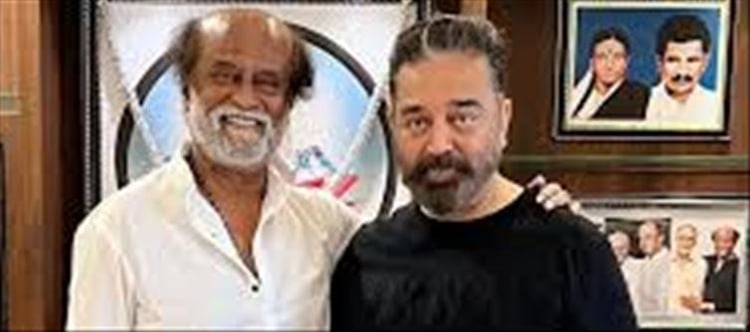
Kamal Haasan has revealed that he abandoned his bollywood career because of pervasive underworld connections in the hindi film industry. According to The indian Express, the veteran actor said the ecosystem of alleged gangster financing and intimidation made it untenable for him to continue working in mumbai, effectively confirming what insiders whispered for decades: the 90s bollywood machine pushed out talent that refused to play along.
Here is a man who could have owned Bollywood. A man who gave hindi cinema Ek Duuje Ke Liye, Sadma, Saagar, and the searing patriotic fury of Hindustani. A man who could act, dance, write, direct, and think circles around most of the industry. And yet, kamal haasan walked away from Mumbai. Not because the audience rejected him. Not because the box office didn't love him. But because, as he has now stated plainly, the people running the show had too many underworld connections.
The confession, reported by The indian Express, lands with the quiet devastation of a truth everyone already half-knew but nobody with Haasan's stature had articulated quite so bluntly. "Too many underworld connections," he said — four words that function as both personal explanation and historical verdict.
The Golden Run That mumbai Cut Short
For anyone asking "Has kamal haasan acted in Bollywood?" — the answer is an emphatic yes, and brilliantly so. His hindi filmography across the 1980s and into the mid-1990s is studded with critical and commercial successes. Ek Duuje Ke Liye (1981) was a phenomenon. Sadma (1983) remains one of indian cinema's most heartbreaking performances. Saagar (1985) proved he could hold his own alongside bollywood royalty. And Hindustani (1996), the bilingual vigilante drama directed by S. Shankar, showed he could carry a pan-Indian blockbuster long before that phrase became a marketing buzzword.
Does kamal haasan know Hindi? Fluently enough to have dubbed himself in most of his hindi films, according to multiple industry accounts — a rarity among South indian actors working in bollywood even today. His command over urdu diction in songs and dialogue was noted by critics and co-stars alike. The language was never the barrier. The barrier wore a different face entirely.
The 90s: When the Underworld Allegedly Ran the Industry
To understand what Haasan walked away from, you have to understand what 1990s bollywood was alleged to have been. This was the era when, according to extensively documented accounts in publications like Mid-Day and india Today, as well as multiple cbi investigations, syndicates allegedly linked to organised crime reportedly had significant involvement in film financing, distribution, and even casting. Producers reportedly received threatening phone calls. Stars were allegedly extorted.
T-Series founder Gulshan Kumar was murdered in 1997 in what investigators alleged was linked to underworld extortion, according to police charge sheets and court proceedings reported widely at the time. The case resulted in convictions, though some accused remained absconding as of the last reported court updates. Producers Rajiv Rai and mukesh Duggal reportedly left the country during this period, and filmmaker subhash ghai publicly acknowledged receiving threats, according to contemporaneous media reports. india Herald reached out to the indian Motion Picture Producers' Association (IMPPA) and the Producers Guild of india for comment on Haasan's characterisation of the era; no response had been received at the time of publication.
This was not tabloid gossip. It was the documented reality of an industry that had not yet received official "industry status" from the government — a designation that only came in 2001, finally opening the doors to legitimate banking and corporate finance. Before that milestone, as The indian Express and The Hindu have reported in retrospectives, much of bollywood ran on unaccounted cash, and organised crime allegedly provided much of the willing financing.
What Haasan's Confession Really Tells Us (Analysis)
The standard narrative around Kamal Haasan's bollywood career has always been framed as a choice — as though he simply preferred Chennai, preferred tamil audiences, preferred creative control. And some of that is true. But his new admission recasts the story entirely. It wasn't just preference. It was, in effect, self-preservation and principle.
Think about what that means for the broader industry history. If an artist of Haasan's calibre — a man who has won multiple National Film Awards (various sources cite between four and six wins depending on whether honorary and special jury recognitions are included) — felt he could not safely or ethically operate within the bollywood ecosystem, how many other talents did that system push out? How many careers never happened because the alleged price of entry was accommodation with criminal elements?
This is the dimension the publicity machine has always been reluctant to address. The corporatisation narrative — bollywood cleaned up, got industry status, attracted legitimate investment — is true as far as it goes. But it conveniently skips over the human cost of the decades that preceded it. Haasan's revelation is a reminder that the cleanup came at the expense of artists who should never have been put in that position.
The Ulaganayagan's Legacy, Reframed
What makes this particularly poignant is how Haasan's career trajectory diverged after leaving Mumbai. He returned to tamil cinema and produced some of the most audacious work in indian film history — Hey Ram, Virumaandi, Dasavathaaram, Vishwaroopam. He took risks no bollywood star of equivalent stature would have touched. He wrote, directed, and produced with a creative freedom that Mumbai's ecosystem of compromise might never have permitted.
In a sense, Bollywood's loss was tamil cinema's extraordinary gain. But the "what if" lingers — a parallel universe where kamal haasan had a safe, legitimate hindi film industry to work in during his physical and creative prime. The films that universe would have produced haunt every cinephile's imagination.
View on X
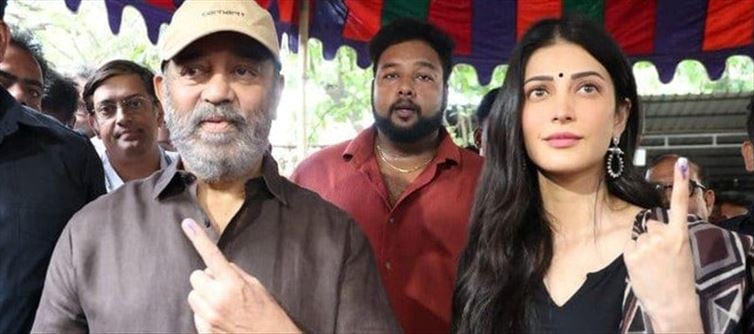
His daughter shruti haasan has spoken affectionately about her father in public appearances, a reminder that behind the Ulaganayagan tag is a man who made real-world decisions to protect his family and his artistic soul from an industry that, for a dark stretch, was allegedly entangled with the criminal networks financing it.
Has bollywood Truly Changed?
The larger question Haasan's revelation provokes is whether today's corporatised, studio-driven bollywood has genuinely exorcised those demons. industry status brought banks and production houses like yash Raj Films, dharma Productions, and others into a formalised structure. The extortion calls reportedly stopped. But as recent controversies around narcotics investigations, financial irregularities, and power-brokering suggest — and as outlets from NDTV to india Today have reported in various investigations — the question of who really holds influence in Mumbai's dream factory remains more layered than the clean corporate brochure would have you believe.
industry bodies such as the Producers Guild of india have pointed to the transformation in Bollywood's financing and governance structures since 2001 as evidence of systemic reform. Those claims have merit. But Haasan's account — and the accounts of others who navigated the pre-reform era — serve as a necessary counterweight to any triumphalist narrative.
kamal haasan, characteristically, has not belaboured the point. He stated it, let it land, and moved on — much as he once moved on from mumbai itself. But the industry he left behind, and the one that exists today, would do well to sit with the weight of what he said. When your best and brightest leave not because they failed but because they refused to be complicit, the failure belongs to the system, not the artist.
Key Takeaways
- Kamal Haasan has stated that 'too many underworld connections' in bollywood drove him away from the hindi film industry, as reported by The indian Express.
- Haasan's hindi filmography includes major hits like Ek Duuje Ke Liye, sadma, Saagar, and Hindustani — his departure was not due to lack of success or audience acceptance.
- The 1990s bollywood era was marked by alleged underworld financing and reported extortion, which only began to recede after the industry received official 'industry status' from the indian government in 2001.
- Haasan's return to tamil cinema produced some of indian cinema's most daring work, suggesting Bollywood's loss was a direct creative gain for the South indian film industry.
- The revelation reframes the standard narrative: Haasan didn't simply 'prefer' tamil cinema — he was effectively pushed out by what he describes as a systemically compromised industry.
Frequently Asked Questions
Has kamal haasan acted in Bollywood?
Yes. kamal haasan had a prolific hindi film career through the 1980s and 1990s, including major successes like Ek Duuje Ke Liye (1981), sadma (1983), Saagar (1985), and Hindustani (1996), according to his filmography records.
Why did kamal haasan leave Bollywood?
According to The indian Express, kamal haasan has revealed that he left bollywood because of 'too many underworld connections' in the hindi film industry, which made the environment untenable for him.
Does kamal haasan know Hindi?
Yes. kamal haasan is fluent in hindi and dubbed himself in most of his hindi films, according to multiple industry accounts. His command over hindi and urdu diction has been noted by critics and co-stars.
How many National Awards has kamal haasan won?
Sources vary: kamal haasan is widely cited as having won between four and six National Film Awards, depending on whether special jury and honorary recognitions are counted alongside competitive wins. He is among the most honoured actors in indian cinema history.


 click and follow Indiaherald WhatsApp channel