


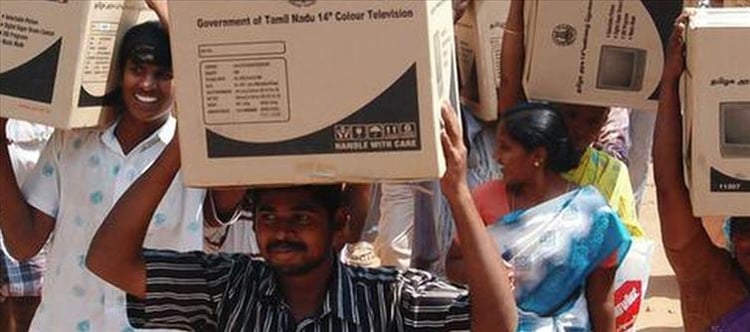

It is legal for political parties in power to create policies and programmes that benefit citizens, but can it be argued that doing so unfairly influences voters or amounts to bribery? Consider the Covid immunisation programme as an example. Can you classify it as an irrational freebie? If the answer is no, why wasn't the booster shot for the same immunisation programme free? What about vaccine campaigns for polio and other diseases—aren't those welfare measures? What distinguishes a welfare measure from a freebie?
By strict definition, every government service that is provided without charge is a gift. Having said that, is it not the responsibility of the welfare state to care for its people, particularly the socially and economically disadvantaged? According to Article 38 of the indian Constitution, the State must work to advance the welfare of the populace by preserving and defending the social order that would allow for the triumph of social, economic, and political justice. In order to ensure social and economic fairness and to reduce disparities in income, status, amenities, and opportunities, welfare programmes work to provide a free service.
Even if these benefits are "free," they cannot be viewed as being unreasonable or against the law. Such programmes have been put in place to assist the needy, while the capable tax-paying residents have been entrusted with sharing the load. The government must maintain a delicate balance to prevent the increased burden on taxpaying citizens from becoming intolerable as well.
By strict definition, every government service that is provided without charge is a gift. Having said that, is it not the responsibility of the welfare state to care for its people, particularly the socially and economically disadvantaged? According to Article 38 of the indian Constitution, the State must work to advance the welfare of the populace by preserving and defending the social order that would allow for the triumph of social, economic, and political justice. In order to ensure social and economic fairness and to reduce disparities in income, status, amenities, and opportunities, welfare programmes work to provide a free service.
Even if these benefits are "free," they cannot be viewed as being unreasonable or against the law. Such programmes have been put in place to assist the needy, while the capable tax-paying residents have been entrusted with sharing the load. The government must maintain a delicate balance to prevent the increased burden on taxpaying citizens from becoming intolerable as well.
 click and follow Indiaherald WhatsApp channel