
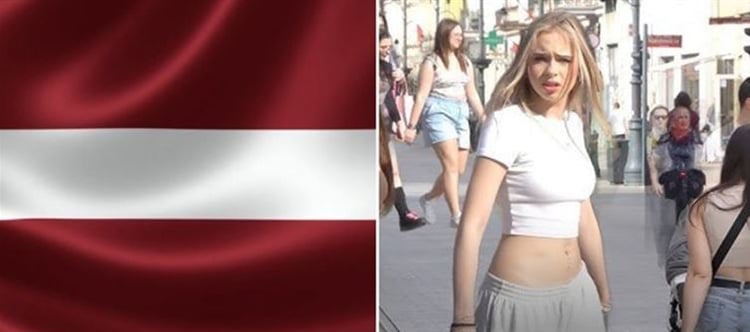


A demographic bombshell has hit Europe: Latvia now has 117 women for every 100 men, one of the biggest gender gaps on the planet.
The imbalance is so extreme that women are reportedly hiring men by the hour for basic household tasks.
But latvia isn’t alone — several european nations are quietly battling the same demographic tilt.
This isn’t just a statistic. It’s a societal reset, reshaping relationships, labour, culture, and gender dynamics across entire countries.
Here’s the brutally honest breakdown.
💥 THE 10 COUNTRIES WHERE women FAR OUTNUMBER MEN — AND WHAT IT MEANS FOR SOCIETY
1️⃣ latvia — 117 women for Every 100 Men (The Epicentre of the Crisis)
The gender gap is so large that it’s shifting the economy itself.
Women hiring men for chores isn’t a “quirky trend” — it’s a survival mechanism in a male-scarce society.
Life expectancy, migration, and socioeconomic patterns have collided to create a demographic earthquake.
2️⃣ lithuania — 115 women per 100 Men (A Silent Demographic Tilt)
Aging population + male mortality + migration = a national imbalance hiding in plain sight.
The dating market? Fiercely competitive — but only for men.
3️⃣ ukraine — 115 women per 100 Men (Worsened by Conflict)
War casualties, displacement, and emigration have dramatically deepened the gender gap.
Women now dominate most population clusters.
4️⃣ estonia — 113 women per 100 Men (A Persistent Pattern)
Northern europe has faced male mortality issues for decades — Estonia’s skewed ratio is a long-standing demographic challenge.
Result: social roles shifting fast.
5️⃣ armenia — 111 women per 100 Men (Migration Driven)
Large-scale male migration has hollowed out the workforce and altered family structures.
Women form the backbone of domestic and economic life.
6️⃣ russia — 110 women per 100 Men (Male Mortality Crisis)
Health issues, conflict, and low life expectancy among men have pushed russia into severe gender imbalance territory.
Entire regions are overwhelmingly female.
7️⃣ belarus — 110 women per 100 Men (Another Post-Soviet Skew)
Like its neighbours, belarus sees more women surviving to older ages — widening the gender gap dramatically in senior populations.
8️⃣ georgia — 108 women per 100 Men (Migration + Mortality)
Younger men often migrate for work, leaving behind communities with a predominantly female population.
It reshapes everything from local economies to marriage patterns.
9️⃣ portugal — 107 women per 100 Men (Western Europe’s Outlier)
Portugal’s aging population and longevity gap have flipped the demographic scales.
Women live longer — and in much higher numbers.
🔟 hungary — 107 women per 100 Men (Slow but Steady Shift)
Hungary’s gender imbalance grows stronger every year, driven largely by health-based mortality gaps and migration.
💥 WHAT THIS CRISIS REALLY MEANS (The Brutal Truth Behind the Numbers)
🧨 1. Labour patterns are shifting — women dominate more roles
From administration to education to healthcare, female-led sectors are expanding fast.
🧨 2. marriage markets are transforming
In many of these countries, women compete for fewer men, flipping traditional dynamics upside down.
🧨 3. Elderly care burdens are rising — and mostly on women
With women living longer, the population of widows skyrockets.
🧨 4. Male migration is reshaping entire rural regions
Whole communities become female-majority households overnight.
🧨 5. Societies must re-evaluate their gender roles
As women dominate demographically, economically, and socially, the old balance simply cannot survive.
 click and follow Indiaherald WhatsApp channel