


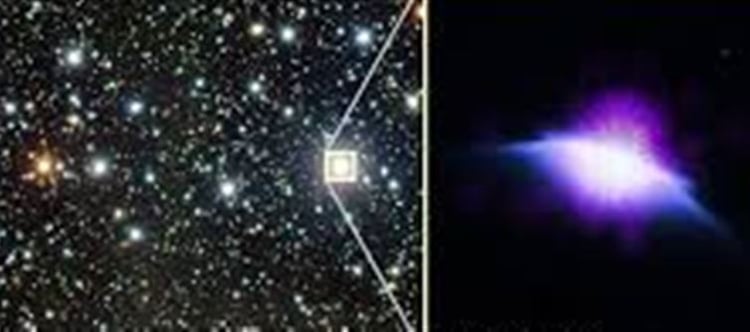

NASA’s Chandra X-ray Observatory has recently observed a young star emitting expanding bubbles of hot gas, offering astronomers a rare glimpse into early stellar activity and its impact on the surrounding space environment.
What Did Chandra Observe?
- The young star, located in a nearby star-forming region, was seen producing bipolar outflows, creating bubble-like structures.
- These bubbles consist of hot, X-ray-emitting gas expanding into the surrounding interstellar medium.
- Observations reveal complex interactions between stellar winds and surrounding gas, helping astronomers understand star formation and early evolution.
Significance of the Discovery
Understanding Stellar Winds: The bubbles are caused by powerful winds from the young star, which can influence planet formation and the dynamics of nearby gas clouds.
Early Stellar Evolution: Observing such activity helps scientists learn about the life cycles of stars and how they interact with their environment.
Impact on Surrounding Space: These outflows may trigger or inhibit star formation in nearby regions depending on their intensity and direction.
How Chandra Observes Stars
- Chandra specializes in X-ray astronomy, detecting high-energy radiation emitted by hot gas around young stars, black holes, and supernova remnants.
- X-ray observations allow astronomers to see processes invisible in optical or infrared light, such as high-temperature bubbles and energetic stellar winds.
- The telescope’s sharp imaging enables detailed studies of small-scale structures in star-forming regions.
Why It Matters
- Studying these bubbles helps scientists predict how stars shape their cosmic neighborhoods.
- Offers insights into the formation of planetary systems by revealing how stellar winds clear gas and dust.
- Enhances our understanding of stellar feedback mechanisms, a crucial factor in galaxy evolution.
✅ Key Takeaway
NASA’s Chandra Observatory has provided stunning evidence of a young star actively shaping its environment by blowing bubbles of hot gas. Such discoveries deepen our knowledge of stellar evolution, planet formation, and the dynamic processes within star-forming regions.
Disclaimer:
The views and opinions expressed in this article are those of the author and do not necessarily reflect the official policy or position of any agency, organization, employer, or company. All information provided is for general informational purposes only. While every effort has been made to ensure accuracy, we make no representations or warranties of any kind, express or implied, about the completeness, reliability, or suitability of the information contained herein. Readers are advised to verify facts and seek professional advice where necessary. Any reliance placed on such information is strictly at the reader’s own risk.
 click and follow Indiaherald WhatsApp channel