



This isn’t just another policy debate—it’s a ticking political time bomb. Delimitation, once seen as a routine democratic exercise, is now raising uncomfortable questions about fairness, representation, and whether doing the right thing comes at a cost. Because if numbers alone decide power, then the balance of India’s democracy could shift dramatically—and not everyone is going to come out equal.
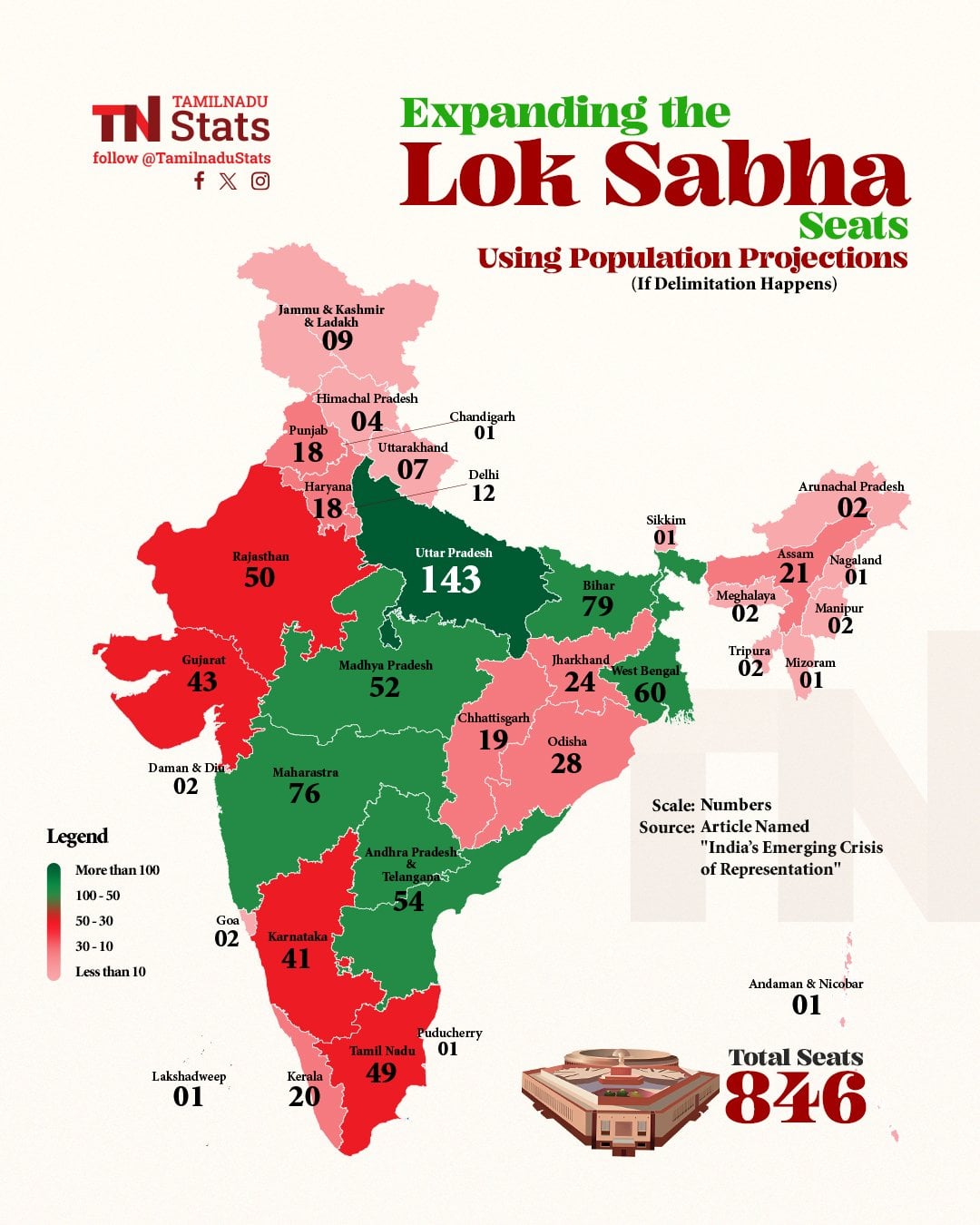
THE NUMBERS THAT HIT HARD:
At the heart of this debate is a simple but explosive idea: seats based on population. If that becomes the deciding factor, four northern states could command a staggering 324 lok sabha seats—around 36% of the total. In comparison, the entire southern bloc would be left with just 165 seats. That gap isn’t just statistical—it’s political power, influence, and voice.
THE GROWTH GAP:
Projections based on fertility rates and population trends reveal a stark contrast. Northern states like rajasthan and bihar could see their representation nearly double, while Uttar Pradesh and madhya pradesh also surge significantly. Meanwhile, the South tells a very different story—modest increases for Karnataka, Andhra Pradesh, Telangana, and tamil Nadu, and absolutely no gain for kerala and Puducherry.
THE IRONY NO ONE CAN IGNORE:
Here’s where it gets uncomfortable. Southern states spent decades investing in education, healthcare, and family planning—successfully controlling population growth. Now, that very success risks turning into a disadvantage. Less population growth means fewer seats. Fewer seats mean reduced say in national decisions.
THE BIGGER QUESTION:
So what exactly is delimitation rewarding—and what is it punishing? If representation is purely numbers-driven, does it ignore governance quality and long-term policy success?
Because beneath all the data and projections lies a deeper concern: when the rules of representation change, so does the future of who gets heard—and who slowly fades out of the conversation.
 click and follow Indiaherald WhatsApp channel