


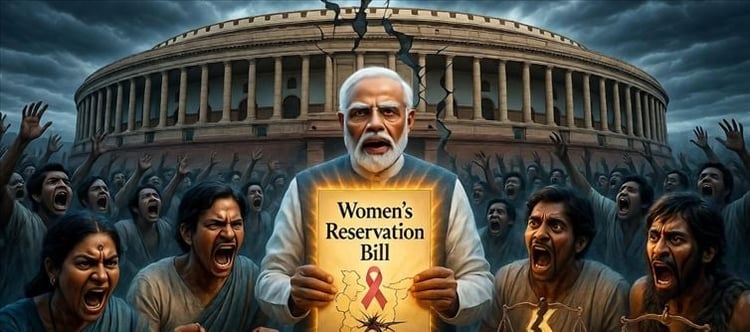

Some bills pass quietly. Others detonate debate. This proposed constitutional amendment squarely falls in the second category—raising hard questions about representation, federal balance, and the mechanics of power. Supporters call it overdue reform; critics see structural risks. What’s undeniable is the scale of change on the table—and the speed at which it’s moving.
WHAT’S BEING FLAGGED—POINT BY POINT:
OBC women LEFT OUT?
Critics argue that while a caste census has begun, there’s still no clear sub-reservation for OBC women. The concern: a large, distinct group may be folded into a broader category without tailored representation.
FEDERALISM UNDER STRAIN
States—especially in the South—say they weren’t adequately consulted on a change that could permanently alter their weight in Parliament. For them, this isn’t procedural; it’s existential.
LIMITS ON JUDICIAL REVIEW
A contentious clause suggests delimitation outcomes may be insulated from court challenges. Opponents warn that this narrows a key constitutional safeguard.
OUTDATED DATA, REAL CONSEQUENCES
Seat allocation tied to older datasets raises alarms about accuracy—particularly for SC/ST communities whose geographic distribution may have shifted significantly.
WOMEN’S RESERVATION—TIME-BOUND?
The proposal reportedly includes a 15-year sunset for women’s reservation, unlike the continuing provisions for SC/ST. Critics question why one set of protections must periodically expire.
PROCESS AND TRANSPARENCY
From cabinet to parliament in days—without a white paper, JPC scrutiny, or broad public consultation—has fueled concerns about due diligence and consensus-building.
CONSTITUTIONAL THRESHOLDS
There’s unease that protections historically requiring supermajorities could be reshaped through mechanisms perceived as easier to amend in the future.
RURAL-URBAN MISMATCH
Using older population data may not reflect large-scale migration, potentially skewing representation between rural and urban constituencies for years.
NORTHEAST EDGE CASES
Small states with single seats face unresolved questions on how rotation or reservation would practically work—details that remain unclear.
THE BOTTOM LINE:
This isn’t just about clauses—it’s about trust, process, and balance. With no two-thirds majority assured, the path forward will likely be as contested as the proposal itself.
 click and follow Indiaherald WhatsApp channel