



The Hidden Science Inside Every Litre of Petrol
Most vehicle owners in india keep a close eye on petrol prices and mileage figures. But there’s another important factor hiding in plain sight that rarely gets attention — petrol density. It might sound technical, yet it plays a surprisingly big role in how your vehicle performs on the road.
From smoother acceleration to better fuel economy and cleaner combustion, petrol density quietly influences what happens inside your engine every time you turn the key. Simply put, petrol density refers to the amount of mass packed into each unit of fuel. And even small changes in that number can affect performance, efficiency, and long-term engine health.
1. What petrol Density Actually Means
petrol density measures the mass of petrol per unit volume, usually expressed in kg per cubic metre (kg/m³). When fuel sits within the right density range, engines burn it more efficiently, resulting in smoother operation and consistent performance.
2. Why This Number Matters for Your Vehicle
Engines are designed to work with fuel that falls within a specific density range. If petrol becomes too light or too heavy, it can affect combustion quality, spark timing, and energy output — all of which influence mileage and performance.
3. Especially Important for Bikes
Two-wheelers are particularly sensitive to fuel quality. Even slight density variations can impact engine responsiveness, acceleration, and fuel efficiency, making density an important factor for bike riders.
4. Temperature Changes the Game
petrol expands when temperatures rise and contracts when they drop. That’s why fuel density is standardized at 15°C, ensuring consistency when it’s produced, transported, and sold.
5. Additives and Refining Play a Role
Modern petrol often includes additives designed to improve combustion and reduce engine deposits. These additives — along with refining techniques — can slightly influence density.
6. The Standard Range in India
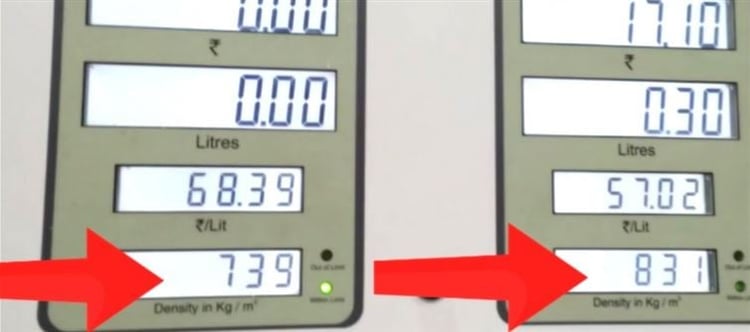
According to the Bureau of indian Standards (BIS), petrol sold in india typically falls within 720–775 kg/m³ at 15°C. Staying within this range helps ensure reliable engine performance and fuel efficiency.
7. Why It Matters at the Pump
When petrol density stays within the recommended range, drivers benefit from better mileage, smoother engine operation, and cleaner emissions. In other words, every litre of fuel works harder for your vehicle.
Understanding petrol density isn’t just for engineers or car enthusiasts. It’s practical knowledge for anyone who wants better mileage, healthier engines, and smarter fuel choices every time they stop at the pump.
 click and follow Indiaherald WhatsApp channel