


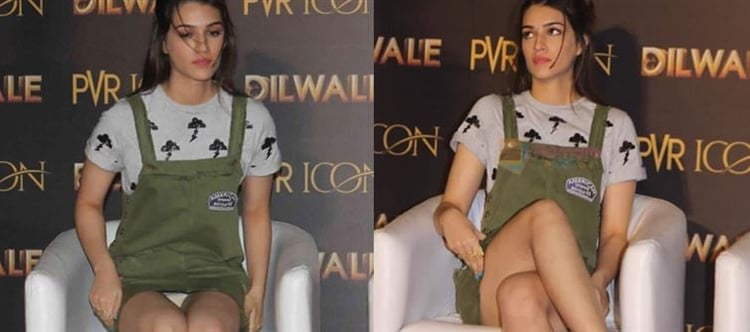

Celebrity culture thrives on visibility. The more you’re seen, the more you stay relevant. But that visibility comes with a trade-off, one that often sparks uncomfortable conversations. And right now, kriti sanon is at the center of one such debate.
A recent remark about asking co-actors to help cover up while wearing short outfits has triggered mixed reactions. On one side, it’s a completely valid instinct. In an environment where cameras are everywhere, and angles can be intrusive, wanting a sense of control over how you’re captured is natural.
But the conversation doesn’t stop there. For many observers, it raises a broader question. If the environment is unpredictable and often invasive, how do personal choices around public appearances fit into that reality?
This is where the debate gets layered. Clothing, for celebrities, is not just personal expression. It’s branding, visibility, and sometimes strategy. fashion becomes part of the public image, carefully curated and widely consumed. But once that image is out in the open, controlling every frame of how it’s captured becomes nearly impossible.
At the same time, it’s important to separate the two ideas that often get blurred. Choosing what to wear does not automatically mean consenting to invasive or disrespectful photography. That boundary still matters, even in a hyper-visible profession.
What this situation really highlights is the tension between control and exposure. The public sees a single narrative, while the reality is far more complex.
In the end, this isn’t about pointing fingers. It’s about recognizing that accountability, expectations, and boundaries all exist at the same time—and balancing them is far from simple.
 click and follow Indiaherald WhatsApp channel