



What happens when a country is forced to switch how it cooks almost overnight? You get chaos, pressure, and a supply chain stretched to its absolute limits. What looks like a smart alternative on paper is now exposing a deeper, more uncomfortable reality.
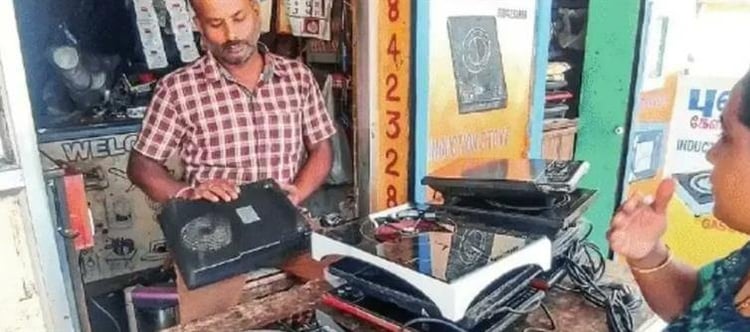
The numbers alone tell a shocking story. In delhi NCR, induction cooktop demand has skyrocketed from around 2,000 units a month to nearly 2 lakh units a day. That’s not growth, that’s an explosion. And no supply chain in the world can absorb a 100x spike without cracking under pressure.
The trigger is clear. Tensions in the Middle east have disrupted LPG supply routes, pushing prices through the roof. In some places, black market cylinders are already touching ₹3,000. Panic has set in, with bookings crossing 88 lakh in just days. Faced with this surge, the government pivoted fast to promote induction cooking, reduce import duties, and push manufacturers to scale up.
On paper, it sounds like a clean solution. In reality, it’s far more complicated.
An induction cooktop may look simple, but at its core lies a highly specialized component, the IGBT chip. This tiny semiconductor is what makes the entire system work, rapidly switching electricity to generate the magnetic field that heats your pan. Without it, the device is useless.
And here’s the problem: india doesn’t make it.
Not a single domestic manufacturer produces these power semiconductors at scale. The country is entirely dependent on imports, primarily from global players in germany and Japan. Even the glass-ceramic surface and key internal components are sourced from abroad, with most Indian-market cooktops relying heavily on Chinese supply chains.
So while demand is exploding locally, the backbone of production remains global and fragile.
The result? A race against time, limited capacity, and a harsh reminder that true self-reliance isn’t built overnight.
Because when demand surges faster than capability, even the simplest solutions become complex.
 click and follow Indiaherald WhatsApp channel