


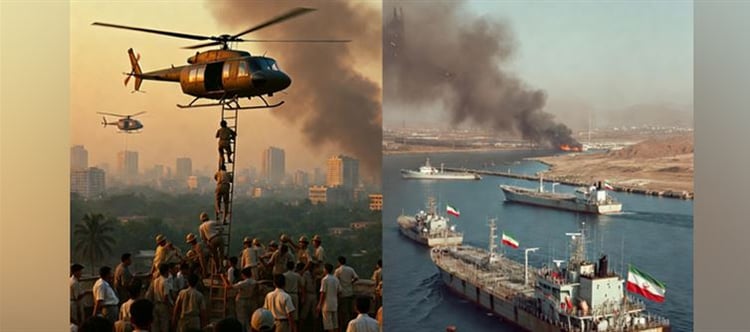

Every so often, history throws up a moment that feels eerily familiar. Different geography, different players—but the same underlying tension: a smaller, non-nuclear nation standing its ground against overwhelming military power, and somehow forcing the conversation to change.
1. The Echo of 1975
In 1975, vietnam didn’t just fight—it endured, adapted, and ultimately reshaped the outcome of a conflict against a vastly superior force. It wasn’t about matching power; it was about outlasting it.
2. Fast Forward to Today
Now, decades later, a similar narrative seems to be unfolding in a very different region. Iran, without nuclear leverage, finds itself confronting not one but multiple powerful adversaries—yet still managing to stay in the game.
3. Power Isn’t Always Symmetrical
What stands out in both cases is this: conventional strength doesn’t always dictate the final outcome. Strategy, geography, resilience, and political will often carry more weight than raw firepower alone.
4. The Ceasefire Moment
When a conflict reaches the point where stronger players agree to pause, negotiate, or recalibrate, it signals something important. It suggests that pressure has worked—at least enough to force a shift in approach.
5. Perception vs Reality
Does that automatically translate to victory? That depends on perspective. For some, it’s proof of defiance paying off. For others, it’s just a temporary pause in a much longer game.
6. The Real Takeaway
What’s undeniable is the pattern itself. Smaller nations, when pushed to the edge, often find ways to stretch conflicts beyond expectations—turning endurance into leverage.
Bottom Line
History doesn’t repeat perfectly—but it rhymes loudly. And once again, the world is watching a moment where the balance of power feels far less certain than it looks on paper.
 click and follow Indiaherald WhatsApp channel