



If you stitched together the past few weeks of statements, you wouldn’t get a clear strategy—you’d get a rollercoaster. Confidence, anger, urgency, even desperation—all packed into a rapid-fire stream of soundbites that felt less like coordinated policy and more like a narrative spinning in real time.
1. victory Declared—Again and Again
It started with certainty. Repeated claims of “we won the war,” delivered not once but multiple times, project total control and closure. The message was simple: mission accomplished, no ambiguity.
2. Independence, Loud and Clear
That confidence quickly expanded into outright dismissal of allies. The line was firm—no help needed, no reliance on NATO, no external support required. A posture of complete self-sufficiency.
3. Then Came the Pressure
But the tone didn’t stay there. Requests for support began creeping in, sometimes framed as cooperation, sometimes edged with warning. The shift was subtle at first—but unmistakable.
4. Allies Turned Targets
Frustration spilled outward. NATO, once dismissed, was now openly criticized. The language hardened, turning partners into liabilities in the narrative.
5. Progress… or Reassurance?
Amid the swings, there were repeated assurances that things were “moving forward.” Whether that was confidence or damage control depended on who was listening.
6. Raw, Unfiltered Escalation
Then came the moments that cut through everything—sharp, emotional, unfiltered language directed at the crisis itself. Not polished diplomacy, but something far more visceral.
7. From Control to Catastrophe
And just as quickly, the rhetoric escalated to existential warnings—language that hinted at catastrophic consequences, raising the stakes from strategic conflict to something far more ominous.
Bottom Line
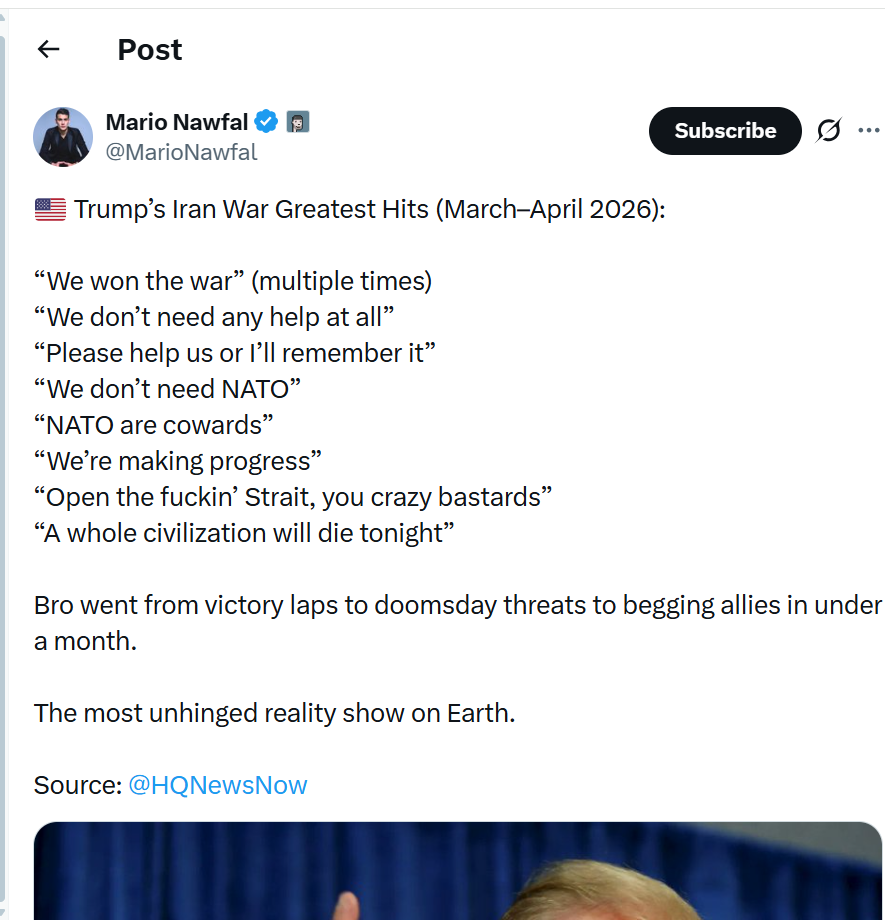
What unfolded wasn’t a straight line—it was a loop of confidence, pressure, and urgency playing out in public. Whether it was strategy, improvisation, or something in between, one thing is clear: the messaging became part of the story itself.
 click and follow Indiaherald WhatsApp channel