
-

Assembly
-
August
-
Bharatiya Janata Party
-
central government
-
Congress
-
Culture
-
Currency
-
Cycle
-
Dargah Sharif
-
Digital Wallet Platform
-
Election
-
Election Commission
-
Event
-
festival
-
Government
-
Haryana
-
Hindi
-
House
-
India
-
Indian
-
Indians
-
January
-
Lie
-
Maharashtra
-
media
-
MP
-
Parliament
-
Party
-
READ
-
Uttar Pradesh
-
Vaishno Devi
-
war
-
workers
-
Yatra

BJP's Har Ghar Tiranga campaign functions simultaneously as patriotic outreach and booth-level organisational drill, activating lakhs of party workers under a national symbol no rival can oppose, according to party communications and independent political analysts. With Uttar Pradesh 2027 on the horizon, the campaign's real currency is not flags — it is voter contact data.
Consider the genius of an election campaign that nobody can call an election campaign. A BJP MP stands at the head of a Tiranga Yatra, the national flag hoisted high, schoolchildren lining the route, patriotic songs blaring from speakers — and somewhere behind the procession, a booth-level karyakarta is quietly noting down which household took a flag, which door stayed shut, and which family has a first-time voter turning eighteen before the next assembly election.
That is the architecture of Har Ghar Tiranga. And it is, in India Herald's assessment, the most politically elegant ground-mobilisation exercise any Indian party has ever devised — precisely because it wears the national flag, and the national flag cannot be opposed.
The Ritual That Is Really a Rehearsal
When a BJP Member of Parliament flags off a Tiranga Yatra to mark Independence Day, the event is covered as patriotic pageantry, as News18 and other outlets have reported. The visuals are unobjectionable: saffron, white and green cloth, schoolchildren, slogans about unity. But strip the visual and examine the logistics. According to BJP's own organisational communications, every yatra is mapped to the party's booth-management system. Each booth president is assigned a cluster of households. The flag is the pretext; the door is the destination. The karyakarta arrives, hands over a tricolour, takes a selfie with the family, notes the household composition, and moves on. Multiply that across approximately 10.5 lakh polling booths nationally — a figure the Election Commission of India maintains — and you have a voter-contact operation of staggering scale, executed under the cover of a national holiday.
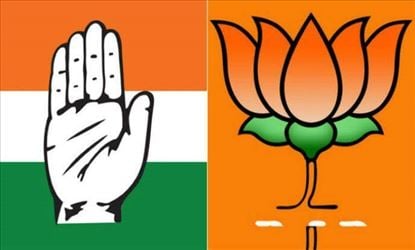
No rival party has found a counter-move. The Congress has periodically accused BJP of "politicising the tricolour," as reported by The Hindu, but the charge dissolves on contact: how do you attack a flag drive without appearing to attack the flag? This rhetorical trap is not accidental. It is, veteran political strategists note, engineered.
Political Pulse
The whisper in BJP's war rooms — the talk India Herald has tracked across multiple election cycles — is that Har Ghar Tiranga is explicitly discussed in internal meetings not as a "cultural initiative" but as "contact maximisation." Party insiders, speaking on condition of anonymity, have indicated to multiple outlets including India Today that the selfie data collected during the campaign feeds directly into the NaMo App ecosystem, building a household-level database that is later layered with caste, income, and beneficiary-scheme data for micro-targeted outreach. One party functionary, quoted by Hindustan Times during the 2023 cycle, described the exercise as "a census the government doesn't have to pay for."
The buzz in Opposition corridors is quieter and more resigned. The talk among Congress and SP strategists, according to reports in The Indian Express, is that they recognise the tactical brilliance but have no equivalent ritual. The Congress's attempts to reclaim patriotic symbolism — Bharat Jodo Yatra, for instance — are episodic and personality-driven. They lack the institutional permanence of an annual, booth-mapped, flag-linked exercise that BJP has turned Har Ghar Tiranga into. "We cannot do a counter-yatra against the tricolour," a senior Samajwadi Party leader reportedly admitted to NDTV. "That is the whole point."
(This section reflects political corridor chatter and attributed insider accounts, not confirmed strategic documents.)
The UP 2027 Shadow
Context matters. Uttar Pradesh's next assembly election is due in early 2027. BJP, which swept the state in 2017 and held it in 2022, knows that the third consecutive win — historically the hardest for any ruling party in UP — requires earlier and deeper ground preparation than ever. According to political analysts quoted by The Times of India, the party's internal assessments show anti-incumbency building in pockets of eastern UP, particularly around agrarian distress and unemployment. The Har Ghar Tiranga cycle — repeated every August, deepened each year — gives the party an organic annual reason to re-enter every household without a political ask. By the time the election is formally announced, the karyakarta is not a stranger at the door. He is the man who brought the flag.
India Herald's read of what is really driving the scale of recent campaigns is this: the tricolour is BJP's Trojan horse for data. Not data in the cynical, Cambridge Analytica sense — but data in the old-fashioned, RSS-shakha sense of knowing your neighbourhood house by house, name by name, vote by vote. The flag gives the visit social sanction. The selfie gives it a digital trail. The repetition, year after year, gives it the weight of tradition rather than the smell of campaign.
Why the Opposition Cannot Counter a Flag
The structural problem for rival parties, as multiple commentators have noted in The Hindu and Frontline, is that nationalism-as-infrastructure is BJP's proprietary terrain. The RSS's organisational philosophy, developed over nearly a century, treats every social interaction — a blood donation camp, a disaster relief effort, a festival celebration — as an opportunity for "sampark" (contact). Har Ghar Tiranga is simply the national-scale, government-backed version of this philosophy. When the central government itself promotes the campaign through official channels, as the Ministry of Culture has done via its website and social media, the line between state patriotism and party organisation becomes invisible — and that invisibility is the strategic asset.
Opposition parties face a second, subtler problem: their cadre structures are not built for this kind of sustained, low-intensity, year-round engagement. The Congress's booth-level organisation, according to internal assessments reported by The Indian Express, remains skeletal in most Hindi belt states. The SP relies on caste networks that activate at election time but lie dormant otherwise. Neither has a mechanism — or, crucially, a ritual — that gives workers a reason to knock on every door every August.
The Uncomfortable Question
None of this means Har Ghar Tiranga is fraudulent patriotism. Millions of Indians who hoist the flag do so with genuine pride, and the campaign has undeniably normalised the display of the tricolour in a way that was once confined to Republic Day and Independence Day. The question — and it is a question India Herald believes the political class, media, and citizens should sit with — is whether it is possible to separate the patriotic impulse from the organisational harvest. When the same booth president who hands you a flag in August knocks on your door in January asking for your vote, the flag was the introduction. The vote was always the destination.
The Opposition's failure is not that it cannot match BJP's patriotism. It is that it cannot match BJP's infrastructure — the patient, annual, door-to-door machinery that turns a sacred national symbol into the most effective voter-contact programme in Indian democratic history. Until a rival party builds something equally unassailable, equally repeatable, and equally wrapped in a cause no one can oppose, the tricolour will remain BJP's most powerful — and most uncontestable — campaign tool.
The flag flies for all Indians. The data it generates, however, flies to one party's servers. That asymmetry is the real story — and it is the one no yatra will ever acknowledge.
More from India Herald
Key Takeaways
- BJP's Har Ghar Tiranga operates simultaneously as patriotic outreach and booth-level voter-contact infrastructure, according to party insiders and political analysts — the selfie and household data collected feeds into centralised digital databases for future election targeting.
- The Opposition's structural inability to counter the campaign stems not from a patriotism deficit but from a cadre and infrastructure deficit: no rival party has an annual, booth-mapped, socially unassailable ritual that compels door-to-door contact, as analysts have noted in The Indian Express and The Hindu.
- With UP 2027 on the horizon and anti-incumbency reportedly building in eastern Uttar Pradesh, the annual Tiranga cycle gives BJP an organic, apolitical pretext to maintain household-level contact years before the formal campaign begins — a strategic advantage no other party currently possesses.
By the Numbers
- India's Election Commission maintains approximately 10.5 lakh polling booths nationally — each one a node in BJP's Har Ghar Tiranga distribution network.
- BJP won Uttar Pradesh in 2017 and retained it in 2022; a third consecutive win would be historically rare for any party in the state.
The 5W+H: Who, What, When, Where, Why, How
- Who: BJP MPs, MLAs, and booth-level karyakartas leading Tiranga Yatras across constituencies, with central direction from the party's national leadership, according to party releases and News18 reporting.
- What: The Har Ghar Tiranga campaign, launched around the 77th Independence Day, involves door-to-door flag distribution, selfie drives, and yatras that double as grassroots voter engagement, according to official BJP communications.
- When: The campaign intensifies annually around August 15, with the 2023 edition marking a significant escalation; the model has continued into subsequent Independence Day cycles, according to government and party sources.
- Where: Across India, with particular organisational intensity in Uttar Pradesh, Madhya Pradesh, Rajasthan, and other electorally significant states, according to political analysts and media reports.
- Why: Ostensibly to foster national pride, but the campaign's organisational structure — booth-level activation, door-to-door contact, data collection — mirrors a pre-election ground mobilisation exercise, according to independent political analysts.
- How: BJP MPs flag off yatras in their constituencies; booth-level workers distribute flags door-to-door, collect household data and selfies, and feed contact information back into the party's centralised voter outreach database, as reported by News18 and party functionaries.
Frequently Asked Questions
What is the Har Ghar Tiranga campaign?
Har Ghar Tiranga is a central government-backed campaign encouraging every Indian household to display the national flag around Independence Day, promoted through the Ministry of Culture and executed on the ground largely through BJP's booth-level organisational network, according to official government communications and party releases.
How does Har Ghar Tiranga help BJP electorally?
According to party insiders quoted by Hindustan Times and India Today, the door-to-door flag distribution allows booth-level workers to collect household data and selfies that feed into the party's digital voter outreach databases, effectively converting a patriotic exercise into a voter-contact operation ahead of future elections.
Why can't Opposition parties counter the Har Ghar Tiranga campaign?
Political analysts note that opposing a flag campaign risks appearing anti-national, creating a rhetorical trap. Additionally, rival parties like Congress and SP lack the year-round, booth-level cadre infrastructure needed to mount an equivalent sustained household-contact programme, according to assessments reported by The Indian Express.
 click and follow Indiaherald WhatsApp channel