

-

Allu Arjun
-
Amitabh Bachchan
-
Andhra Pradesh
-
Arshad Warsi
-
Audience
-
Bihar
-
Blockbuster hit
-
bollywood
-
BUSINESS
-
Chennai
-
Cinema
-
Culture
-
economics
-
Event
-
Hindi
-
House
-
Hyderabad
-
Idea
-
India
-
Indian
-
Industries
-
Industry
-
KGF
-
KGF Chapter 2
-
local language
-
mahesh babu
-
Mona Singh
-
monday
-
Mumbai
-
Office
-
Oscar
-
Population
-
Prabhas
-
Press
-
prithviraj
-
Priyanka Chopra
-
producer
-
Pushpa
-
Rajamouli
-
Research and Analysis Wing
-
RRR
-
RRR Movie
-
social media
-
Success
-
Tamil
-
Telangana
-
television
-
Telugu
-
Varanasi
-
war
-
zero

The pan-Indian cinema model — big-budget, multi-language releases targeting all of india — is in retreat. According to Mirchi9, most cross-regional blockbuster bets after Baahubali and rrr have underperformed or flopped, suggesting the 2022-era boom was driven by post-Covid pent-up demand and Rajamouli's singular genius, not a structural shift in how india watches movies.
Here is a number that should haunt every producer who greenlit a ₹300 crore pan-Indian film between 2022 and 2025: for every rrr that crossed ₹1000 crore worldwide, at least half a dozen lavishly mounted cross-regional spectacles quietly bled their financiers dry. The pan-Indian revolution, it turns out, may have had exactly one revolutionary — and his name is SS Rajamouli.
As Mirchi9's incisive analysis frames it, the question the industry should be asking is not whether rajamouli has reached the end of his dominance. It is whether the entire pan-Indian cinema experiment was a mirage built on one man's genius and a once-in-a-century pandemic that starved audiences into theatres for anything that felt like an event.
The Baahubali Illusion: How One Franchise Rewrote the Rules Nobody Else Could Follow
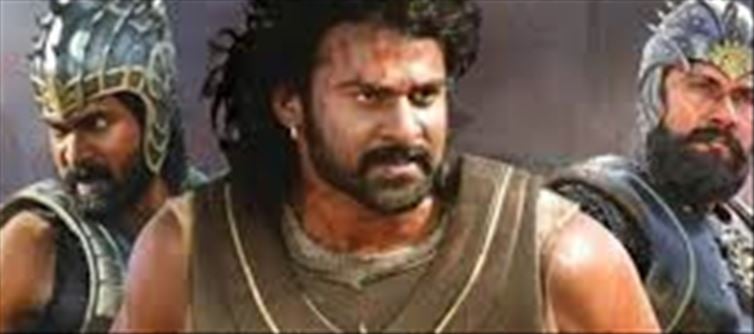
Baahubali (2015, 2017) did something indian cinema had never seen: it made a Telugu-language mythological epic the biggest film in the country, across every single language market. The sequel grossed over ₹1800 crore worldwide. rrr followed in 2022, crossing ₹1100 crore globally and picking up an oscar along the way. The industry response was predictable and, in hindsight, spectacularly misguided: if rajamouli could do it, surely the formula could be replicated.
Producers from hyderabad to mumbai to chennai began packaging films not for their home audiences but for a mythical 'all-India viewer.' Budgets ballooned. hindi dubbing became mandatory. A-list stars from different industries were paired in combinations designed to unlock multiple regional markets simultaneously. The logic was seductive: india is one country with 1.4 billion potential ticket-buyers. Why settle for one state when you can have the whole map?
The answer, as the box-office ledger now makes painfully clear, is that the map does not work the way the spreadsheet imagined.
The Autopsy: Why Most Pan-Indian Bets Have Bled Money
According to Mirchi9's analysis, the overwhelming majority of films marketed as pan-Indian releases post-RRR have underperformed in at least one — and often all — of their target non-home markets. The pattern is striking: a telugu film might hold its home turf but crater in the hindi belt. A bollywood production with a South indian director might generate curiosity but no repeat footfall outside its comfort zone. A tamil star's crossover vehicle might trend on social media without translating into ticket sales north of the Vindhyas.
The exceptions — pushpa, kgf chapter 2, Pathaan — each had very specific, non-replicable drivers. pushpa rode Allu Arjun's raw charisma and a mass-circuit appeal that connected to the single-screen heartland. kgf chapter 2 was a franchise sequel with Yash's cult following already seeded by the first film's Hindi-belt success on satellite tv during lockdown. Pathaan was Shah Rukh Khan's comeback after four years of absence — a bollywood IP event, not a cross-regional play in the Baahubali mould.
None of these proved that India's box-office borders had dissolved. They proved, if anything, that specific stars with specific audience contracts can occasionally punch through linguistic barriers — exactly as Rajinikanth and amitabh bachchan proved decades earlier, without anyone declaring a structural revolution.
The Covid Variable: Pent-Up Demand Was Not a New Market
Here is the part the industry's 2022 euphoria conveniently ignored: the theatrical boom of 2022-2023 was fuelled significantly by audiences returning to cinemas after two years of lockdown-era deprivation. Theatres were not just screening movies; they were offering a social experience people had been denied. In that environment, anything that felt like an event — a rajamouli spectacle, a Khan comeback, a sequel to a film people had watched on television during quarantine — was going to overperform.
As Mirchi9 notes, the pan-Indian model assumed this surge was the new baseline. It was not. As the pent-up demand normalised through 2024 and 2025, audiences reverted to their natural consumption patterns: they preferred stories in their own language, rooted in their own cultural textures, starring faces they had a deep parasocial relationship with. The OTT-era audience, far from becoming borderless, had actually become more fragmented — accustomed to choosing from a buffet, not forced to eat what the nearest multiplex served.
Rajamouli's Genius Is the Problem, Not the Model
This is the uncomfortable vantage the industry does not want to confront: Rajamouli's pan-Indian success was not evidence that the model works. It was evidence that rajamouli works. His filmmaking operates at a level of visual storytelling, emotional universality, and mythic scale that transcends language because it barely needs dialogue to communicate. Baahubali's central images — the waterfall climb, the arrow bridge, the war elephant — are silent-cinema powerful. RRR's Naatu Naatu sequence works whether you speak telugu, hindi, or Japanese.
That is not a model. That is a singularity. And singularities, by definition, cannot be industrialised.
With his next project reportedly a massive collaboration with mahesh babu — tentatively linked to the title varanasi — rajamouli himself faces the burden of proving that his own magic is repeatable, not just unreplicable by others. The expectations on that film are not merely commercial; they are existential for the very idea of pan-Indian cinema.
The Quiet Retreat to home Turf
What is happening behind the press releases is revealing. industry sources and trade analysts have noted a clear pattern through 2025 and into 2026: producers who burned cash on pan-Indian misadventures are quietly recalibrating. telugu production houses are focusing tighter on the twin telugu states. tamil producers are making films for tamil Nadu first, with hindi dubbing as a low-cost afterthought rather than a primary marketing strategy. Even bollywood, which briefly flirted with importing South directors and stars to juice its tentpole pipeline, is returning to its domestic comfort zone — mid-budget films with proven Hindi-market appeal.
The economics tell the story with brutal clarity. A ₹150 crore telugu film that collects ₹200 crore from andhra pradesh and telangana is a clean hit. The same film budgeted at ₹400 crore to accommodate pan-Indian marketing, Hindi-belt release logistics, and the premium demanded by crossover casting needs ₹600 crore just to break even — a number almost no non-Rajamouli, non-franchise film has achieved.
The First Pan-Indian Star Was Not Who You Think
For readers asking who the first pan-Indian star truly was, the honest answer predates the term itself. Rajinikanth's films were dubbed and released across india from the 1990s. Baahubali's prabhas became the first actor to be explicitly marketed as a pan-Indian star in the modern sense, but the concept owes more to television dubbing culture (which made allu arjun a household name in bihar before pushpa ever released) than to any conscious box-office strategy. rajamouli directed a total of 11 feature films across his career, and remarkably, it was only the last three — Baahubali 1, Baahubali 2, and rrr — that rewrote the commercial geography of indian cinema.
So What Survives?
The pan-Indian dream is not dead — but it is being demoted from a business model to a lightning strike. The industry is learning, painfully and expensively, that India's linguistic diversity is not a barrier to be overcome by subtitling and star-stacking. It is the fundamental architecture of how stories connect with audiences on this subcontinent. Regional cinema, far from being the small-time game that the 2022 narrative dismissed it as, is reasserting itself as the only consistently profitable filmmaking strategy in indian cinema.
The real question the next five years will answer is not whether another filmmaker can replicate Rajamouli's cross-regional dominance. It is whether even rajamouli can replicate Rajamouli. If varanasi delivers, the pan-Indian conversation lives — but as a one-man genre, not an industry movement. If it does not, we will look back at 2015-2022 as the most glorious anomaly in indian box-office history: the years one storyteller, armed with a pandemic and a waterfall, convinced an entire industry it had discovered a new continent. The continent was a mirage. The storyteller was real.
More from india Herald




Key Takeaways
- According to Mirchi9, the pan-Indian cinema model is in decline because most cross-regional blockbuster bets after rrr have underperformed, suggesting the boom was driven by post-Covid demand and Rajamouli's singular genius, not structural change.
- Producers across telugu, tamil, and hindi industries are quietly retreating to home-turf economics, with ₹150 crore regional films proving more profitable than ₹400 crore pan-Indian gambles.
- Rajamouli's 11-film career saw only the last three — Baahubali 1, Baahubali 2, and rrr — achieve genuine pan-Indian box-office dominance, making his success a singularity rather than a replicable model.
- The 2022-2023 theatrical boom was significantly fuelled by post-lockdown pent-up demand, which producers mistook for a permanent new baseline of cross-regional ticket-buying.
- Rajamouli's upcoming mahesh babu collaboration is now an existential test not just for the filmmaker but for the entire concept of pan-Indian cinema.
Frequently Asked Questions
Who is the first pan-India star?
While Rajinikanth's films were dubbed across india from the 1990s, prabhas is widely considered the first actor explicitly marketed as a pan-Indian star in the modern sense, following Baahubali's unprecedented cross-regional success from 2015.
How many movies has SS rajamouli directed?
SS rajamouli has directed 11 feature films across his career, ranging from Student No.1 (2001) to rrr (2022), with his upcoming mahesh babu collaboration expected as his next release.
Which is the first pan-India movie?
Baahubali: The Beginning (2015), directed by SS rajamouli, is widely credited as the first film to be consciously designed and marketed as a pan-Indian release, achieving massive box-office success across all language markets simultaneously.
Why are pan-Indian movies failing?
According to Mirchi9's analysis, most pan-Indian films fail because they mistake Rajamouli's singular storytelling genius and post-Covid pent-up theatrical demand for a replicable business model. India's linguistic and cultural diversity means audiences still prefer stories rooted in their own language and cultural context.
What is SS Rajamouli's next movie?
Rajamouli's next project is reportedly a massive collaboration with mahesh babu, tentatively linked to the title varanasi, which is seen as an existential test for the pan-Indian cinema concept itself.
 click and follow Indiaherald WhatsApp channel