


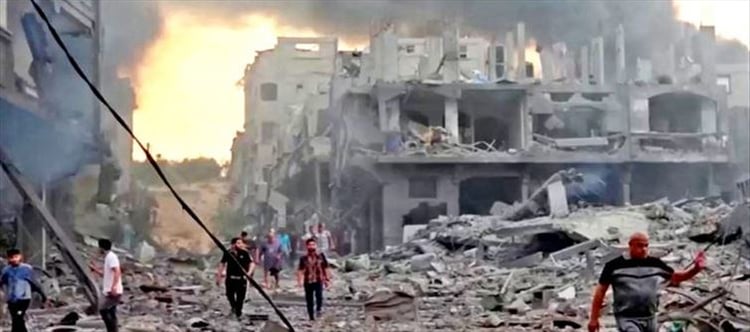

Given that the belligerents and their allies possess several nuclear weapons, there is a strong fear that the Israel-Hamas conflict might ignite World war III. After their uranium-enrichment centrifuges blew up due to the Stuxnet computer malware, iran has recovered. And then there's pakistan and its quickly expanding arsenal, not likely aided by knockdown kits and screwdriver assembly of Chinese components.
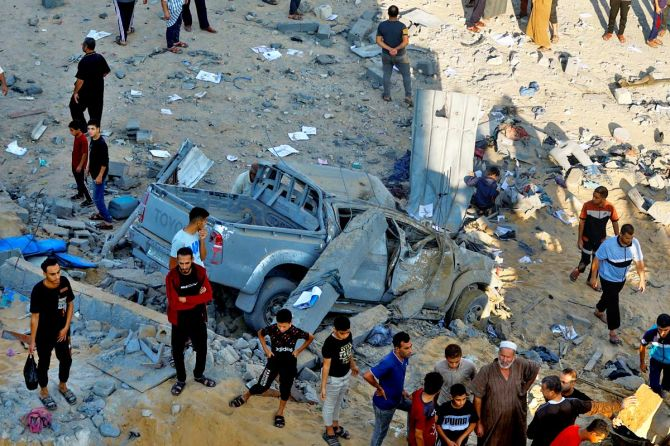 Ironically, given that thousands of Palestinians may have died in 1970 as a result of Pakistani soldiers—and maybe irregulars—being seconded to jordan during the Black september rebellion, pakistan is among the most outspoken advocates of palestine as an Ummah cause.
The terrifying prospect of a global World war III is real, and just as the disintegrating League of Nations was powerless to stop previous global conflicts, the ineffectual UN is now unlikely to be able to stop a new one. It hasn't been able to stop all the lesser wars, like the one in Ukraine, and it's clear that big countries don't give a damn about the UN's efforts and blathering. As a result, one of the main concerns is that the Hamas strike might start a bigger fire.
More importantly, this led to a significant transfer of wealth from emerging nations, which set them back decades and increased human suffering. It also generated inflation in the US. Thus, even if the most hopeful Green programs succeed, there are unintended implications to what occurs in West Asia, which, short of a miracle, will continue to dominate the energy supply for the next few decades.
 click and follow Indiaherald WhatsApp channel