


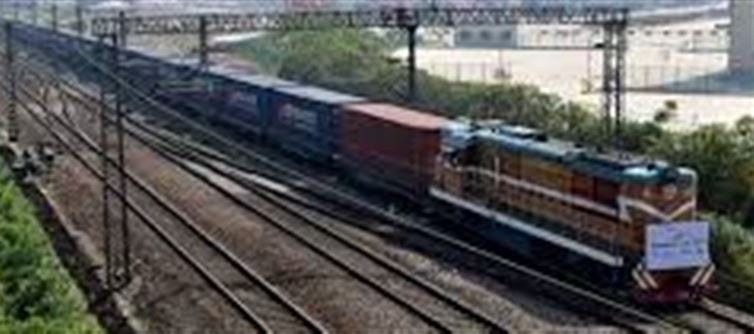

Beijing, China – china has successfully conducted a groundbreaking trial by linking seven freight trains wirelessly without using traditional mechanical couplings. The experiment, carried out on the Baoshen Railway in Inner Mongolia, marks a significant advancement in railway automation and logistics technology.
Key Details of the Trial:
- Number of Trains: 7 freight trains
- Weight per Train: Approximately 5,000 tonnes
- Technology Used: ADAS-type (Advanced driver Assistance Systems) wireless control
- Functionality: The trains were able to communicate dynamically, automatically maintaining safe distances and synchronized speeds, without mechanical hooks connecting them.
According to reports by the South china Morning Post (SCMP), the trial demonstrated that multiple trains could operate as a coordinated convoy, reducing the need for manual intervention and improving efficiency in freight operations.
Significance of the Technology:
Increased Efficiency: Linking trains wirelessly can reduce fuel consumption and optimize rail traffic.
Enhanced Safety: Automated distance management lowers the risk of collisions or derailments.
Future of rail Automation: This technology is a step toward fully autonomous freight trains, similar to how ADAS systems assist modern vehicles in navigation and safety.
Environmental Impact: Improved train coordination can reduce carbon emissions and energy use by minimizing stops and starts.
Experts say this innovation could revolutionize freight transport, not only in china but globally, by enabling more efficient, safer, and environmentally friendly rail logistics.
The success of this trial indicates China’s growing focus on smart transportation and wallet PLATFORM' target='_blank' title='digital-Latest Updates, Photos, Videos are a click away, CLICK NOW'>digital railways, leveraging AI and wireless technologies to transform the future of freight movement.
Disclaimer:
The views and opinions expressed in this article are those of the author and do not necessarily reflect the official policy or position of any agency, organization, employer, or company. All information provided is for general informational purposes only. While every effort has been made to ensure accuracy, we make no representations or warranties of any kind, express or implied, about the completeness, reliability, or suitability of the information contained herein. Readers are advised to verify facts and seek professional advice where necessary. Any reliance placed on such information is strictly at the reader’s own risk.
.jpg)
 click and follow Indiaherald WhatsApp channel