


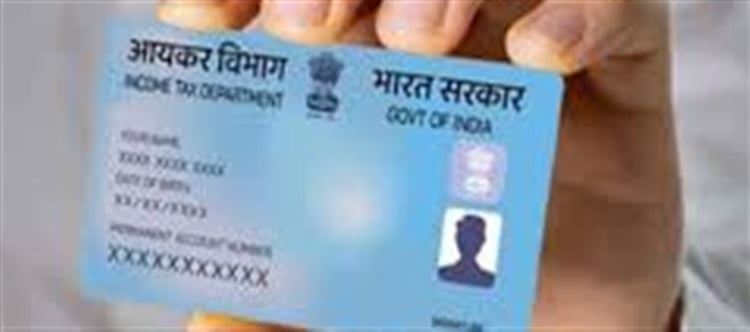

Under the draft Income‑tax Rules, 2026 being prepared by the Central Board of Direct Taxes (CBDT), the government is proposing major changes to how and where your Permanent Account Number (PAN) must be quoted. These changes are part of the transition to the new Income Tax Act, 2025 and are expected to take effect from 1 April 2026 once finalised.
Here’s what the new rules about PAN requirements for banks and other transactions mean for you — and how they differ from existing practice.
📌 What’s Changing for PAN Card Requirements
Under the draft 2026 rules:
🔹 PAN Not Required for Everyday Small bank Transactions
Instead of requiring PAN for almost all banking activities, the new draft rules suggest that:
- PAN will be mandatory only when cash deposits or withdrawals exceed ₹10 lakh in a financial year (aggregated across accounts).
- Smaller cash transactions that do not breach this threshold will not require you to quote PAN.
Example: If you deposit ₹9 lakh and withdraw ₹1 lakh in the same year (total ₹10 lakh), PAN quoting may not be mandatory — but exceeding that across banks will trigger PAN requirement.
🔹 Higher Thresholds for Other Transactions
The draft rules also propose increasing the PAN requirement limits across other areas:
- Hotel/restaurant bills: PAN quoting only above ₹1 lakh.
- Property deals: Mandatory PAN quoting only if property value exceeds ₹20 lakh.
- Vehicle purchases: Mandatory PAN only when the vehicle value is above ₹5 lakh.
These are significant relaxations compared to earlier lower limits in many cases.
🏦 Why This Is Being Done
The government’s intent is to:
✅ Reduce compliance burden on ordinary taxpayers and ease routine financial transactions.
✅ Focus PAN‑based reporting on high‑value transactions, where tax visibility and tracking matter most.
✅ Streamline rules with today’s economic realities (inflation, higher asset prices, wallet PLATFORM' target='_blank' title='digital-Latest Updates, Photos, Videos are a click away, CLICK NOW'>digital banking).
So the PAN isn’t being made irrelevant — it’s being required only where it helps meaningful tax tracking, rather than for every minor banking action.
📌 What Still Requires PAN
Even under the new proposals, PAN will continue to be mandatory for:
- Income tax filing and returns
- TDS/TCS reporting
- High‑value financial transactions as described above
- Quoting PAN in property, investment, and high‑value bank transactions if thresholds are crossed
So you cannot avoid PAN completely, but you may not need to quote it for routine or low‑value activities that were previously caught under blanket rules.
🧠 For Banks & Financial Institutions
Banks will still collect PAN where required by the rules (above limits), and aggregate customer data will be recorded and matched for compliance and tax reporting. India’s tax system increasingly ties PAN with wallet PLATFORM' target='_blank' title='digital-Latest Updates, Photos, Videos are a click away, CLICK NOW'>digital reporting systems like the Annual Information Statement (AIS) and Statement of Financial Transactions (SFT) for better verification.
📌 Final Takeaway
The draft Income Tax Rules 2026 are rationalising PAN card requirements, not eliminating them:
🔹 PAN will no longer be needed for every bank transaction — key changes include an annual ₹10 lakh limit for deposits/withdrawals before PAN is mandated.
🔹 Higher thresholds are being introduced for property deals, vehicle purchases, and bills.
🔹 PAN remains essential for taxation, high‑value transactions and reporting under the Income Tax Act.
These updates aim to strike a balance between easing compliance for normal citizens while strengthening tax reporting for larger monetary transactions.
Disclaimer:
The views and opinions expressed in this article are those of the author and do not necessarily reflect the official policy or position of any agency, organization, employer, or company. All information provided is for general informational purposes only. While every effort has been made to ensure accuracy, we make no representations or warranties of any kind, express or implied, about the completeness, reliability, or suitability of the information contained herein. Readers are advised to verify facts and seek professional advice where necessary. Any reliance placed on such information is strictly at the reader’s own risk.
 click and follow Indiaherald WhatsApp channel